
You stand up after an hour at your desk and your lower back takes a moment to follow. It feels compressed, like something at the base of your spine is holding on.
You press your hands into your low back. You lean back a little, twist side to side, maybe reach for your toes. It eases for a minute, and then the same tightness settles back in.
If this feels familiar, the place to look may be just below where you feel it. A gentle hip release for lower back pain is often one of the kindest places to start, because the hips and the low back move as one connected system.
Below are five practices I share with clients and in my Movement & Mobility Series. They're slow, supported, and simple enough to do on your living room floor.
Why Your Lower Back Keeps Asking for Attention
Most people with a tight lower back have already tried a lot. Stretching after workouts. Foam rolling. A heating pad in the evening. A massage that helps for a day or two.
All of these can feel good. And yet the tightness tends to return, often in the same spot, at the same time of day.
That pattern is worth listening to. When tension keeps coming back after it's been released, it usually means the body is still organizing itself around something. Very often, that something is the hips.
The Hip and Low Back Connection
Your pelvis is the base your spine stands on. The muscles that move your hips, including the hip flexors, the deep rotators, the glutes and the hamstrings, all attach to the pelvis. When they hold tension, they change how the pelvis sits, and the lower back adapts to match.
Think of a long day of sitting. The front of the hips stays shortened for hours. The hamstrings and glutes rest in one position. When you stand, the hips have less movement available, so the lower back takes on more of the bending, twisting and stabilizing than it was designed to.
One of the deepest hip muscles, the psoas, connects your lumbar spine to your thigh bone and responds closely to stress. When the nervous system stays in a subtle bracing pattern, the psoas tends to stay engaged too. I explore that relationship in more depth in Tight Hips & the Nervous System Connection, and if you sit for most of your day, Tight Hips From Sitting goes further into that pattern.
So when we create space in the hips, the lower back often doesn't have to work so hard. Free the hips, and the spine has room to lengthen.
Why Gentle Works Better Than Forcing
Here's something that surprises many people: pulling harder on a tight muscle often makes it hold on more.
Your nervous system is always reading how safe a movement feels. When a stretch is quick or intense, it can register as a threat, and the muscle responds by guarding. When a movement is slow, supported and paired with an easy breath, the system has time to recognize that it's safe to soften.
This is why the five practices below:
Start lying down, where the floor can support your whole body
Move slowly, with your exhale leading the release
Use props like a strap, a folded blanket or a block, so you never have to strain
Stop well before your edge, at the place where you can still breathe easily
You may find you get more release at 60% effort than you ever did at 100%.
5 Gentle Hip Release Practices for Lower Back Pain
You'll need a mat or a carpeted floor, a yoga strap (a belt or long scarf works too), and a folded blanket. Move through the sequence in order. The whole practice takes about 10 to 15 minutes.
1. Windshield Wipers
(Supine Knee Drops)
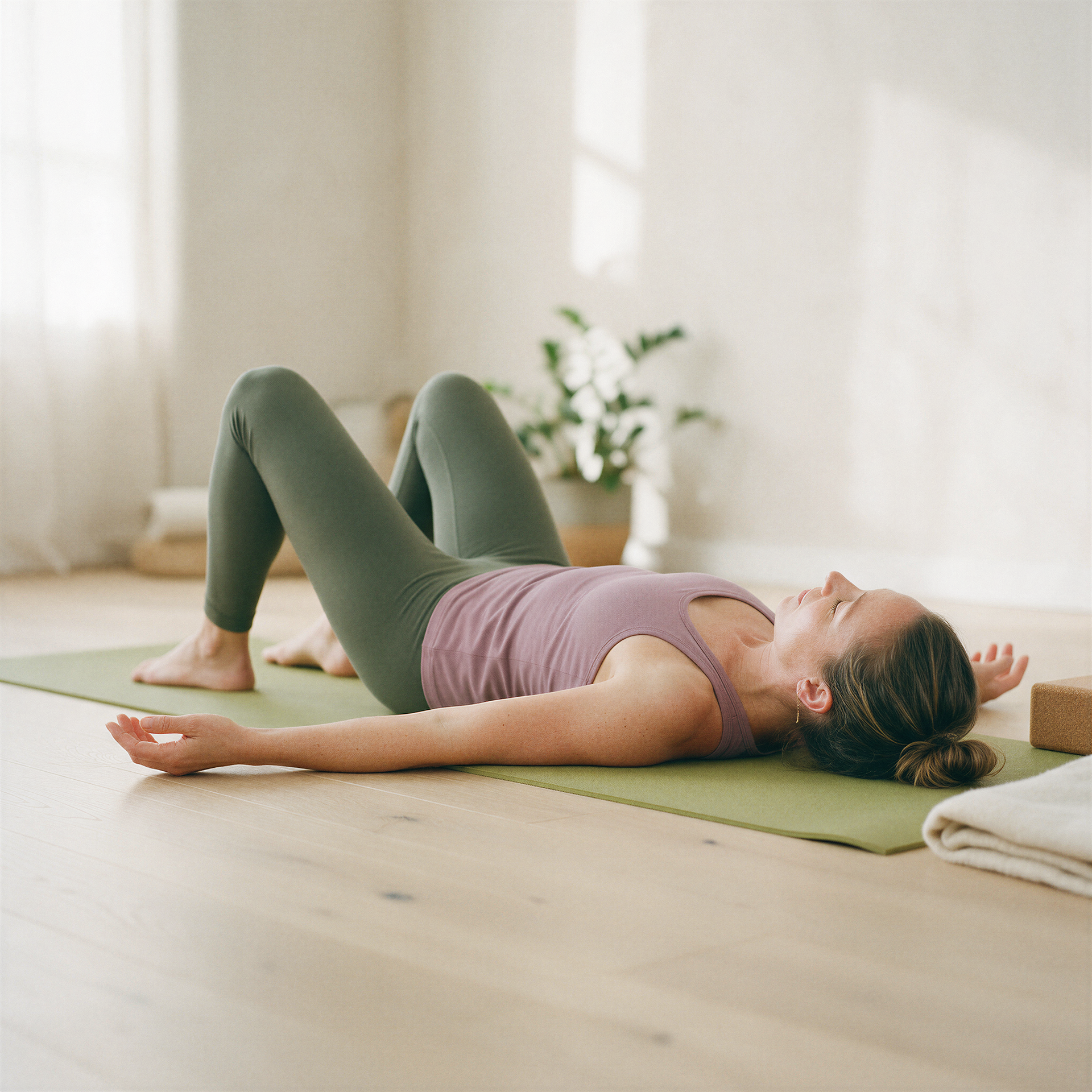
How to practice: Lie on your back with your knees bent and your feet on the floor, a little wider than hip-width apart. Rest your arms out to the sides, palms up.
On an exhale, let both knees drift slowly to the right. Let them go only as far as feels easy. Inhale to bring them back to center, then exhale them to the left. Continue for 8 to 10 slow rounds.
Why it helps: This gentle rotation moves the hip joints and the lower spine together, without any load. It's a lovely way to let your back know that movement is safe before you ask for anything more. Notice whether one side feels more available than the other. That difference is useful information to carry into the rest of the practice.
2. Reclining Hand-to-Toe
With a Strap
(Reclining Hamstring Stretch)
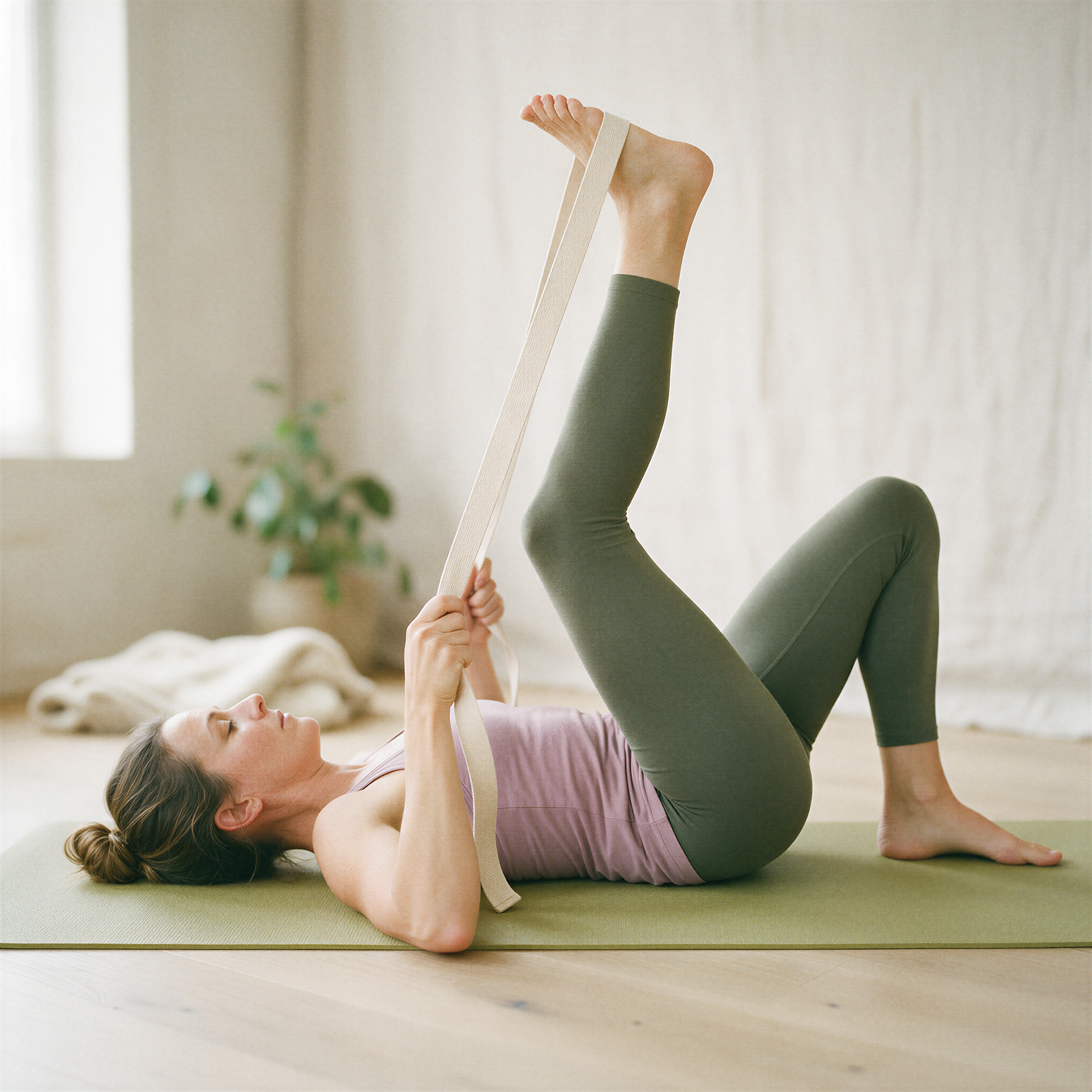
How to practice: Stay on your back. Bend your left knee with the foot on the floor. Loop a strap around the ball of your right foot and extend that leg up toward the ceiling.
Keep your shoulders resting on the floor and both sides of your waist long. The right knee can stay softly bent. Hold for 5 to 8 easy breaths, then switch sides. If it feels comfortable, you can extend the bottom leg along the floor instead of keeping it bent.
Why it helps: Your hamstrings attach to your sitting bones at the base of the pelvis. When they hold tension, they can draw the pelvis under and flatten the natural curve of the lower back. The strap lets you lengthen the back of the leg while your back stays fully supported, so the stretch happens in the hamstrings and not in your spine.
3. Happy Baby
(Ananda Balasana)
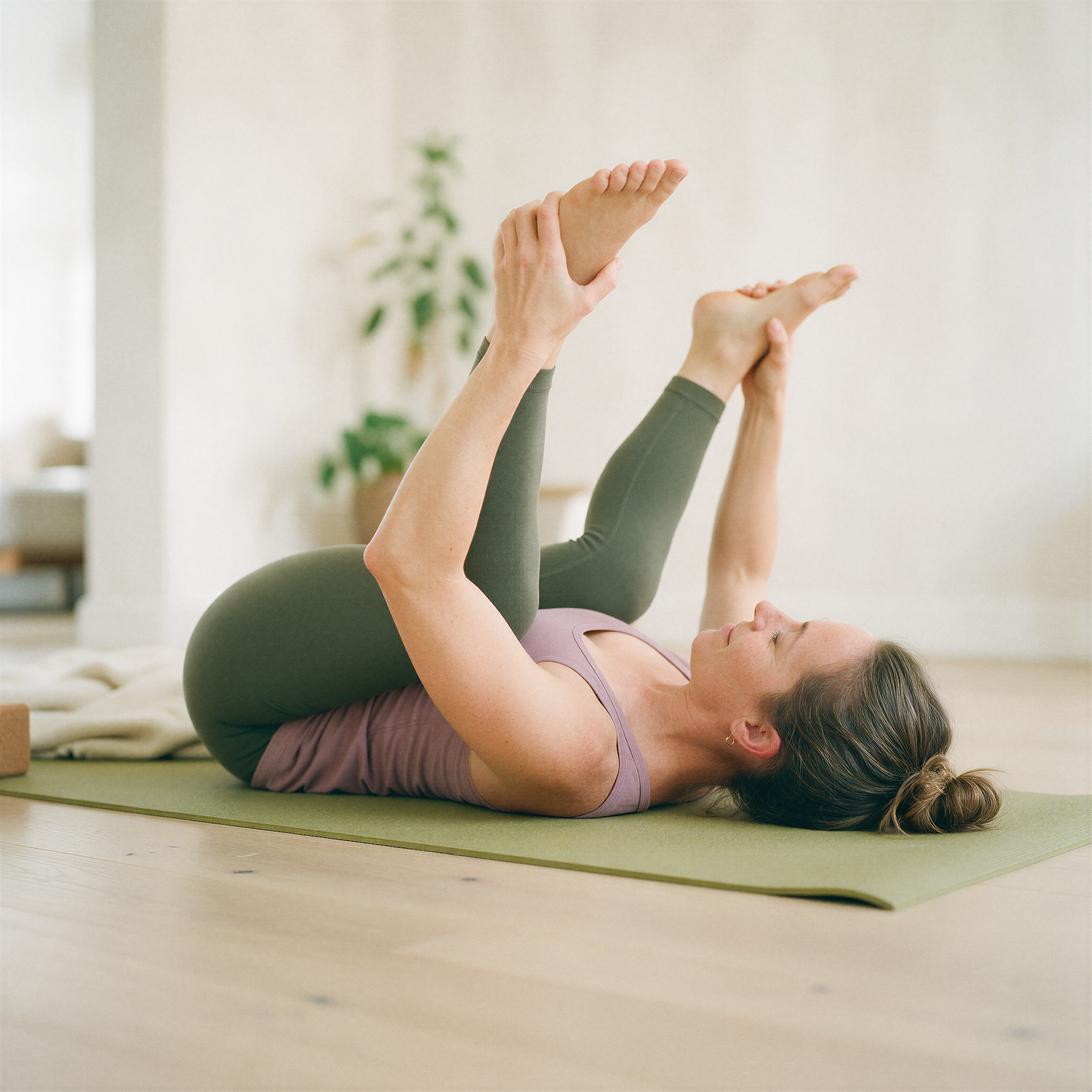
How to practice: Draw both knees toward your chest, then let them open toward your outer ribs. Hold the outer edges of your feet, or use the strap around each foot if reaching feels like a strain. Your shins can point up toward the ceiling.
Let your lower back stay long and your sacrum rest heavy on the floor. There's no need to pull the knees down. You can rock slowly from side to side if that feels good. Stay for 6 to 10 breaths.
Why it helps: Happy Baby opens the inner thighs and the back of the hips while the floor supports your spine. Many people feel the lower back widen and settle here. It's also one of the poses that tends to slow the breath on its own.
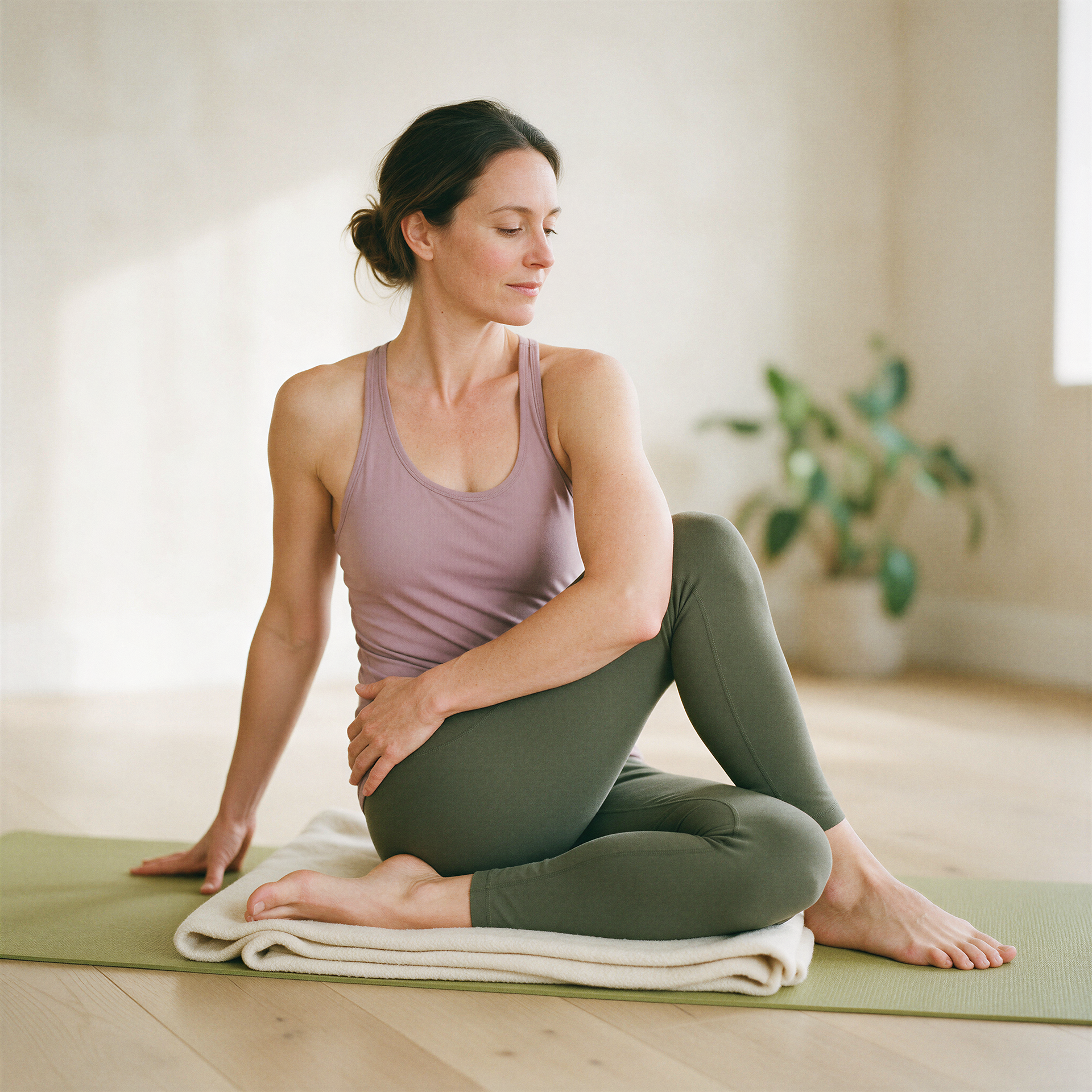
4. Seated Twist With
a Bent Bottom Leg
(Half Lord of the Fishes Variation)
How to practice: Sit on a folded blanket so your pelvis can stay upright. Fold your left leg underneath you, so the left foot rests near your right hip. Cross your right foot over and place it on the floor outside your left thigh.
Inhale and lengthen up through the crown of your head. Exhale and turn your torso to the right, placing your right hand behind you and wrapping your left arm around your right knee. Stay for 5 breaths, lengthening on each inhale and turning a little more on each exhale if it's available. Switch sides.
Why it helps: The lower back is built for only a small amount of rotation. Most of a healthy twist comes from the mid back and rib cage. Lifting first and turning second lets the rotation travel through the whole spine instead of collecting in the low back. The blanket under your sitting bones keeps the pelvis level, so the hips can release without the back rounding.
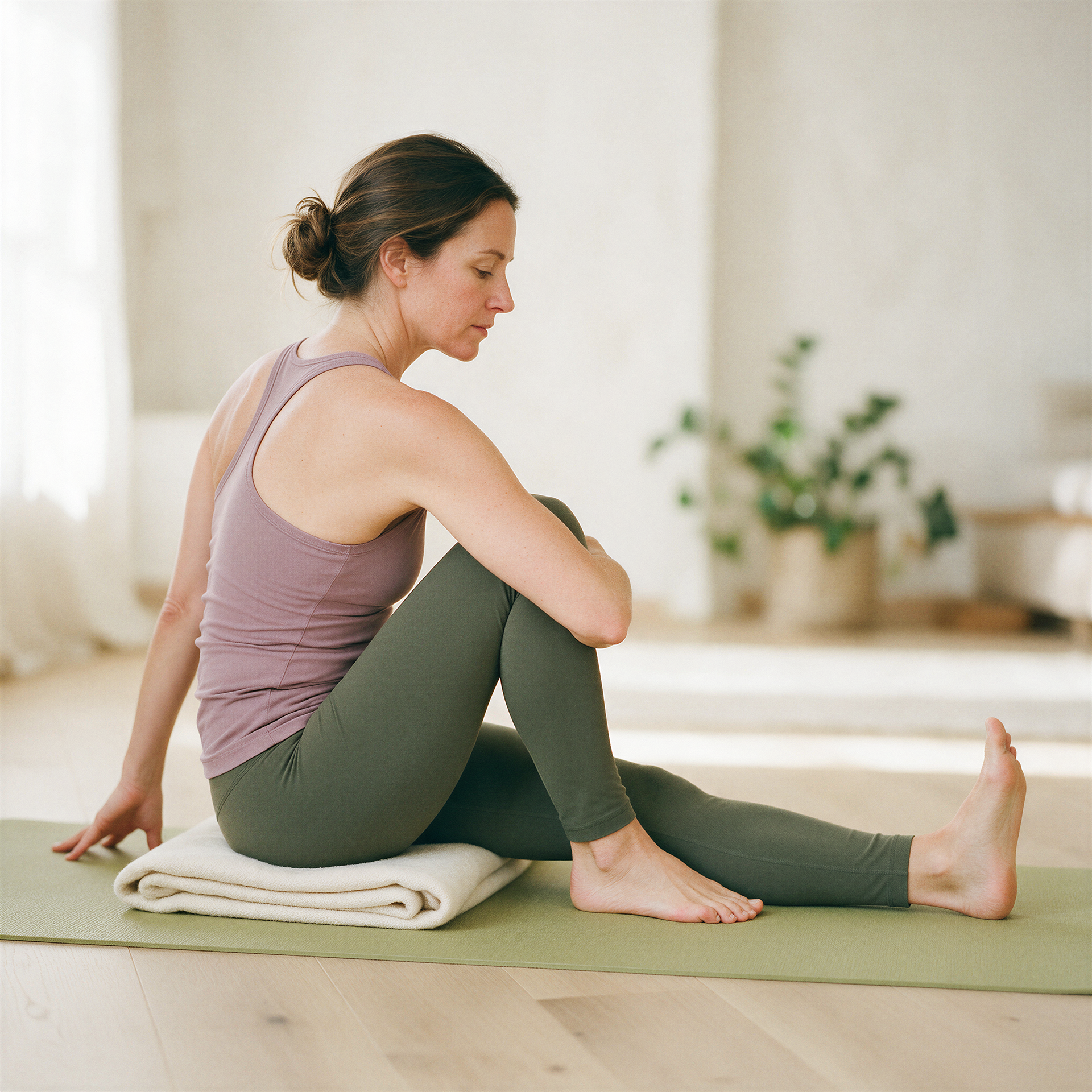
5. Seated Twist With a Straight Bottom Leg
(Marichi's Pose Variation)
How to practice: Sit on your blanket with both legs extended. Bend your right knee and place your right foot on the floor beside your left inner thigh. Keep the left leg straight, with the toes pointing up.
Root down through both sitting bones and lengthen through your crown. On an exhale, turn toward your bent right knee, with your right hand behind you and your left arm hugging the knee. Keep both sides of your waist long as you turn. Stay for 5 breaths, then switch sides.
Why it helps: With the bottom leg straight, this twist asks a little more of the back of the hips and the hamstrings. It invites the pelvis and spine to organize together: grounded at the base, long through the middle, turning from the ribs. It's a fitting place to finish, because it brings together everything the earlier practices opened.
To Close
After the last twist, lie back down with your knees bent and your feet wide, letting the knees rest against each other. Take a few breaths here. Notice your lower back against the floor, and whether anything feels different from when you began.
How to Get the Most From Your Practice
Go slowly.
Give each movement time. Release tends to arrive a few breaths in, rarely in the first one.
Let your exhale lead.
Moving deeper on the exhale and pausing on the inhale gives your nervous system a steady rhythm to follow.
Use your props.
A strap, a blanket or a block lets your body find length without bracing against the effort.
Practice little and often.
Five minutes most days tends to shift a pattern more than one long session a week. These practices are especially helpful after sitting for long stretches, or in the evening before bed.
Notice your two sides.
Most of us have a side that feels tighter. You don't need to even it out. Simply spending a couple of extra breaths on the tighter side is enough.
Pause if something feels sharp.
A good release feels like spreading, warmth or softening. Sharp, pinching or radiating sensations are a sign to back off or skip that practice. If you're pregnant, recovering from surgery, or managing a hip or spine condition, check in with your provider before trying new movements.
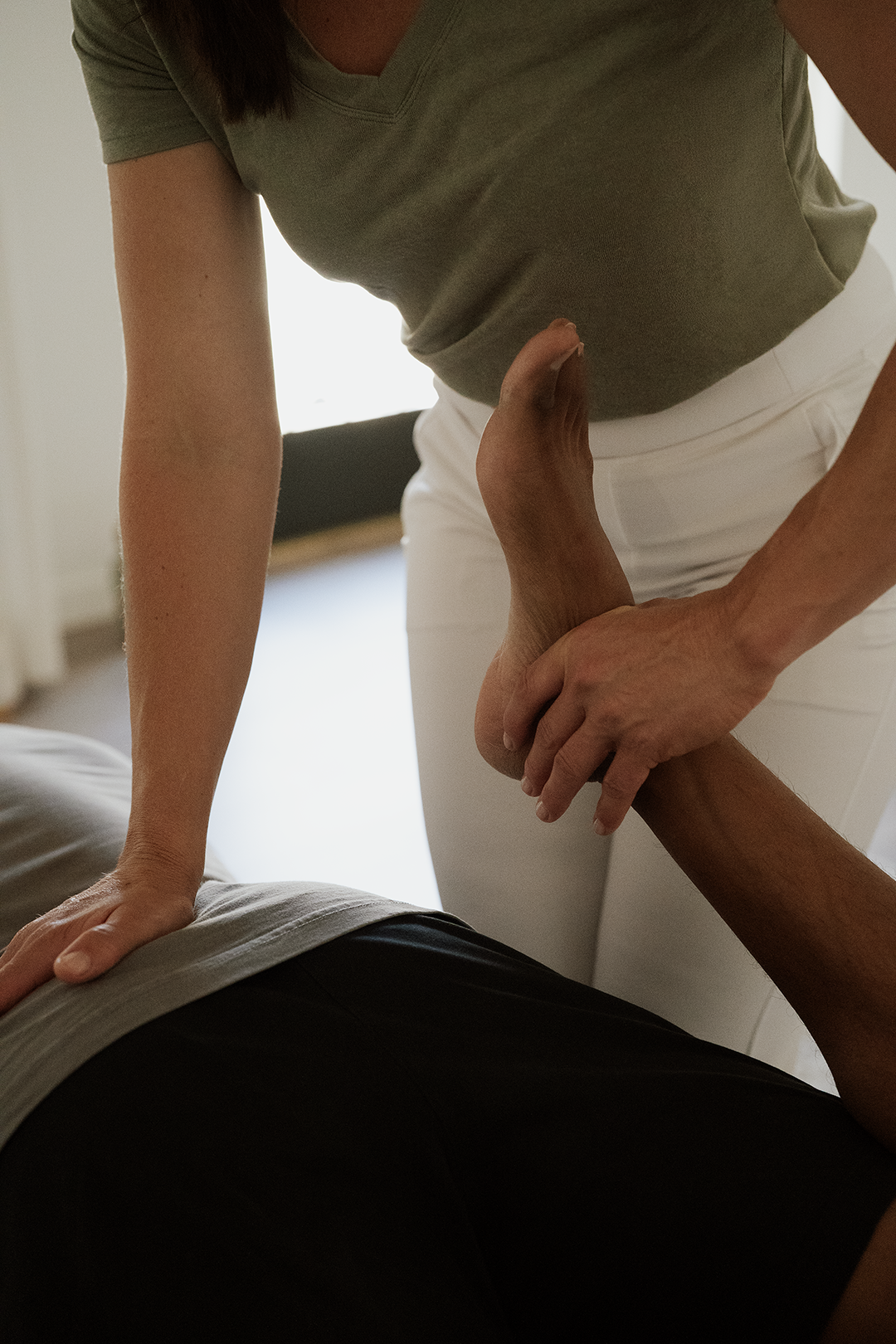

How I Support the Hips and Low Back in Practice
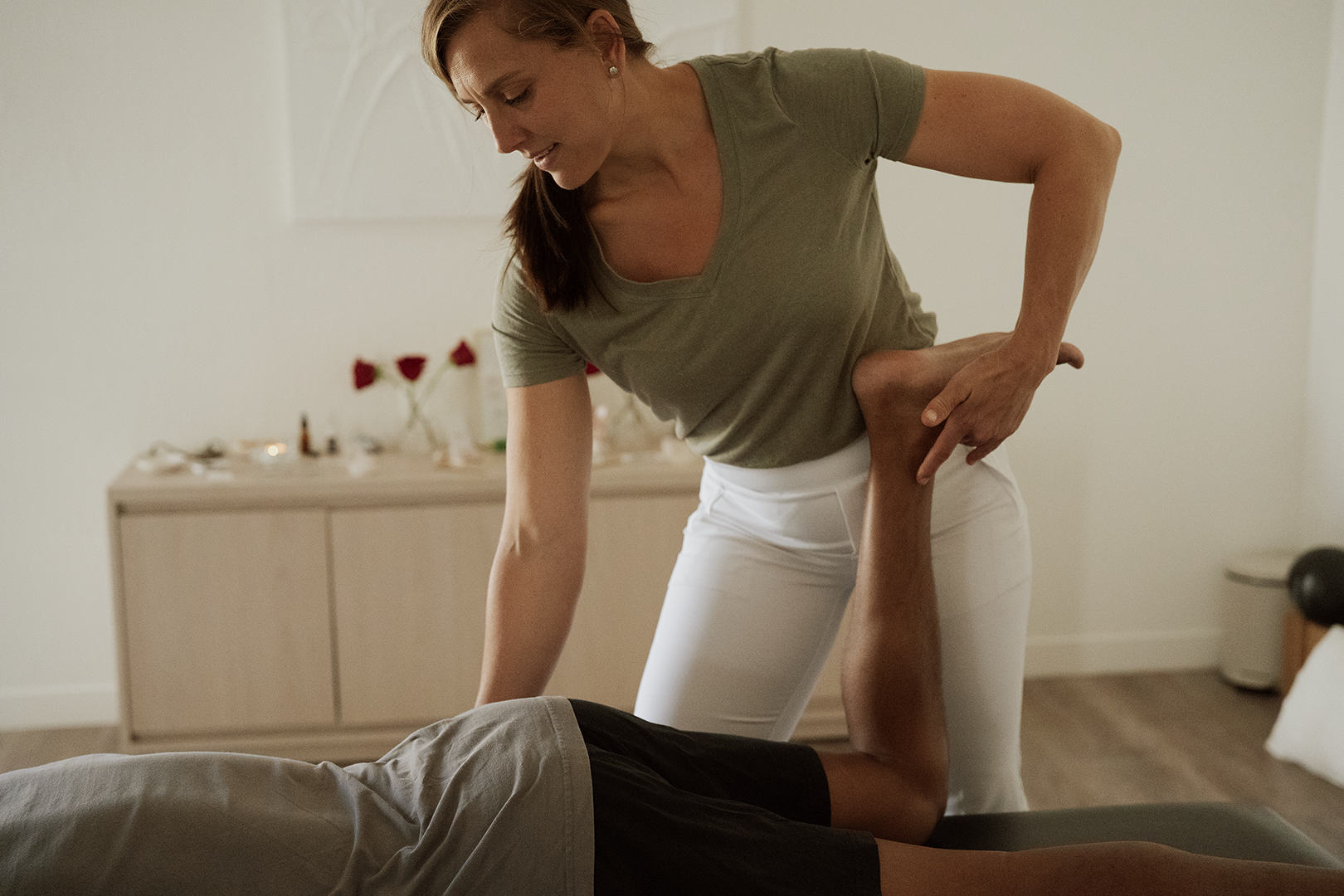
In my Pleasant Hill office, I rarely work only where someone feels the tightness. When the lower back is holding, I'm also feeling how the pelvis sits, how the hips move, how the rib cage responds to breath, and how the whole body is distributing tension.
Through Bio-Geometric Integration and craniosacral work, I use gentle, precise contacts to support the places where the body has been holding a pattern. There's no forceful cracking. The work is quiet and attentive, and it gives your nervous system space to reorganize.
Clients often tell me their lower back feels wider afterward, that they can breathe lower into their belly, or that standing up from a chair feels easier. These practices are a way to carry that feeling home.
Practice With Me: Movement & Mobility Series
If you'd like to explore these practices with guidance, my Movement & Mobility Series is a small-group class that blends yoga-based postures with functional movement and somatic awareness. Free the Hips, Lengthen the Spine is one of its sessions.
We move slowly, with plenty of space to notice what your body is communicating. With a small group, I can offer individual guidance and hands-on support along the way. Bring a mat, a block and a strap, so you can keep practicing at home.
The next Free the Hips, Lengthen the Spine session is Saturday, November 21, 1:00 to 2:00 PM in Pleasant Hill.
Frequently Asked Questions
Can tight hips cause lower back pain?
Yes, often. The hip muscles attach to the pelvis, and the pelvis is the base of the spine. When the hips hold tension or lose some of their movement, the lower back tends to take on extra work, which can show up as tightness, compression or aching.
What is the best hip release for lower back pain?
There's no single best practice, because every body holds tension a little differently. A gentle sequence that combines rotation, hamstring lengthening, hip opening and supported twists, like the five above, addresses the hips from several directions. Slow movement and an easy breath matter as much as the pose you choose.
How often should I do hip release exercises?
A few minutes most days is usually more helpful than one long session each week. Many people find these practices most helpful after long periods of sitting, or in the evening to settle before sleep.
Should I stretch if my lower back hurts?
Gentle, supported movement is often helpful for everyday tightness. Avoid anything that causes sharp or radiating pain. If your back pain comes with numbness, weakness in a leg, changes in bladder or bowel control, or follows a fall or injury, see a healthcare provider promptly.
Can tight hips cause sciatica-like pain?
Tension in the deep hip muscles can sometimes irritate the area where the sciatic nerve passes through the back of the hip. If you feel pain or tingling down the back of your leg, it's worth having it assessed. You can read more in Sciatica From Sitting.
Can a chiropractor help with tight hips and lower back pain?
A gentle, nervous system-centered approach looks at how the pelvis, hips and spine are working together, as well as the spot that hurts. In my practice, I combine Bio-Geometric Integration, craniosacral work and attentive touch to help the body ease out of its holding patterns.
Your Body Already Knows How to Lengthen
The tightness in your lower back is your body adapting to how you've been moving, sitting and carrying stress. That same intelligence knows how to find length again when it's given the right conditions.
A few slow minutes on the floor, an easy breath, and a little curiosity about your hips can be a meaningful place to begin.
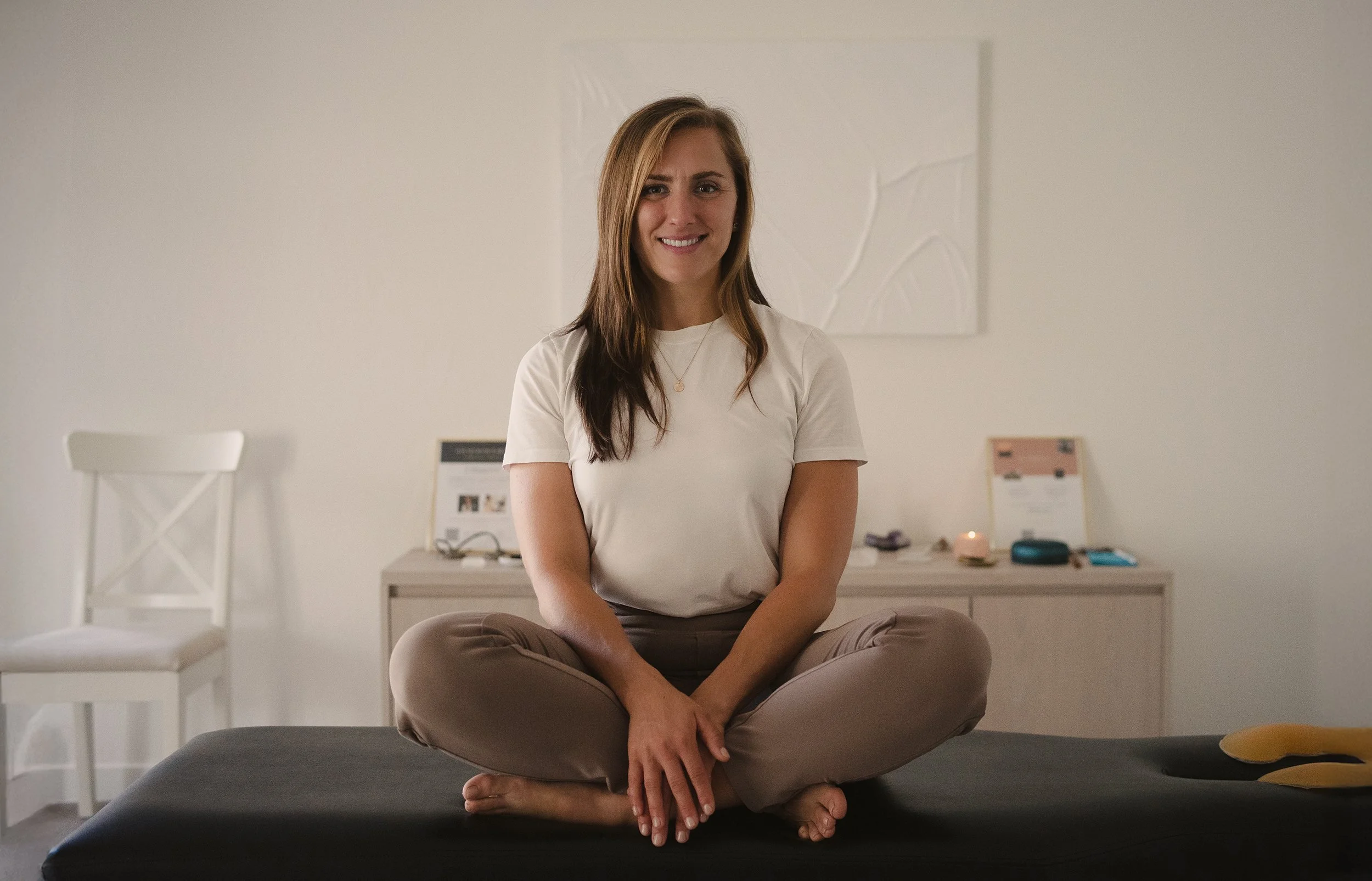
About Dr. Alandi Stec
Dr. Alandi Stec is a Doctor of Chiropractic and Reiki Master specializing in nervous system-centered healing approaches. She serves the Pleasant Hill and Bay Area athletic community through Life Force Chiropractic, combining Bio-Geometric Integration with craniosacral work and somatic practices to support athletes in discovering their body's innate capacity for optimal performance and resilience.
Keep the conversation going.
Each month, The Regulating Rhythm brings a free reflection to your inbox, and paid subscribers receive a new practice to help the nervous system settle.
Keep Exploring
Practice in person: join the Movement & Mobility Series in Pleasant Hill.
Book a session: if you're in the East Bay, from Walnut Creek and Lafayette to Concord, and you'd like support with your hips and lower back, you're welcome to book a visit.
A new practice each month: The Regulating Rhythm is my monthly note to support your nervous system, on and beyond the table. Join on Substack and receive my 20-minute guided meditation, Find Your Way Back to Center, on me.
Read next: Why Am I Always So Tight? and Tight Hips & the Nervous System Connection.