
Tight Hips & Nervous System Connection
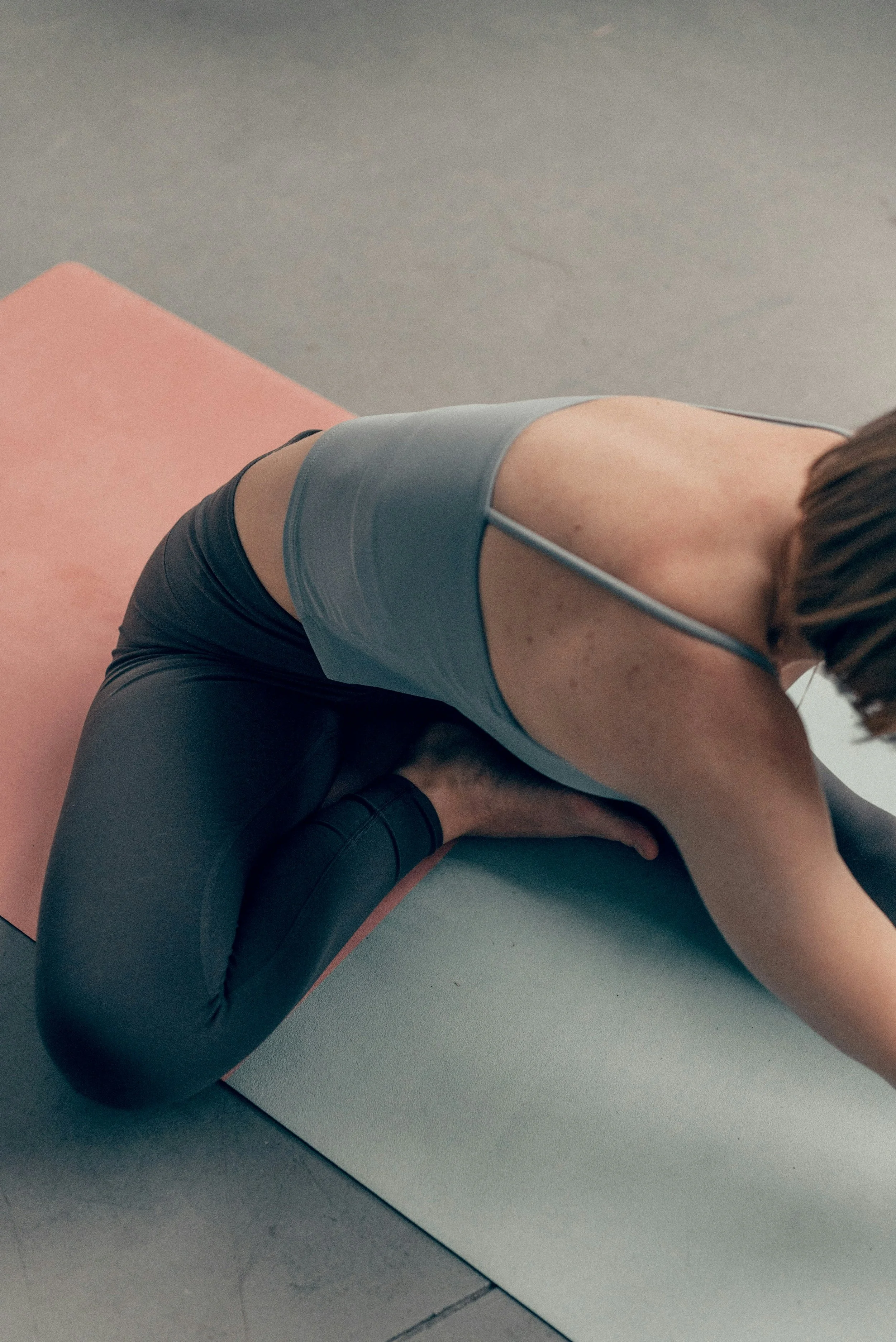
You've stretched. You've foam rolled. You've held pigeon pose until your timer went off. And for a little while, your hips feel more open.
Then you sit down at your desk. Or drive home. Or fall asleep. And the next morning, everything is tight again. The same stiffness through your hips. The same pull across your lower back. Like nothing happened.
If this cycle sounds familiar, you're not alone. Hip tightness is one of the most common complaints I hear in my practice. And the frustrating part? Most of the solutions people try only address part of what's going on.
Because the tension in your hips isn't just a muscle problem. It's a nervous system pattern. And until that pattern is addressed, the tightness will keep returning no matter how much you stretch.
In this post, you'll learn:
• Why your hips stay tight even when you stretch regularly
• The connection between your psoas muscle, stress response, and spinal compression
• How hip restriction affects your entire spine, not just your lower back
• What actually creates lasting hip freedom (it's not more stretching)
• Practices and support that address the root of the pattern
The Hip Tightness Cycle Most People Are Stuck In
Here's what typically happens. Your hips feel tight, so you stretch. The stretch temporarily lengthens the muscle tissue, and you feel some relief. But within hours, the tightness returns. So you stretch again. Maybe harder this time. Maybe longer.
After weeks or months of this, you might try a new approach. Foam rolling. Yoga. A hip mobility routine you found online. These can all feel good in the moment. But the pattern keeps cycling back.
The reason is straightforward. Stretching addresses muscle length, but it doesn't address the signal telling your muscles to stay tight in the first place.
That signal comes from your nervous system.
When your body perceives ongoing stress, whether physical, emotional, or environmental, your nervous system activates a protective response. Part of that response involves tightening specific muscles to brace your body. And one of the primary muscles your nervous system recruits for this job is the psoas.
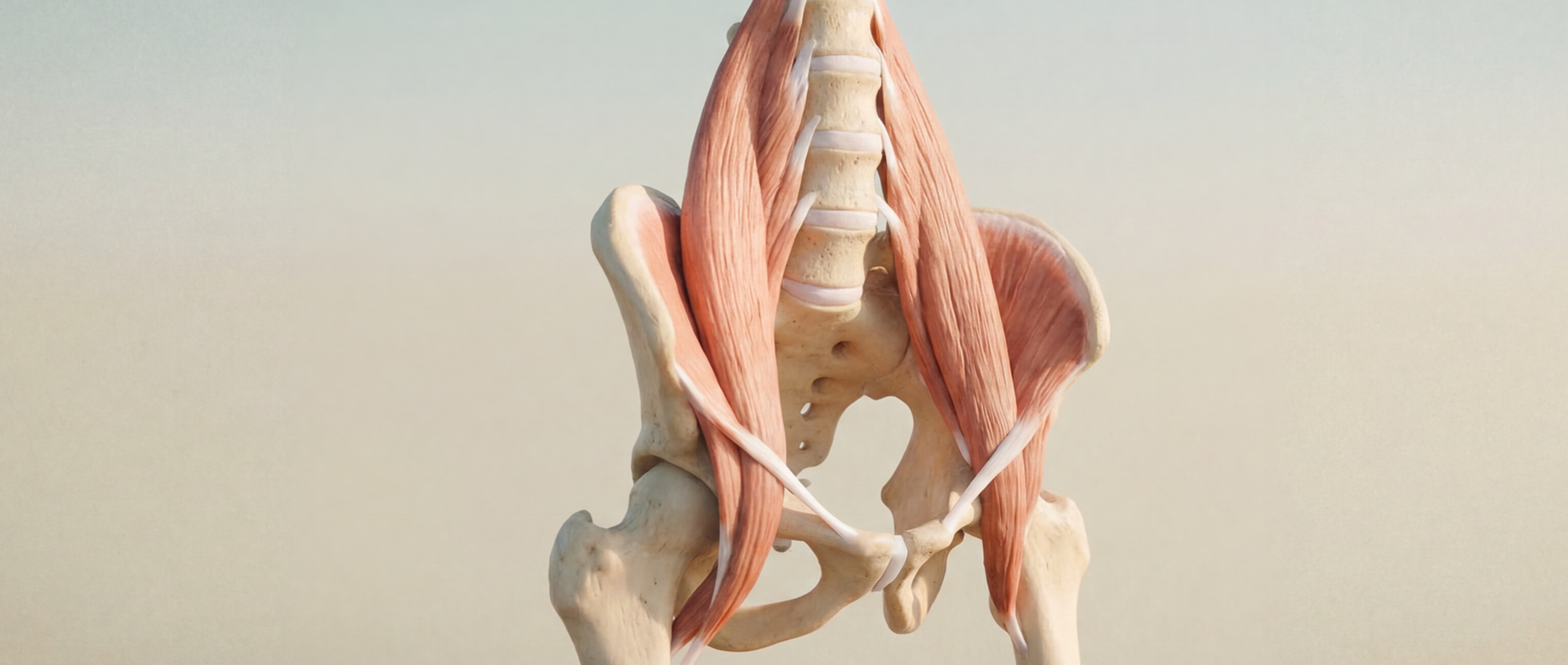
Your Psoas: The Muscle That Connects Stress to Your Spine
The psoas (pronounced SO-az) is a deep core muscle that most people have never heard of, even though it affects how they move, breathe, and feel every day.
Here's what makes the psoas unique. It's the only muscle in your body that directly connects your spine to your legs. It originates along your lower thoracic and lumbar vertebrae (roughly from your mid-back to your low back), passes through your pelvis, and attaches to the top of your femur. It's what allows you to bend at the waist, lift your legs, and stabilize your lower spine.
But the psoas has another role that goes beyond movement. It's deeply wired into your autonomic nervous system, the system that governs your fight-or-flight response.
When your brain detects a threat, whether it's a car swerving toward you or a deadline you can't meet, your nervous system sends a rapid signal to the psoas to contract. This contraction prepares your body to run or to curl into a protective position. It's a survival reflex. Fast, automatic, and outside your conscious control.
The problem? In modern life, the threats rarely stop. Traffic. Work pressure. Financial stress. Screen time. Emotional tension. Your nervous system doesn't distinguish between a bear chasing you and a stressful email. It responds the same way, by tightening the psoas and bracing.
Over time, this creates what I call a holding pattern. The psoas stays contracted not because it's structurally short, but because your nervous system hasn't received the signal that it's safe to let go.
This is why stretching alone doesn't resolve the issue. You're trying to lengthen a muscle that your nervous system is actively telling to stay tight.
The Feedback Loop: How Tight Hips Keep Your Nervous System Activated
Here's where things compound. The relationship between your psoas and your nervous system isn't one-directional. It works both ways.
When your brain senses danger, it tightens the psoas. But a chronically tight psoas also sends signals back to the brain that say, "We're still in danger." Your nervous system reads the tension in the muscle and interprets it as confirmation that the threat is ongoing. So it keeps the stress response active.
This creates a feedback loop.
Stress tightens the psoas. The tight psoas reinforces the stress signal. The stress signal keeps the psoas contracted.
You might notice this as a vague sense of unease in your body, even when nothing is obviously wrong. A feeling of bracing through your core. Difficulty taking a deep, full breath. Restless energy in your legs. Or a low back that always feels compressed, no matter how much you move.
This loop doesn't resolve with more flexibility work. It requires a shift in your nervous system's baseline state.
Free the Hips, Lengthen the Spine: The Relationship Most People Miss
The connection between your hips and your spine is more direct than most people realize. Because the psoas attaches to your lumbar vertebrae, when it stays contracted, it literally compresses your lower spine.
Think about what happens structurally when the psoas shortens. It pulls your lumbar vertebrae forward and down, increasing the curve of your lower back (what's known as anterior pelvic tilt). This added compression reduces the space between your vertebrae, places strain on the discs and ligaments, and forces the muscles of your lower back to work harder to keep you upright.
But the effects don't stop at your lower back.
Your spine is a continuous structure. When one region compresses, the segments above and below have to compensate. A tight, shortened psoas can restrict how your ribcage moves, limit thoracic mobility, change how your shoulders sit, and even affect your neck and jaw. The whole system reorganizes around the restriction.
There's another layer here too. The psoas shares fascial connections with your diaphragm, your primary breathing muscle. They attach along the same vertebrae in the lower spine. When the psoas is chronically tight, it can restrict your diaphragm's ability to fully descend, leading to shallow, chest-based breathing.
Shallow breathing signals your nervous system that something is wrong, reinforcing the very stress response that tightened the psoas to begin with. It's another loop.
Tight psoas. Compressed spine. Restricted diaphragm. Shallow breath. More stress. Tighter psoas.
This is why freeing the hips has such a profound effect on the entire body. When the psoas can release, the lumbar spine decompresses. The ribcage opens. The diaphragm moves more freely. Breath deepens. And the nervous system finally receives a different message: "You can soften now."
What Actually Helps (Beyond Stretching)
If the root of persistent hip tightness is a nervous system holding pattern, then the most effective approach addresses both the tissue and the signal.
This means combining structural work that helps the body reorganize with practices that shift the nervous system's baseline state. Not one or the other. Both.
Gentle, Nervous System-Centered Chiropractic Care
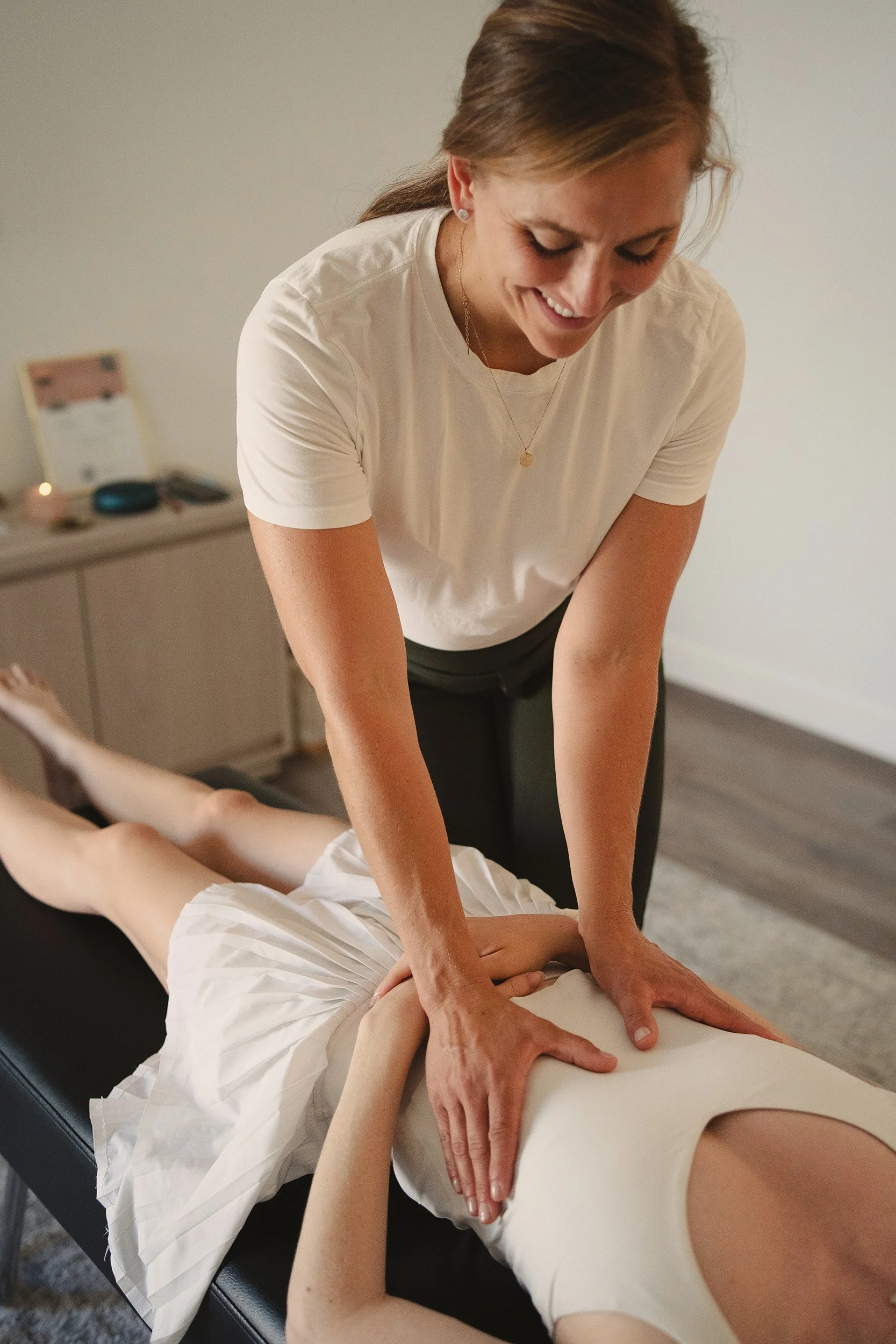
In my practice, I work with the relationship between the pelvis, spine, and nervous system as a connected whole. Through Bio-Geometric Integration, I use gentle contacts along your spine and body to help the places where holding patterns are present. Where your psoas is pulling your lumbar spine forward. Where your pelvis has shifted to compensate. Where your ribcage is restricting breath.
This isn't about forcing your hips open or cracking your back into a different position. It's about creating the conditions where your body can reorganize on its own. When the nervous system receives the right input, muscles release, joints decompress, and breath expands without you having to override anything.
Clients often describe the experience as their hips "letting go" in a way that stretching never achieved. Not because the stretch wasn't reaching the muscle, but because the nervous system wasn't ready to release it.
If you're in the Pleasant Hill, Walnut Creek, Lafayette, or greater East Bay area, you can book a session here.

Movement That Builds Awareness, Not Just Flexibility
There's a significant difference between stretching a muscle and learning to sense, coordinate, and release a holding pattern through conscious movement.
Practices that combine functional movement with somatic awareness, like yoga-based postures done with attention to breath and internal sensation, help your nervous system learn a new relationship with your hips. Instead of forcing range of motion, you're teaching your body that it's safe to move through ranges it has been protecting.
This is the approach behind the Movement & Mobility Series at Life Force Chiropractic. These small-group sessions blend yoga-based postures with functional movement and somatic awareness to explore how the hips support the spine, how tension patterns influence posture, and how creating freedom at the base of the body restores length and fluidity throughout your whole structure.
Each session focuses on releasing stored tension in the hips, improving joint range of motion, supporting spinal length and decompression, and cultivating balance and functional strength. Groups are limited to five participants so you receive individualized guidance tailored to your body.
Daily Nervous System Regulation Practices
What you do between sessions matters as much as the sessions themselves. Building a daily practice of nervous system regulation gives your body consistent input that it's safe to release protective tension.
This doesn't have to be complicated. A few minutes of diaphragmatic breathing can shift your nervous system from sympathetic (fight-or-flight) activation toward parasympathetic (rest and restore) tone. Because the diaphragm and psoas share fascial connections, deeper breathing directly supports psoas release. It's one of the most accessible tools you have.


A simple practice to try:
Lie on your back with your knees bent and feet flat on the floor. Place one hand on your chest and one on your belly. Breathe in slowly through your nose, directing the breath into your belly so your lower hand rises while your upper hand stays relatively still. Exhale slowly through your mouth. Repeat for 8 to 10 breaths, allowing each exhale to be slightly longer than each inhale.
Notice what happens in your hips as your breath deepens. You may feel a softening through your inner thighs, a subtle release in your lower back, or a sense of your pelvis settling more fully into the floor. That's your psoas responding to the shift in your nervous system's state.
If you want a structured daily practice to build these skills, the12 Days of Nervous System Regulation course offers guided practices you can do at home. Over 12 days, you'll develop tools for shifting your nervous system's baseline, which directly supports the kind of lasting hip and spinal release we're talking about here. It's a $50 investment in learning how your body works, so you can support your own regulation long after the course ends.
What It Feels Like When Your Hips Actually Release
When the nervous system component shifts, the experience of release is qualitatively different from what stretching produces.
People describe it as a sense of length through their whole torso, not just looseness in their hips. Their lower back feels decompressed rather than just less sore. Breath drops lower, filling spaces that felt closed off. Walking feels more fluid, like the legs are moving from a deeper place in the body. There's often an emotional component too, a feeling of settling, of arriving in your body in a way that feels quieter and more grounded.
This is what becomes possible when you stop trying to force your hips open and start creating the conditions where your nervous system feels safe enough to let them go.
Signs Your Hip Tightness Is Nervous System-Driven
Not all hip tightness involves a nervous system component. But if several of these resonate, your nervous system is likely part of the picture:
• Your hips feel tight even after consistent stretching over weeks or months
• The tightness returns quickly after stretching, sometimes within hours
• You also carry tension in your jaw, shoulders, or upper back
• Your lower back feels compressed or achy, especially after sitting
• You notice your breath tends to be shallow or chest-based
• Hip tightness worsens during stressful periods
• You feel a general sense of bracing or guarding through your core and pelvis
• Relaxation feels difficult, even when you want to rest, your body stays activated
If you recognize yourself in this list, your body isn't broken. It's protecting. And that protection can shift when your nervous system gets the right support.
Frequently Asked Questions
Can tight hip flexors really cause lower back pain?
Yes. The psoas muscle attaches directly to your lumbar vertebrae. When it stays contracted, it pulls the lower spine forward, increasing compression and strain on the discs, ligaments, and surrounding muscles. This is one of the most common and most overlooked contributors to persistent lower back pain.
Why do my hips tighten up again after stretching?
Stretching addresses muscle length, but if your nervous system is maintaining a protective contraction, the muscle returns to its shortened state once the stretch is released. Lasting change requires addressing the nervous system signal, not just the tissue.
How does stress affect hip tightness?
When your body perceives stress, your nervous system activates the psoas as part of the fight-or-flight response. Chronic stress keeps this muscle in a contracted state, creating persistent tightness that doesn't respond well to conventional stretching.
Can chiropractic care help with tight hips?
When the approach addresses the nervous system's role in maintaining tension, yes. Gentle, nervous system-centered chiropractic work helps the body reorganize the relationship between the pelvis, spine, and surrounding tissues, allowing muscles like the psoas to release from the inside out rather than being forced open.
How long does it take to release chronic hip tension?
This varies. Some people notice a shift in their very first session. For deeper, long-standing patterns, a series of sessions combined with daily regulation practices typically produces meaningful change within several weeks. The key is consistency in both the structural work and the nervous system support.
What's the connection between breathing and hip tightness?
Your diaphragm and psoas share fascial connections along the lower spine. A tight psoas restricts the diaphragm's movement, leading to shallow breathing. Shallow breathing reinforces the stress response, keeping the psoas tight. Deep, diaphragmatic breathing is one of the most direct ways to support psoas release.
Your Next Step
Your body has been working hard to protect you. The tension in your hips isn't a failure. It's your nervous system doing its job. The invitation now is to give it the information it needs to shift from protection into ease.
For in-person support:
If you're in the Pleasant Hill, Walnut Creek, Concord, Lafayette, or Orinda area, I'd love to work with you. Book a session at Life Force Chiropractic and let's explore what your body is ready to release.
For hands-on movement exploration:
The Movement & Mobility Series offers small-group sessions focused on freeing the hips, lengthening the spine, and building somatic awareness. Limited to five participants per session for individualized guidance.
For daily nervous system support:
The 12 Days of Nervous System Regulation course gives you guided daily practices to shift your nervous system's baseline, from anywhere in the US or Canada. $50 for lifetime access.
Want to go deeper?
Attuning Into You is a 21-day nervous system recalibration program that builds your capacity for regulation, resilience, and embodied awareness.
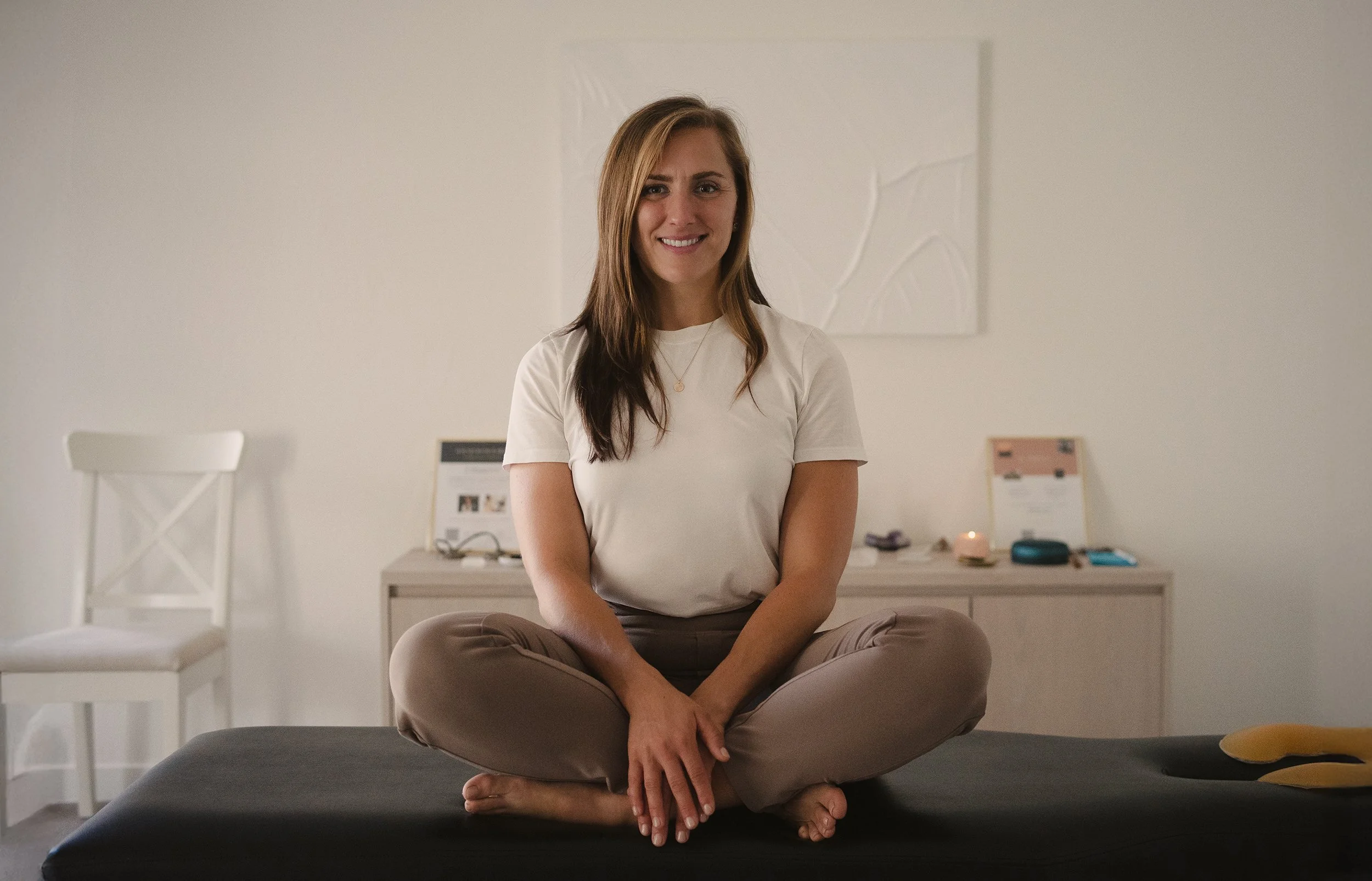
About Dr. Alandi Stec
Dr. Alandi Stec is a chiropractor and nervous system specialist practicing in Pleasant Hill and San Francisco, California. Her approach integrates Bio-Geometric Integration, craniosacral therapy, and Reiki to support the body's innate capacity for regulation and wholeness. She also offers online courses in nervous system regulation, yoga nidra, and meditation for people across the US and Canada.