
Why Sitting Is Making Your Hips Tight (And What to Do About It)
Many people assume tight hips are simply a sign they need to stretch more.
The hips feel stiff when standing up from a chair. The first few steps after a long meeting feel awkward. Squatting feels restricted. Getting up from the floor takes more effort than it used to. So they stretch: a hip flexor stretch here, a pigeon pose there, maybe a mobility class or a foam roller before bed.
The stretching often helps. For a little while. Then the tightness returns.
For many people working in tech, this cycle becomes familiar. The hips feel better temporarily but never seem to stay that way, as though the body keeps recreating the same tension no matter how much effort goes into releasing it. The reason is that tight hips are often about far more than flexibility. They're frequently a reflection of how the whole body has adapted to prolonged sitting, chronic demand, and the way the nervous system organizes around both.
Your Hips Are Designed for Movement
The hip is one of the most powerful and versatile joints in the body. It's designed to walk, run, climb, squat, rotate, balance, and transfer force between the upper and lower body. When the hips move well, they create efficiency throughout the whole system.
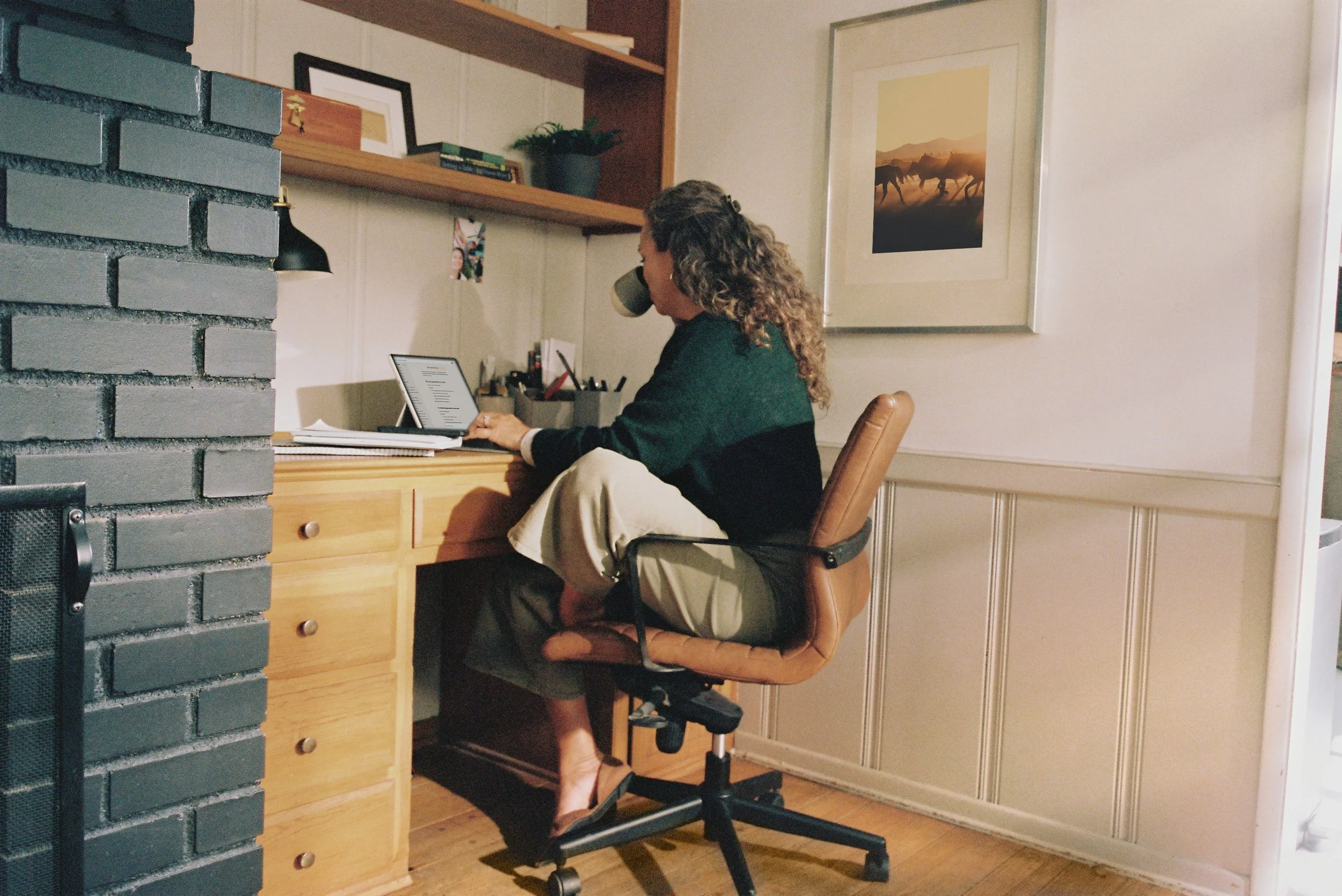
The challenge is that most modern work asks very little of the hips. Many technology professionals spend eight, ten, or even twelve hours a day sitting. The hips stay in a relatively fixed position for long stretches. The muscles at the front of the hips stay shortened. The glutes become less involved. The pelvis moves less than it was designed to. The body adapts remarkably well to whatever it experiences most, and what begins as a temporary position eventually becomes a pattern. The hips stop expecting movement because movement is no longer the primary demand being placed on them.
Why Stretching Your Hip Flexors Isn't Working
One of the most frustrating aspects of tight hips is that stretching can feel effective while failing to create lasting change.
The reason is that tightness and shortness aren't always the same thing. Sometimes a muscle is genuinely shortened and benefits from being lengthened. Often, though, a muscle feels tight because the nervous system is maintaining a certain level of tone within it. In other words, the body is actively holding the pattern.
This distinction changes how we understand the problem. If the nervous system believes a region needs additional stability or protection, it may keep recreating tension even after the tissue has been stretched. The hips can feel tight not because they're incapable of lengthening, but because the body has learned to organize around a particular strategy. This is one reason so many people stretch the same muscles over and over without meaningful long-term change. The tissue temporarily releases, but the larger pattern remains intact.
The Hidden Role of the Psoas
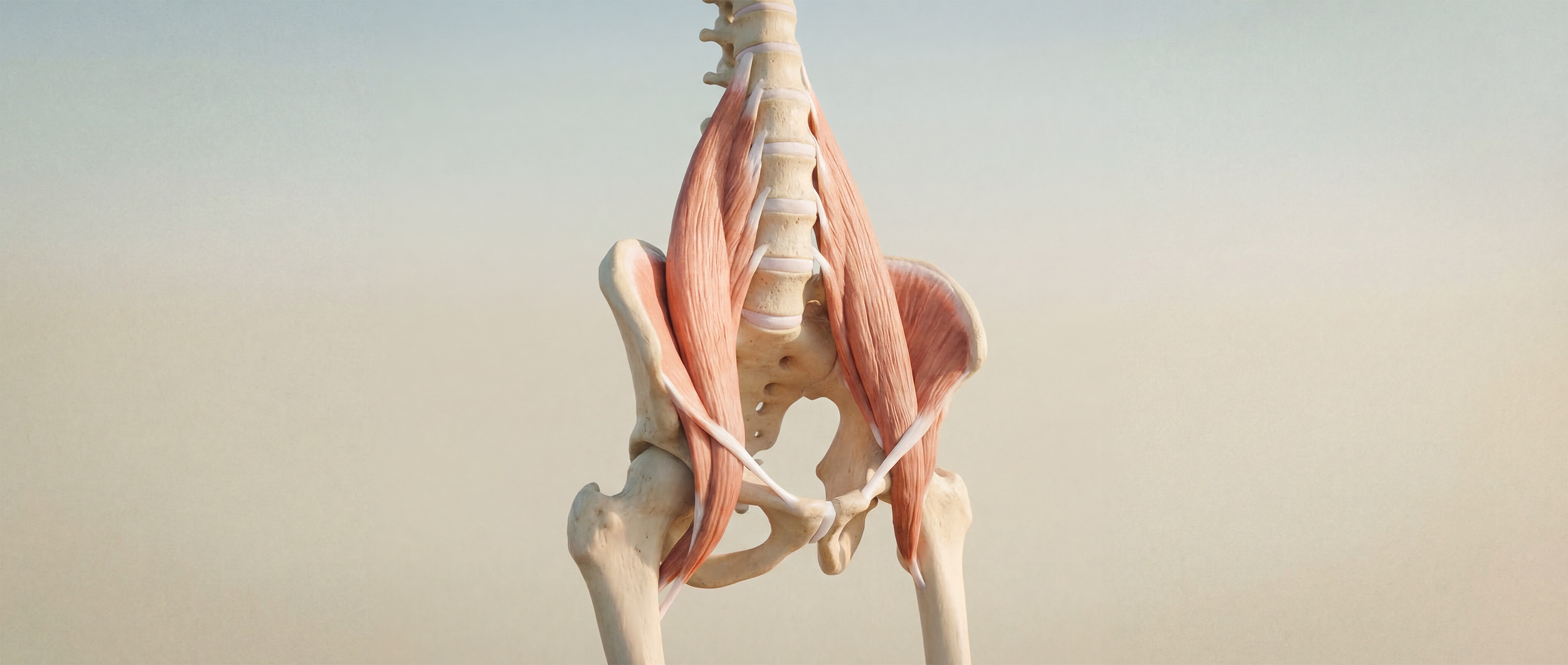
One of the most important muscles in this conversation is the psoas.
The psoas connects the lumbar spine to the inside of the thigh and plays a significant role in posture, movement, stability, and balance. While it's often called a hip flexor, its influence extends far beyond lifting the leg. Because of its location deep within the body, the psoas has important relationships with the spine, diaphragm, pelvis, and nervous system.
When someone spends long periods sitting, the psoas stays in a shortened position for hours. Eventually it adapts. The result is often stiffness at the front of the hips, reduced hip extension while walking, increased strain through the lower back, and a general sense that the body doesn't move as fluidly as it once did.
What's particularly interesting is that the psoas also tends to become more active during stress. When the nervous system shifts into a more protective state, the psoas often increases its tone along with it. This is one reason hip tightness can persist even in people stretching regularly. The pattern isn't always mechanical. Often, it's neurological as well.
Why Tech Workers Commonly Experience Tight Hips
Most people think of sitting as rest. From the perspective of the hips, it often isn't.
A typical workday involves long periods of sustained focus, limited movement, repetitive positioning, and ongoing cognitive demand. The body gradually organizes around these realities. The pelvis becomes less mobile. The hip flexors stay active. The glutes contribute less. The lower back absorbs more load. Over time, the body becomes remarkably efficient at sitting, and often less efficient at everything else.
This is why many people notice tight hips despite exercising regularly. An hour at the gym cannot always undo ten hours spent in a chair. The body adapts most strongly to what it experiences most consistently. For many people, the issue isn't a lack of exercise. It's the overwhelming amount of time spent in one position.
The Connection Between Tight Hips and Low Back Pain
The hips and low back have a close working relationship. When the hips stop moving well, the lumbar spine frequently begins doing more than its share, and movements that should be distributed through the pelvis and hips concentrate in the lower back instead. Over time, this can create irritation, fatigue, and stiffness. This is one reason people commonly experience both symptoms together.
I've written more about the hip-and-low-back relationship, and why the pattern involves the whole region rather than one isolated area, in Why Your Tight Hips Won't Release. If low back pain is your primary experience, that's the deeper read.
Tight Hips and the Nervous System
One of the most overlooked aspects of hip tension is the role of the nervous system.
The body doesn't simply respond to physical positioning. It also responds to psychological and emotional demand. When the nervous system shifts into a more protective state, muscle tone throughout the body increases. The shoulders become tighter. The jaw becomes tighter. The hips often become tighter as well.
This isn't the body malfunctioning. It's the body adapting. Many people spend years in a state of low-grade activation. Work demands, deadlines, notifications, and ongoing cognitive load create a system that rarely receives a clear signal that it's safe to fully relax. The hips often reflect that reality, which is why tension can persist even when someone stretches consistently. From the nervous system's perspective, the pattern still serves a purpose.
How I Work With Tight Hips
Many people arrive expecting treatment to focus directly on the hips. Sometimes it does. More often, the hips are part of a larger conversation.
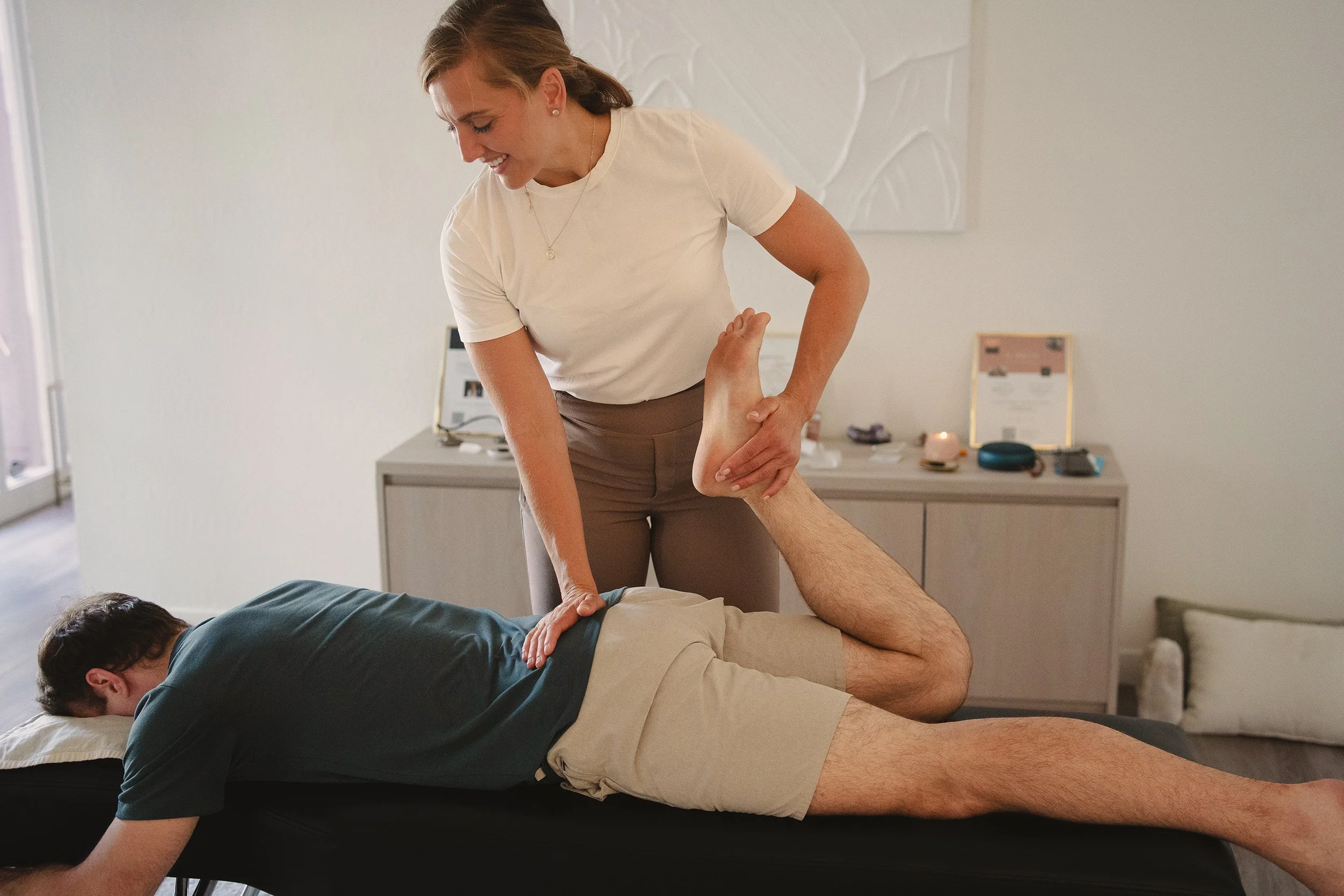
My work is informed by Bio-Geometric Integration (BGI), which views the body as an interconnected system. When someone comes in with hip tightness, I'm interested in more than the hips. How is the pelvis moving? How is the breath moving? What's happening through the lumbar spine and rib cage? Where is the body compensating?
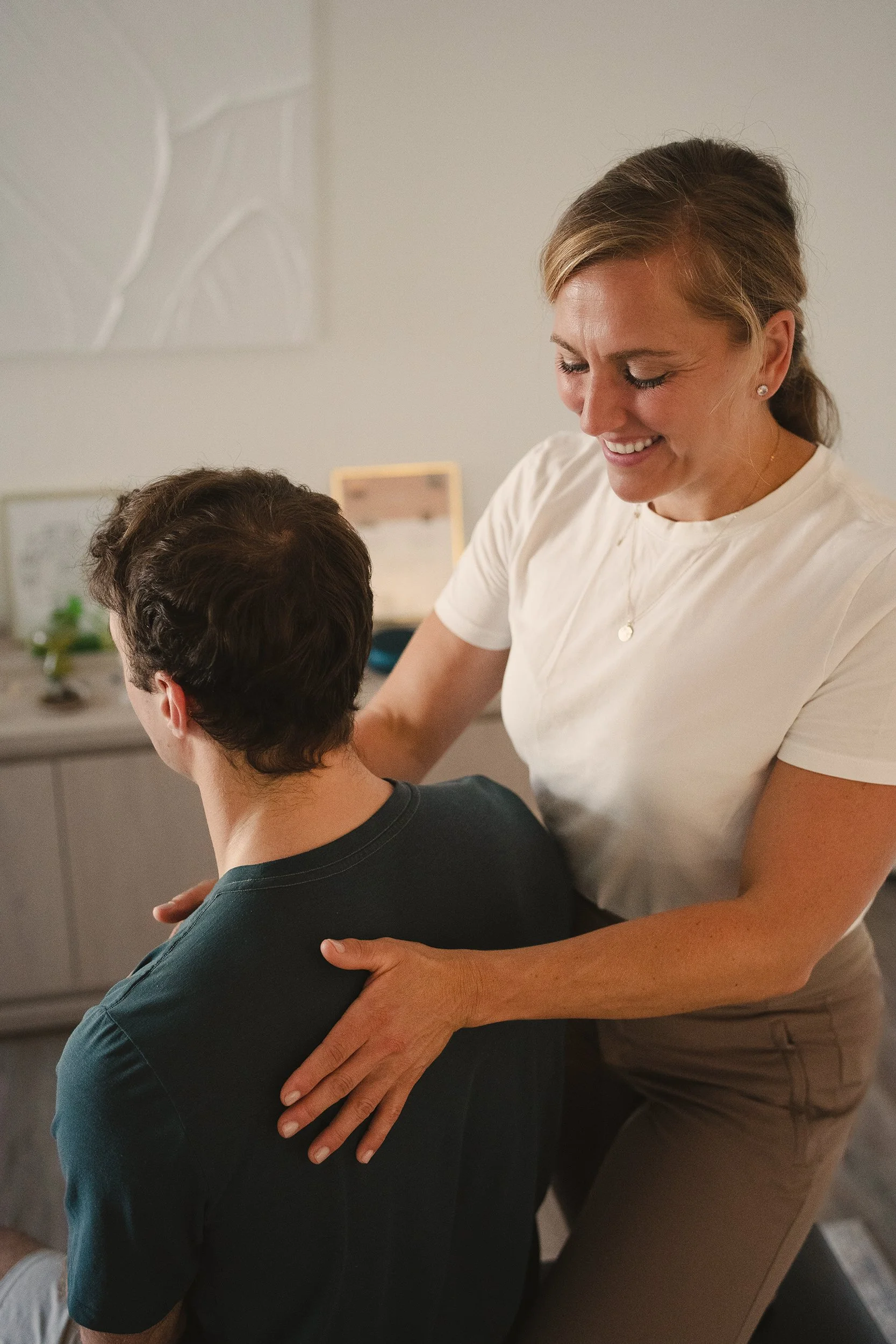
Sessions are gentle and performed fully clothed, using a combination of Bio-Geometric Integration, craniosacral therapy, soft tissue work, gentle chiropractic care, and Reiki. Often the work begins somewhere other than the hips. A breathing pattern may be influencing pelvic tension. A restriction through the diaphragm may be affecting the psoas. A compensatory pattern through the spine may be altering how the pelvis organizes itself.
As the larger system unwinds, many people notice the hips no longer need to work so hard. Walking becomes easier. The pelvis feels lighter. The spine feels less compressed. The goal isn't simply creating flexibility. It's helping the body rediscover options it forgot were available.
Practices That Can Help Between Sessions
If hip tightness has become a regular part of your life, several simple practices can support change. Frequent movement throughout the day is one of the most effective; the hips benefit from regular changes in position far more than from staying static. Standing up every thirty to sixty minutes for a brief walk is often more valuable than a single stretching session at the end of the day. Walking is particularly helpful because it encourages natural movement through the pelvis and hips.
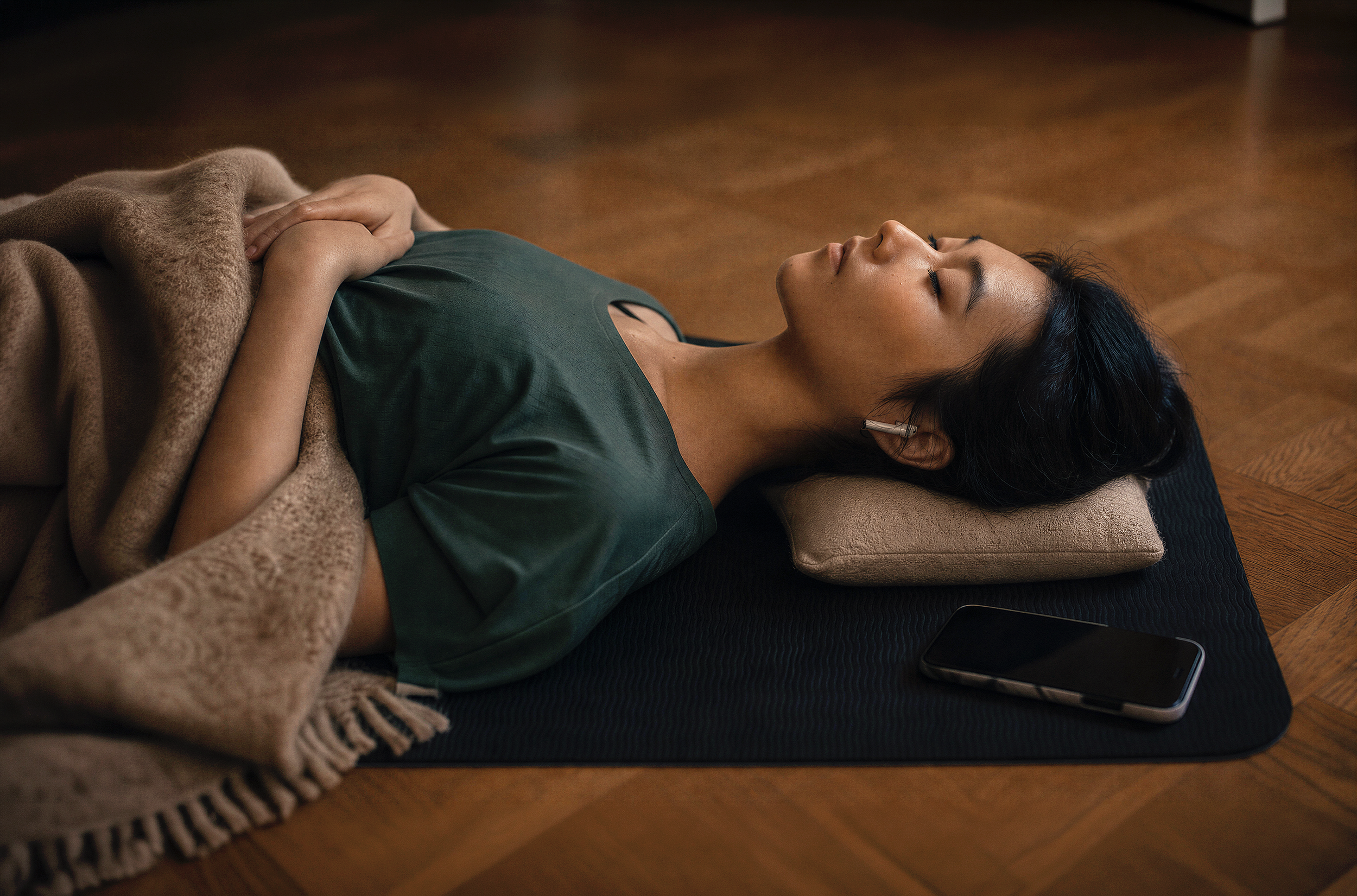
Constructive rest can also be valuable: lying on your back with your knees bent and feet on the floor gives the psoas and surrounding tissues an opportunity to soften. If you'd like a guided way into that kind of deep rest, Yoga Nidra at Home is built for exactly this. Finally, breathing into the lower rib cage and abdomen helps restore movement through the diaphragm, pelvis, and trunk while reducing the tendency to stay chronically braced.
Most importantly, lasting change often comes from helping the body feel safe enough to let go of a pattern, not simply forcing the pattern to release.
A Closing Invitation
If your hips feel tight no matter how much stretching you do, there's a good chance the story is bigger than flexibility alone. The tension may reflect years of sitting, compensation patterns, altered breathing mechanics, accumulated stress, and nervous system adaptation.
The good news is that these patterns can change. The body is constantly learning from its environment, and with the right support, it can learn something different.
If you're in Pleasant Hill, Walnut Creek, or elsewhere in the East Bay or San Francisco and you're looking for a different approach to chronic hip tightness, you're welcome to schedule a session.
If you're outside the area, or you'd like a guided rest practice that helps the psoas and pelvis soften, Yoga Nidra at Home offers a 27-minute practice you can return to anytime.
Frequently Asked Questions
Why do my hips feel tight even though I stretch regularly?
Hip tightness isn't always caused by a lack of flexibility. In many cases, the nervous system continues maintaining tension patterns despite regular stretching.
Can sitting all day make my hips tight?
Yes. Prolonged sitting keeps the hips in a relatively fixed position for long periods, encouraging the body to adapt through increased stiffness and reduced mobility.
What is the psoas muscle?
The psoas is a deep muscle connecting the lumbar spine to the thigh. It plays an important role in posture, movement, stability, and hip function.
Can stress contribute to tight hips?
Yes. Increased nervous system activation can raise muscle tone throughout the body, including the hips and pelvis.
Can chiropractic help tight hips?
A whole-body approach can help address the compensation patterns, movement restrictions, and nervous system factors contributing to chronic hip tension.
About Dr. Alandi Stec
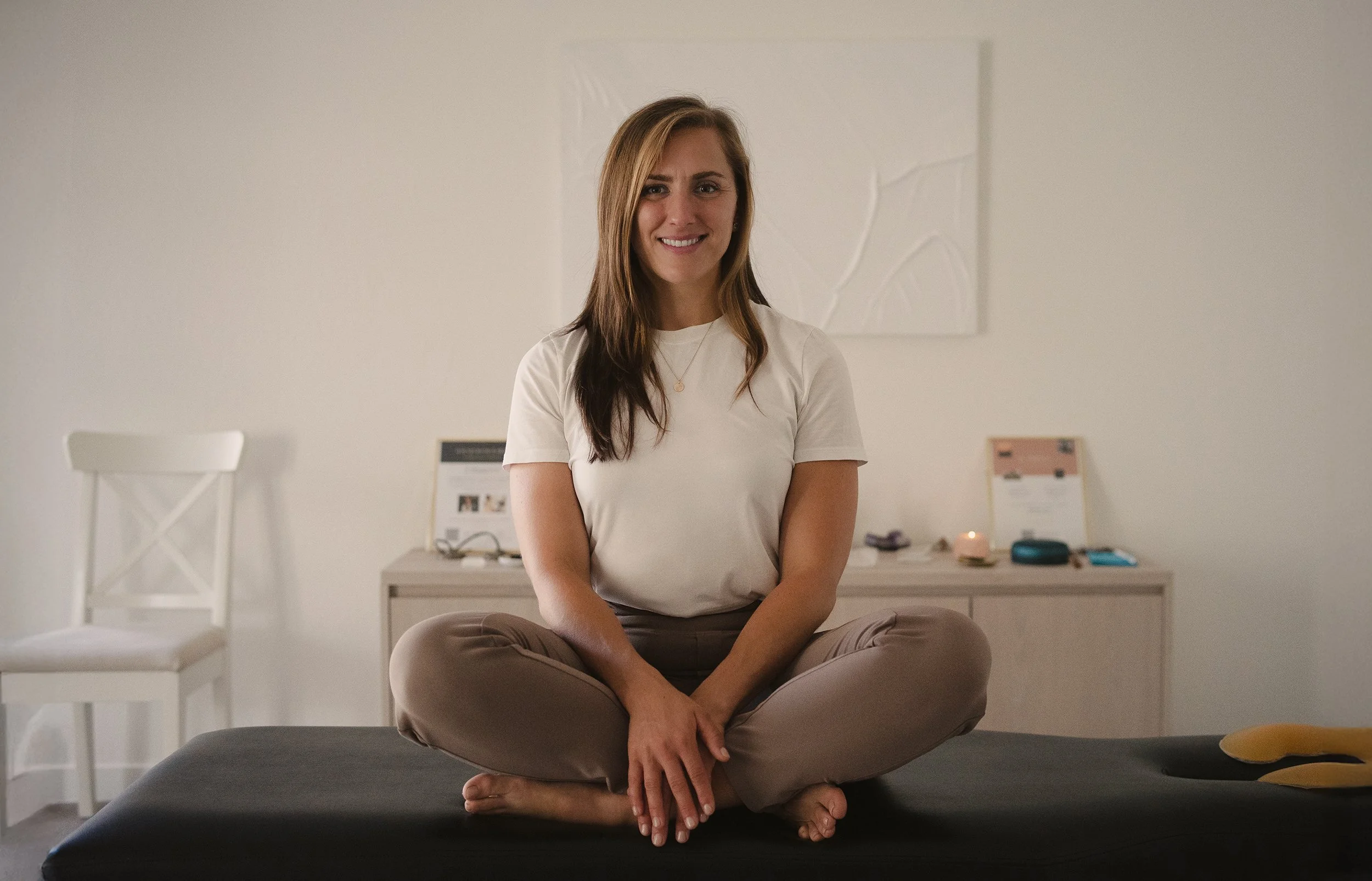
Dr. Alandi Stec is a Doctor of Chiropractic and Reiki Master specializing in nervous system-centered healing approaches. She serves the Pleasant Hill and Bay Area athletic community through Life Force Chiropractic, combining Bio-Geometric Integration with craniosacral work and somatic practices to support athletes in discovering their body's innate capacity for optimal performance and resilience.
A FREE PRACTICE TO TAKE WITH YOU
Find Your Way Back to Center
A free guided meditation for settling the body and quieting the mind.
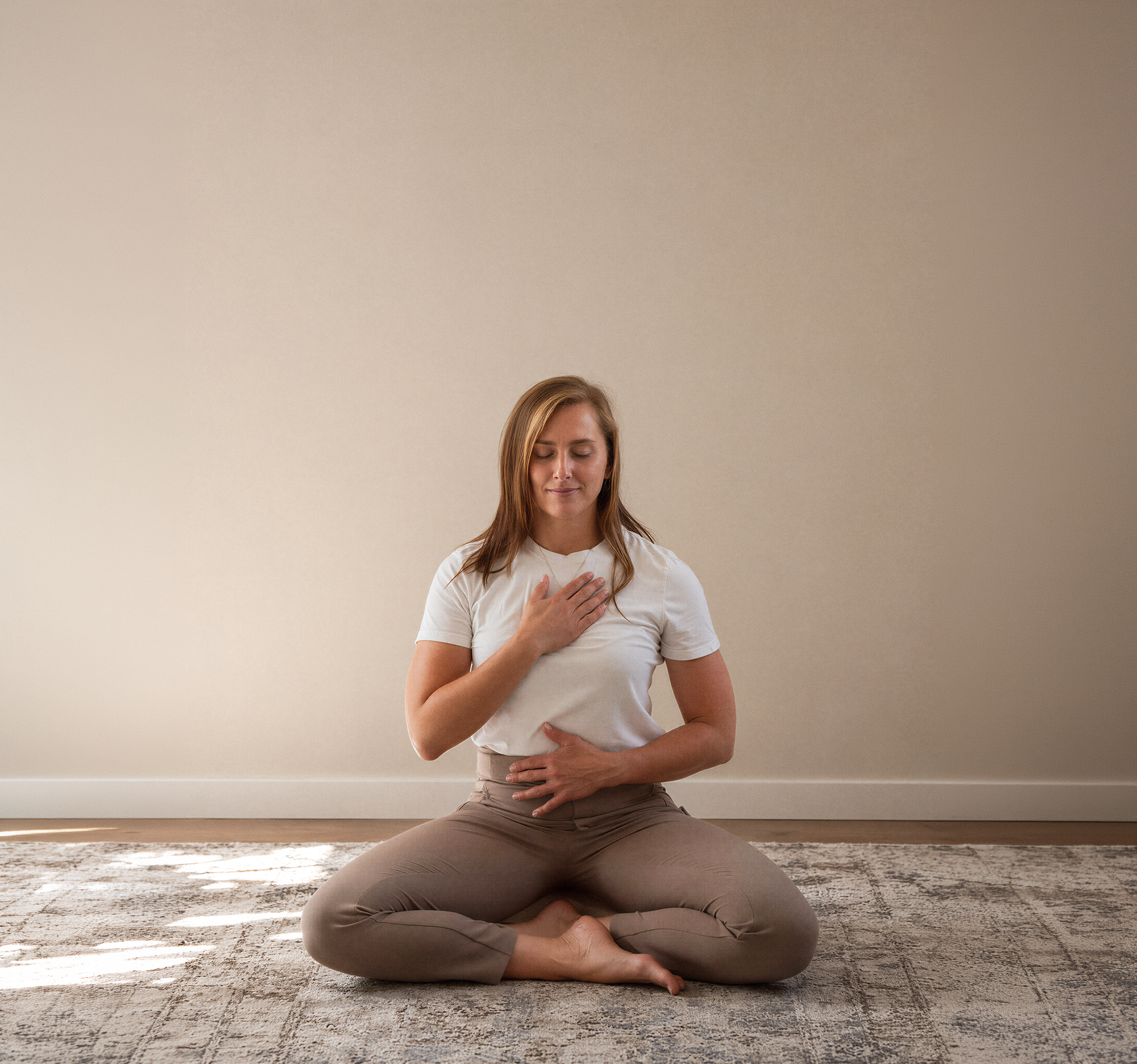
This 20-minute guided meditation offers a simple space to slow down, soften your attention, and reconnect with yourself. Return to it whenever life feels full, your mind feels busy, or you simply need a moment to pause.
Recorded by Dr. Alandi Stec and delivered to your inbox when you join the newsletter.