
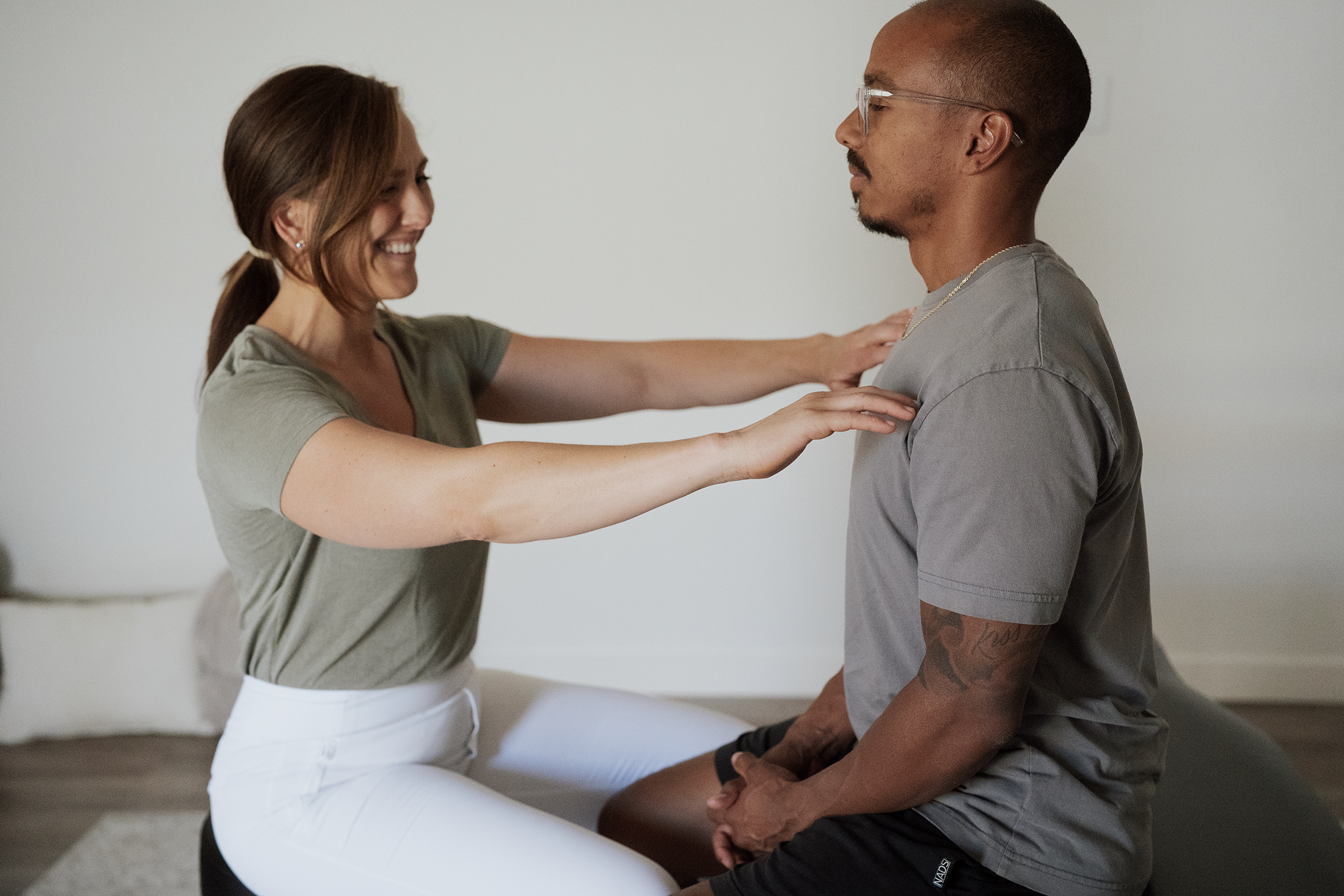
Have you ever wondered why one side of your neck always feels tighter than the other? Why one hip seems to sit higher, one shoulder feels more restricted, or a particular place in your back seems to hold tension no matter how much you stretch?
Perhaps you notice that turning your head in one direction feels effortless, while turning in the other feels limited. Or that one side of your body feels open and spacious, while the other feels compressed, stiff, or somehow less available.
If you've ever asked why one side of your body is tighter than the other, you're not alone. We often look for a single explanation. Something we lifted incorrectly. An awkward night of sleep. A workout that pushed us a little too far.
But what if the answer isn't found in one particular event?
What if the way your body feels today is, in part, the expression of thousands of small movements you've been making over time?
The way you sit. The way you stand. The leg you cross. The arm you reach with. The hip you shift your weight into while waiting in line.
These seemingly insignificant movements are part of the ongoing conversation between your body, your nervous system, and the physical world you move through.
And over time, they can shape the way your body organizes itself.
Your Body Is Always Adapting
Imagine yourself standing in your kitchen in the morning.
You reach into the cupboard for your favorite mug. Without thinking, you extend your right arm, rotate slightly through your upper back, shift your weight into your left hip, and stabilize through your legs.
It's a simple movement. One you've probably made hundreds of times.
Now imagine that every morning you reach with the same arm, rotate in the same direction, and shift your weight into the same hip.
Later, while working at your desk, you cross your right leg over your left. When you sit on the couch, you lean toward the same armrest. When you carry your groceries, you favor the same hand.
When you pour laundry detergent, you reach with your dominant arm while your opposite leg provides stability. When you brush your teeth, you settle your weight into one hip. When you stand at the kitchen counter, one knee locks while the other remains slightly bent.
None of these movements is inherently wrong.
In fact, your body is beautifully designed to accommodate them.
But when we repeatedly move through the same patterns, while rarely exploring their opposites, we may begin to develop differences in mobility, muscular activity, coordination, and the distribution of physical load.
Your body becomes practiced at the movements you ask it to perform most often.
And sometimes, those familiar patterns begin to influence how you feel even when you're no longer performing them.
Why Is One Side of My Body Tighter Than the Other?
The body doesn't move as a collection of isolated parts.
When you reach for something overhead, the movement involves far more than your shoulder.
Your shoulder blade glides along your rib cage. Your upper back participates in rotation and extension. Your abdominal muscles help organize your trunk. Your pelvis and legs provide a foundation from which the movement can occur.
It's an interconnected experience.
Now consider what happens when certain areas are less available to participate.
Perhaps your upper back doesn't rotate as easily in one direction. Your shoulder may compensate by moving differently. Your rib cage may shift. Your lower back may contribute more motion than it otherwise would.
You still reach the mug.
Your body accomplishes the task.
But the movement may require a different distribution of effort.
Repeat this often enough, and that strategy can become familiar to your nervous system.
A similar experience can happen when you repeatedly sit with one leg crossed, stand with your weight shifted into one hip, or carry a bag over the same shoulder.
The effects are not necessarily dramatic. And asymmetry itself isn't a problem; human bodies are naturally asymmetrical.
But sometimes the combination of repetitive loading, limited movement variability, muscular guarding, and insufficient recovery contributes to areas that begin to feel persistently tight, fatigued, compressed, or restricted.
What feels like a problem in one location may be connected to the way several other areas are participating in movement.
Following the Pathway of Tension Through the Body
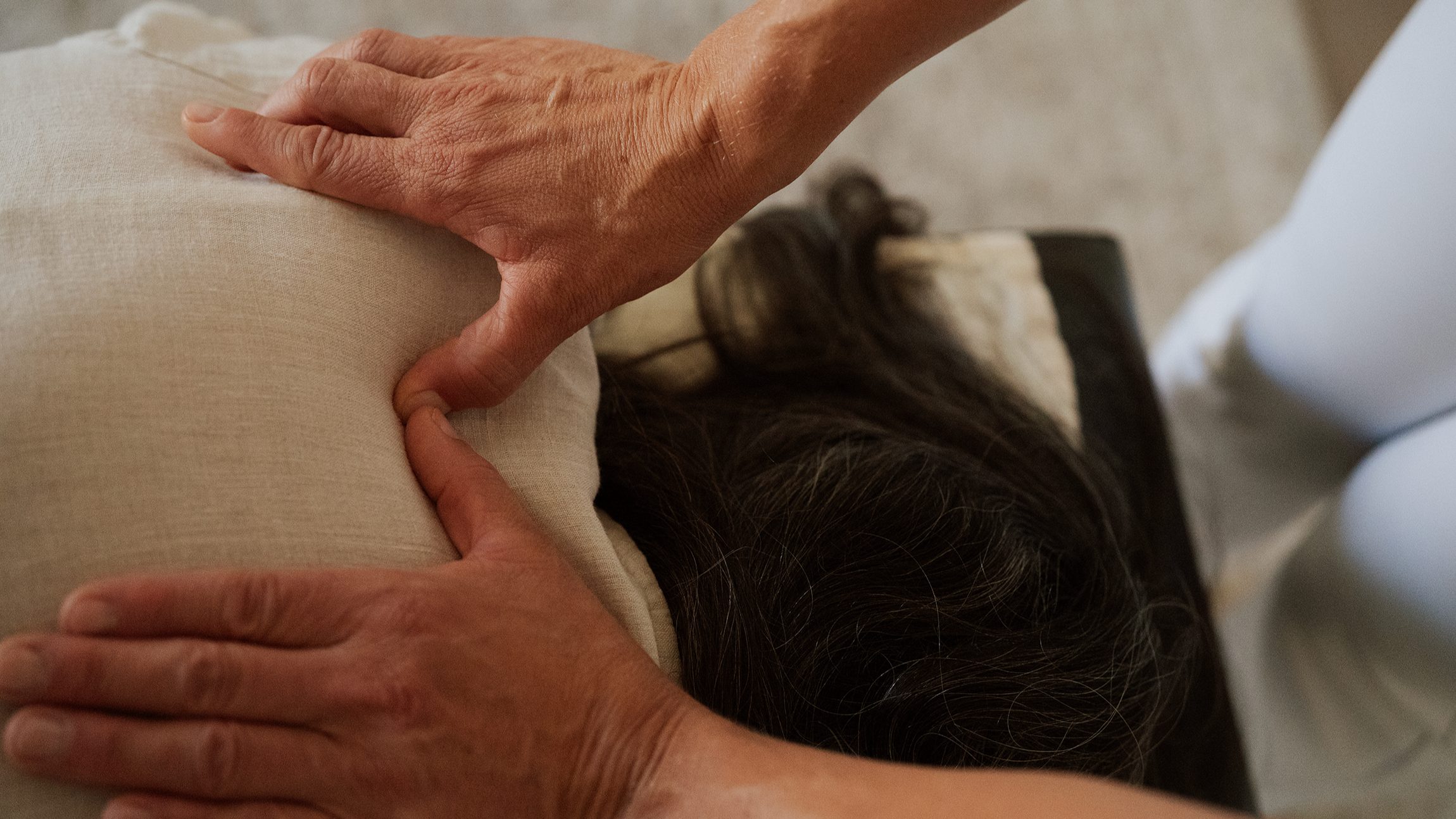
This interconnected nature of movement is central to how I understand the body through Bio-Geometric Integration (BGI), a chiropractic approach developed by Dr. Sue Brown.
BGI offers a way of considering how forces move through the body and how tension may be organized across interconnected structures.
Rather than viewing an area of discomfort as an isolated problem, we can become curious about the broader pattern.
Consider someone who habitually shifts their weight into the right hip.
As the pelvis changes position, the trunk may adjust to maintain balance. The rib cage may rotate or shift. The muscles surrounding the spine may engage differently on either side. The shoulders and neck may make additional adjustments to keep the head oriented comfortably.
From the outside, the person may simply appear to be standing.
But within the body, a complex arrangement of muscular activity and mechanical forces is helping maintain that position.
Over time, the person might notice a familiar pulling sensation through the hip, tension along one side of the back, or stiffness at the base of the neck. If that sounds familiar, Why Am I Always So Tight? looks at these common patterns of tension.
This doesn't mean that a particular hip position inevitably creates neck pain. The body is far more complex than a single cause-and-effect relationship.
It does invite us to consider something important:
The place where you experience tension isn't always the only place worth paying attention to.
Through the BGI lens, we explore the relationships between these areas, the direction of tension, and the ways the body may be organizing itself around accumulated physical demands.
Why Does My Body Feel Tight, Stiff, or Out of Alignment?
When someone comes into my chiropractic practice describing tightness or stiffness, I'm interested in more than the location of their discomfort.
I'm curious about how their body moves.
Does one shoulder rotate more freely than the other? Does the pelvis move comfortably in both directions? Is the rib cage able to expand and rotate? Are certain muscles working especially hard to provide stability?
And what does daily life look like for this person?
Perhaps they spend hours at a computer with their head turned toward a second monitor.
Perhaps they hold a young child on the same hip throughout the day.
Perhaps they drive long distances with one arm extended toward the steering wheel.
Or perhaps they participate in demanding physical training but spend most of the rest of the day sitting.
All of these experiences influence the movement demands placed on the body.
Muscles and connective tissues respond to repeated loading. The nervous system learns familiar strategies for accomplishing movement. Joints and surrounding structures experience varying degrees of motion and mechanical stress.
A sensation of tightness doesn't always mean a muscle is physically shortened. Sometimes it reflects fatigue, protective muscle activity, sensitivity, or a movement strategy that has become particularly familiar.
And a sensation of compression or restriction doesn't necessarily mean that something is structurally out of place.
These sensations are meaningful information, but they are not diagnoses on their own.
By looking beyond the symptom and exploring the larger movement picture, we can begin to understand why certain areas may be working harder than others.
What About Bigger Physical Impacts?
Of course, not all patterns of tension develop through everyday repetition.
Sometimes the body experiences a more significant physical demand.
A fall down the stairs. A skiing accident. An ankle sprain. An unexpected collision during a basketball game. A sudden movement that strains the muscles of the back.
These experiences may involve tissue injury, pain, inflammation, or protective changes in movement.
Even after an injury heals, a person may sometimes continue using movement strategies developed during recovery.
For example, someone who has experienced an ankle sprain might temporarily shift more weight onto the opposite leg. That change can influence how they walk, how their pelvis moves, and how the rest of the body coordinates movement.
The body adapts to protect and support itself.
And sometimes, as healing progresses, it benefits from opportunities to rediscover movement options that were temporarily unavailable.
These more significant physical experiences deserve appropriate evaluation and care. They also remind us of something that applies to everyday movement:
Our bodies are continuously responding to the forces and experiences of life.
The Emotional and Energetic Dimensions of Tension
Physical movement is only one part of the picture.
Think about what happens when you're startled.
Your shoulders may rise. Your breath may become shallow. Your abdominal muscles may tighten. Your body prepares to respond before you've consciously decided what to do.
Or consider the physical difference between moving through a day feeling rushed and overwhelmed versus moving through a day feeling supported, spacious, and at ease.
Your emotional experience and nervous system state can influence breathing, muscle activity, pain sensitivity, and the way you move.
Stress can contribute to increased muscular guarding and changes in how the body responds to physical demands.
Within BGI, there is also an energetic and experiential dimension to understanding the body: an appreciation that our physical organization cannot always be separated from the broader experience of being human.
While energetic interpretations belong to the philosophy of this approach rather than established physiological measurement, the relationship between emotional stress, nervous system regulation, and physical experience is an important area of scientific study.
We are living, sensing, responding organisms.
And our bodies are continuously adapting to both our internal and external environments.
Alignment Is Not About Holding a Perfect Posture
When we talk about bringing the body back into alignment, it's easy to imagine a perfectly straight spine, level shoulders, and a pelvis positioned in one ideal arrangement.
But healthy movement is not about holding ourselves in a rigid, symmetrical position.
The body is designed to move.
To bend, rotate, extend, contract, stabilize, and release.
There is no single posture that every body should maintain throughout the day.
What matters is having access to a variety of movement possibilities, along with the strength, coordination, and capacity to respond to changing demands.
Alignment, in this sense, means developing the freedom to move and adapt.
A body that can comfortably shift its weight in either direction, rotate through the spine, reach overhead, and respond to unexpected demands has more movement options available to it.
And movement options matter.
They allow us to distribute physical demands across different tissues and movement strategies rather than continually relying on the same ones.


Supporting Alignment Through Chiropractic, Yoga, and Functional Fitness
If everyday life shapes our movement patterns, then our intentional practices offer opportunities to explore and expand them.
This is where chiropractic care, alignment-based yoga, and functional fitness can become complementary approaches to supporting the body.
Chiropractic Care:
Exploring the Body's Patterns of Tension
In my work at Life Force Chiropractic, I approach the body with curiosity about its interconnected patterns.
Through observation, palpation, movement assessment, and chiropractic care informed by Bio-Geometric Integration, I consider how different areas of the body may be participating in a larger pattern of tension.
A chiropractic adjustment is a specific physical input intended to influence joint movement and neuromusculoskeletal function.
My intention is to support greater ease and movement where restriction or discomfort may be present, without forcing the body into a predetermined ideal shape.
For me, chiropractic is also an invitation to become more aware of how we inhabit our bodies.
Iyengar Yoga: Developing Awareness of Alignment
Iyengar yoga places particular emphasis on alignment, precision, and thoughtful organization of the body within each posture.
Through intentional positioning and sustained attention, practitioners can begin to recognize differences between sides of the body.
Perhaps one hip rotates more freely. One hamstring feels less available. One shoulder requires a different arrangement to move comfortably overhead.
Rather than automatically moving through familiar patterns, the practice creates opportunities to notice, explore, and develop greater awareness.
Props and modifications can make positions more accessible, allowing the practitioner to explore movement with support.
Functional Fitness and CrossFit:
Building Strength Across Movement Patterns
Functional fitness offers another opportunity to develop physical capacity.
Movements such as squatting, hinging, pressing, pulling, carrying, and rotating challenge the body to coordinate multiple joints and muscle groups.
CrossFit, when appropriately coached and programmed, can provide opportunities to build strength, mobility, coordination, and resilience through varied movement demands. I explore this more in Movement & Bodywork for Athletes.
Unilateral exercises, such as single-leg squats, lunges, single-arm presses, and carries, can be particularly useful for exploring differences between sides.
The goal is the strength, control, and confidence to move through a broad range of activities, with or without perfect symmetry.
These practices approach the body from different directions, but they share an important possibility: helping us develop a more capable and adaptable relationship with movement.
What Neuroscience Teaches Us About Adaptation
One of the most remarkable qualities of the human nervous system is its capacity to change through experience.
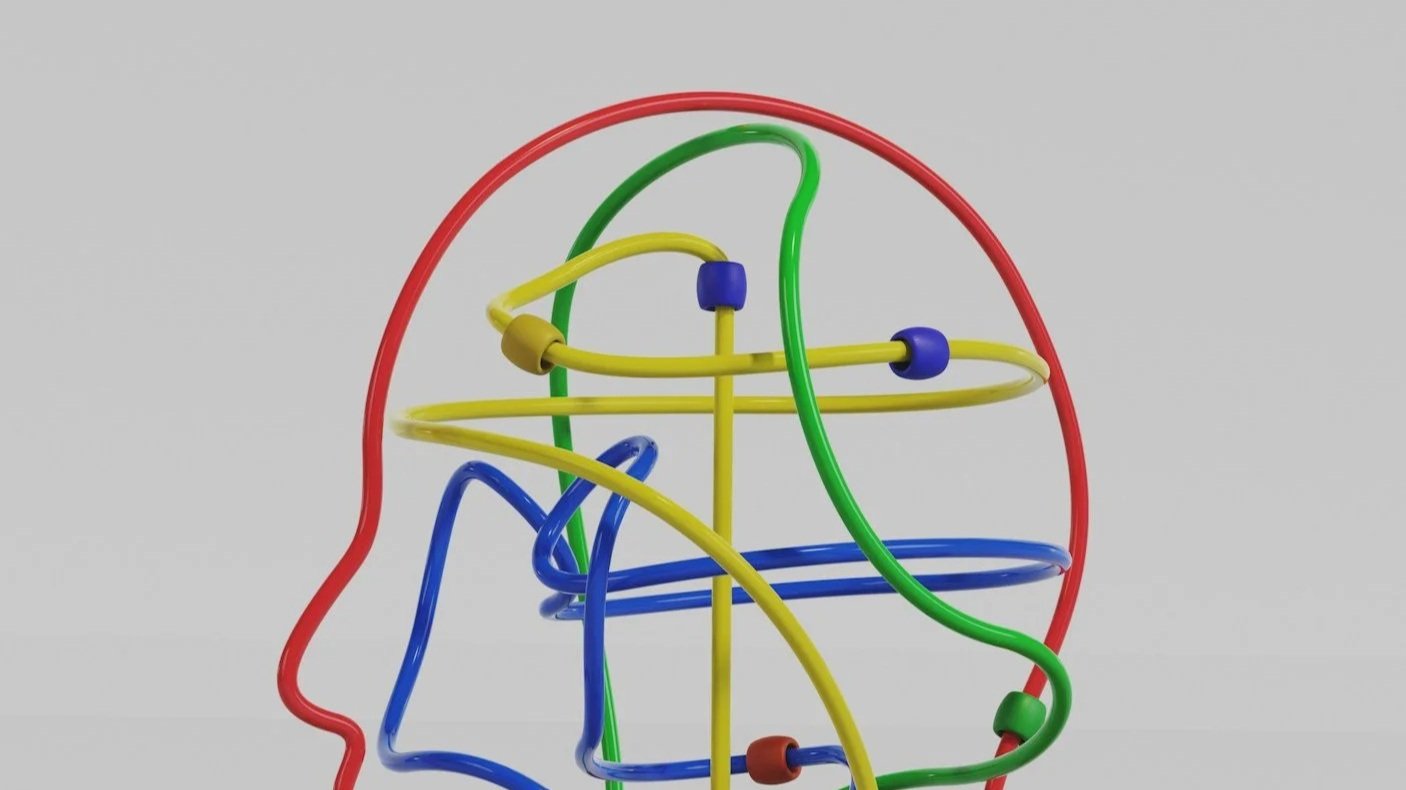
This capacity, known as neuroplasticity, allows the nervous system to modify its organization and function in response to learning, practice, and changing demands.
The movements we repeat become familiar. The movements we explore and practice can become more coordinated and accessible.
Neuroscience educator and body practitioner Dr. Monique Andrews, also known as Dr. Mo, brings attention to the relationship between the nervous system, sensory experience, and the body's capacity to adapt.
Her work offers a valuable bridge between the science of nervous system function and the lived experience of being in a body.
Our nervous systems are constantly receiving sensory information about position, movement, pressure, and the environment around us.
This information helps the brain and spinal cord coordinate movement and respond to changing conditions.
When we explore unfamiliar movements, develop strength, practice balance, or bring greater attention to how we move, we offer the nervous system opportunities for learning.
Not every movement imbalance is a neurological problem, and changing a movement pattern won't necessarily resolve pain.
What neuroplasticity does tell us is that adaptability is something we can continue to cultivate.
And that is an extraordinary possibility.
Small Ways to Bring More Movement Variety Into Your Day
You don't need to overhaul your entire life to begin exploring how you move.
Start by noticing.
The next time you reach into the cupboard, which arm do you use?
When you cross your legs, is it always the same leg on top?
When you stand at the kitchen counter, which hip receives most of your weight?
When you carry your bag, does it always rest on the same shoulder?
When you rise from a chair, do you shift toward one side before standing?
Try exploring the opposite movement, gently and without forcing anything.
Reach with your other arm. Shift your weight into the other leg. Carry your bag on the opposite side for a little while. Notice how it feels to rotate in a direction you don't usually explore.
You may discover that one side feels unfamiliar.
You may notice that certain movements require more attention or coordination.
Or you may simply become aware of habits you had never considered before.
None of this needs to become another task to perfect.
The invitation is simply to become curious.
What movements does your body know well? And what movements might it benefit from exploring more often?
Frequently Asked Questions
Why is one side of my body tighter than the other?
Most bodies are naturally a little asymmetrical, and daily habits add to it: reaching with the same arm, crossing the same leg, standing with your weight in one hip. Over time, the body becomes practiced at those patterns, and one side can begin to feel tighter, stiffer, or less available.
Is it normal for one side of the body to be tighter?
Some difference between the two sides is very common. It's worth having it assessed if the tightness is increasing, painful, follows an injury, or comes with numbness, tingling, or weakness.
Can posture cause one side of my body to be tight?
Holding the same positions for long periods, without much variation, can contribute. Movement variety tends to matter more than finding one perfect posture, because it lets the body share physical demands across different tissues and movement strategies.
How can I even out tightness between the two sides of my body?
Start by noticing your habits, then gently explore the opposite movements: reach with the other arm, shift into the other hip, carry your bag on the other shoulder. Single-side strength work, alignment-focused yoga, and gentle chiropractic care can all help the body develop more options.
Can a chiropractor help when one side of my body feels tighter?
A chiropractor who looks at the whole body can help you understand how different areas are participating in the pattern, beyond the spot where you feel it. In my Pleasant Hill practice, I use Bio-Geometric Integration to explore how tension is distributed and where gentle input may support greater ease.
Your Body Is an Ongoing Expression of Your Life
Your body is not a fixed structure.
It is continuously responding to the life you live.
Every reach, step, breath, workout, resting position, and physical experience contributes to the demands your body encounters.
Some of those experiences strengthen and expand your capacity. Others may lead you to rely on familiar patterns that, over time, feel less comfortable or less adaptable.
But the remarkable thing is that your body is not simply a record of what has happened.
It is also capable of learning, changing, and discovering new possibilities.
Through greater awareness, intentional movement, appropriate physical care, and opportunities for recovery, we can support that ongoing process.
Perhaps the next time you notice a familiar tightness in your shoulder, stiffness in your hip, or restriction through your spine, you'll become curious about more than the location of the sensation.
Perhaps you'll begin to wonder about the many ways your body has been moving, adapting, and supporting you throughout your life.
And perhaps that curiosity will open the door to a different relationship with your body.
One rooted in supporting the extraordinary capacity you already possess to move, learn, and adapt.
Explore Chiropractic Care at Life Force Chiropractic
At Life Force Chiropractic in Pleasant Hill, California, I offer individualized chiropractic care informed by Bio-Geometric Integration and an appreciation for the interconnected nature of the body.
My work invites us to look beyond isolated areas of discomfort and explore how the body organizes movement, tension, and adaptation as a whole.
Whether you're experiencing recurring stiffness, muscular tension, movement restrictions, or simply want to develop a deeper understanding of your body, chiropractic care may be one part of your approach to physical well-being. I welcome clients from Pleasant Hill, Walnut Creek, Concord, Martinez, and the surrounding East Bay.
About Dr. Alandi Stec
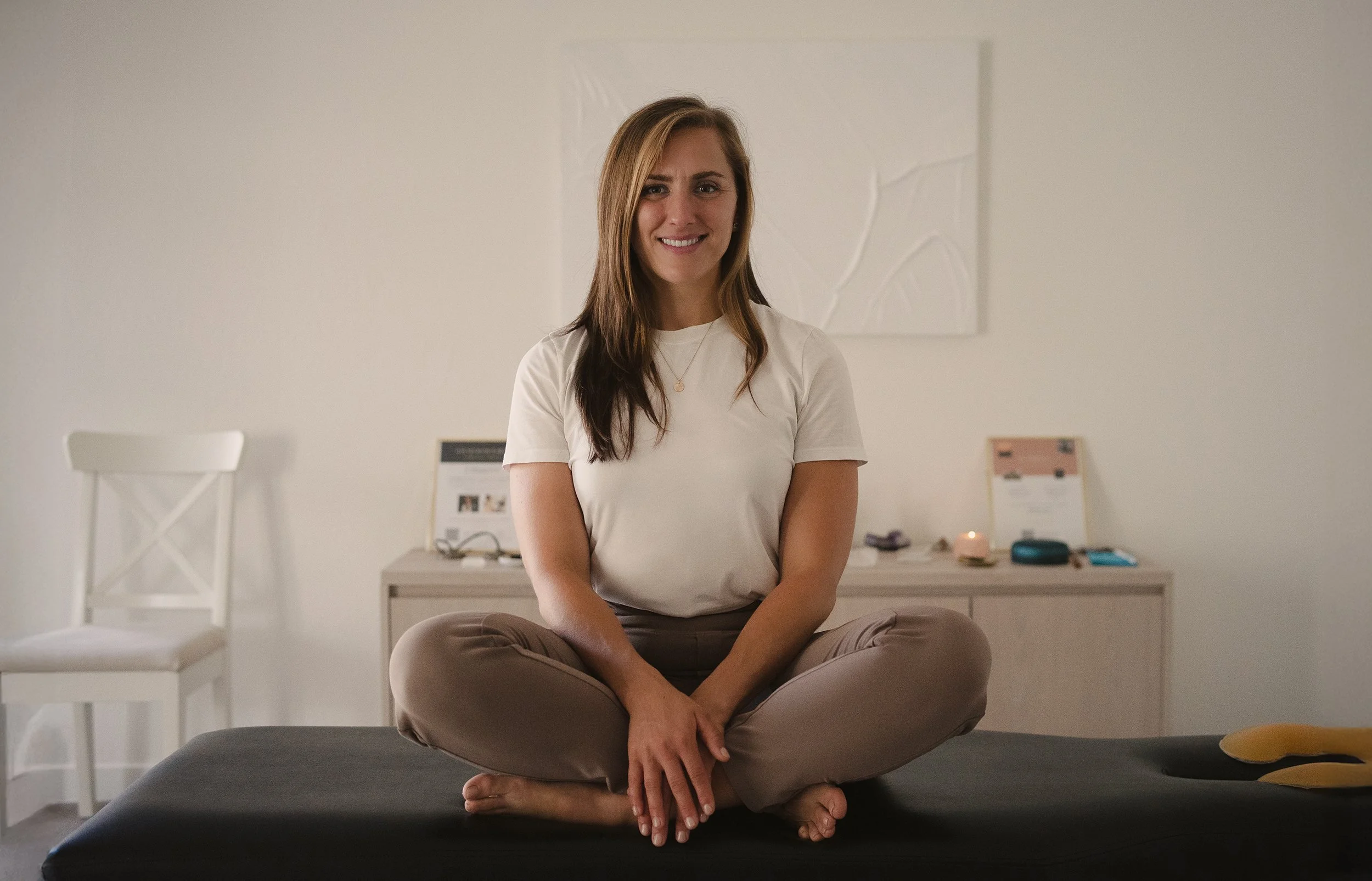
Dr. Alandi Stec is a Doctor of Chiropractic and Reiki Master specializing in nervous system-centered healing approaches. She serves the Pleasant Hill and Bay Area athletic community through Life Force Chiropractic, combining Bio-Geometric Integration with craniosacral work and somatic practices to support athletes in discovering their body's innate capacity for optimal performance and resilience.
Keep the conversation going.
Each month, The Regulating Rhythm brings a free reflection to your inbox, and paid subscribers receive a new practice to help the nervous system settle.
Keep Exploring
Book a session: you're welcome to explore chiropractic care and schedule your visit.
Explore movement with me: my small-group Movement & Mobility Series is a slow, guided way to notice your patterns and discover the movements your body explores less often.
A new practice each month: The Regulating Rhythm is my monthly note to support your nervous system, on and beyond the table. Join on Substack and receive my 20-minute guided meditation, Find Your Way Back to Center, on me.
Read next: Why Am I Always So Tight? and What to Expect in Your First Session.