
What Happens in Your First Session at Life Force

If you've never experienced nervous-system-centered chiropractic, the most common question is simply: what actually happens?
It's a fair question, and an important one, because what happens here looks quite different from what many people picture when they hear the word "chiropractic." There's no sudden cracking. No forceful twisting. No lying on a table wondering what's about to be done to you. If your image of chiropractic involves bracing yourself for a big adjustment, it's worth knowing that this is a different kind of care entirely.
Here's what your first visit with Dr. Alandi Stec is actually like, from the moment you arrive to what you might notice afterward.
Before You Arrive
Care begins before you're on the table. When you book, you'll share a little about what's bringing you in, whether that's a specific complaint like neck pain, headaches, or a low back that won't settle, or a more general sense that your body is carrying more than it should.
There's nothing you need to prepare. You'll stay fully clothed for your session, so wear something comfortable you can relax in. Beyond that, the most useful thing you can bring is simply yourself, however you happen to be arriving that day.
The Conversation
Your first visit begins with a conversation, not a procedure. Dr. Alandi will want to understand not just where it hurts, but the fuller picture: how long it's been going on, what your days ask of your body, old injuries, patterns you've noticed, and what you're hoping for.
This matters because, in this approach, a symptom is rarely treated as an isolated problem. A tight neck is understood in the context of the whole body, how it moves, breathes, compensates, and holds. The conversation is where that context starts to take shape, and it's also where many people first feel the difference: the sense of being genuinely listened to, without being rushed.
On the Table
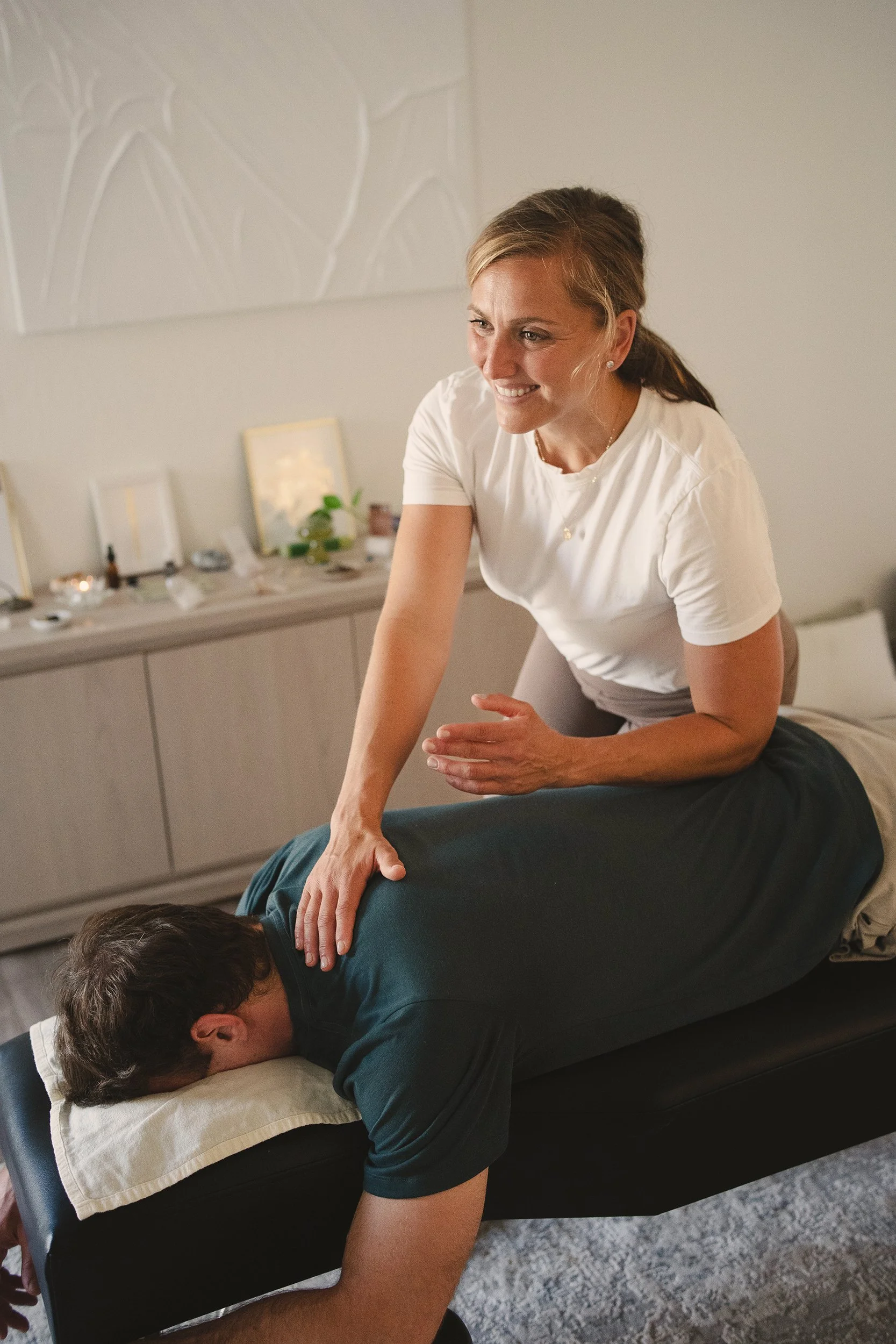
The hands-on work is gentle, and for many people it's unlike anything they've experienced.
You'll rest, fully clothed, on a comfortable table in a quiet, unhurried room. Rather than applying force, Dr. Alandi uses light, precise contact to listen to your body, following areas of tension, restriction, and compensation. Her approach draws on Bio-Geometric Integration (BGI), craniosacral therapy, soft tissue work, and Reiki, weaving them together according to what your body is asking for that day. You can read more about the approach on the specialization page.
What people notice in the moment varies. Some feel warmth or a gentle unwinding. Some feel their breath drop lower and slower without trying. Some feel a wave of tiredness as the nervous system finally downshifts. Some simply feel deeply relaxed, in the way you might after a long exhale you didn't know you were holding. There's nothing you need to do to make it work. The work happens as your body, given a safe and unhurried space, begins to reorganize on its own.
Why It's Gentle
People sometimes wonder whether something this gentle can really do much. It's a reasonable question, and the answer lies in how the approach understands the body.
Force can move a joint. It can't convince a nervous system to stop protecting an area it believes is vulnerable. This work is aimed at that deeper layer, the nervous system that decides how much tension the whole body holds. When the system is met gently and feels safe, it can let go of patterns it has been maintaining for years. Alignment, in this view, isn't something imposed from outside. It's what emerges when the body no longer needs to compensate. Gentleness isn't a limitation of the approach. It's the mechanism.
After Your Session
Because the work invites the nervous system to shift, people often feel noticeably different afterward, though not always in the ways they expect.
Many feel relaxed, lighter, or more spacious in their body. Some feel pleasantly tired, a sign the system has dropped into a recovery state, and rest well that night. Occasionally people notice their body continuing to unwind over the following day or two as it integrates the session. All of this is normal. The most helpful thing you can do afterward is give yourself a little room: drink water, move gently, and let your body settle rather than rushing straight back into demand.

Is This Right for You?
Nervous-system-centered care tends to resonate with people who've found that forceful approaches didn't hold, who prefer gentleness, or who sense their symptoms are connected to stress and how their body carries it. It's suitable across a wide range of ages and situations, from desk workers and athletes to expecting mothers and children.
If you're not sure whether it's the right fit, that's exactly what a first visit is for. The conversation at the start is as much about whether this approach suits you as it is about your body.
A Closing Invitation
A first session is simply a beginning, an unhurried hour where your body gets to be listened to, and where you get to feel what a different kind of care is like. There's nothing to brace for and nothing you need to get right.
If you're in Pleasant Hill, Walnut Creek, or elsewhere in the East Bay or San Francisco and you're curious what this might feel like in your own body, you're warmly welcome to book a first visit with Dr. Alandi.
Frequently Asked Questions
What happens at a first chiropractic visit at Life Force?
Your first visit begins with an unhurried conversation about what's bringing you in and how your body has been feeling, followed by gentle, fully-clothed hands-on work. Rather than forceful adjustments, Dr. Alandi uses light contact drawing on Bio-Geometric Integration, craniosacral therapy, soft tissue work, and Reiki.
Does gentle chiropractic involve cracking or forceful adjustments?
No. This approach uses light, precise contact rather than sudden cracking or forceful twisting. It works with the nervous system and the body's own capacity to reorganize, rather than imposing change through force.
What should I wear to my first session?
You stay fully clothed throughout the session, so wear something comfortable you can relax in.
How will I feel after a session?
Many people feel relaxed, lighter, or pleasantly tired as the nervous system settles into a recovery state. Some notice their body continuing to unwind over the following day or two. Giving yourself a little room to rest afterward is helpful.
Is gentle nervous-system-centered chiropractic right for me?
It often suits people who prefer a gentle approach, who found forceful methods didn't hold, or who sense their symptoms are connected to stress. It's suitable across a wide range of ages and situations. A first visit is a good way to find out whether it's the right fit for you.
About Dr. Alandi Stec
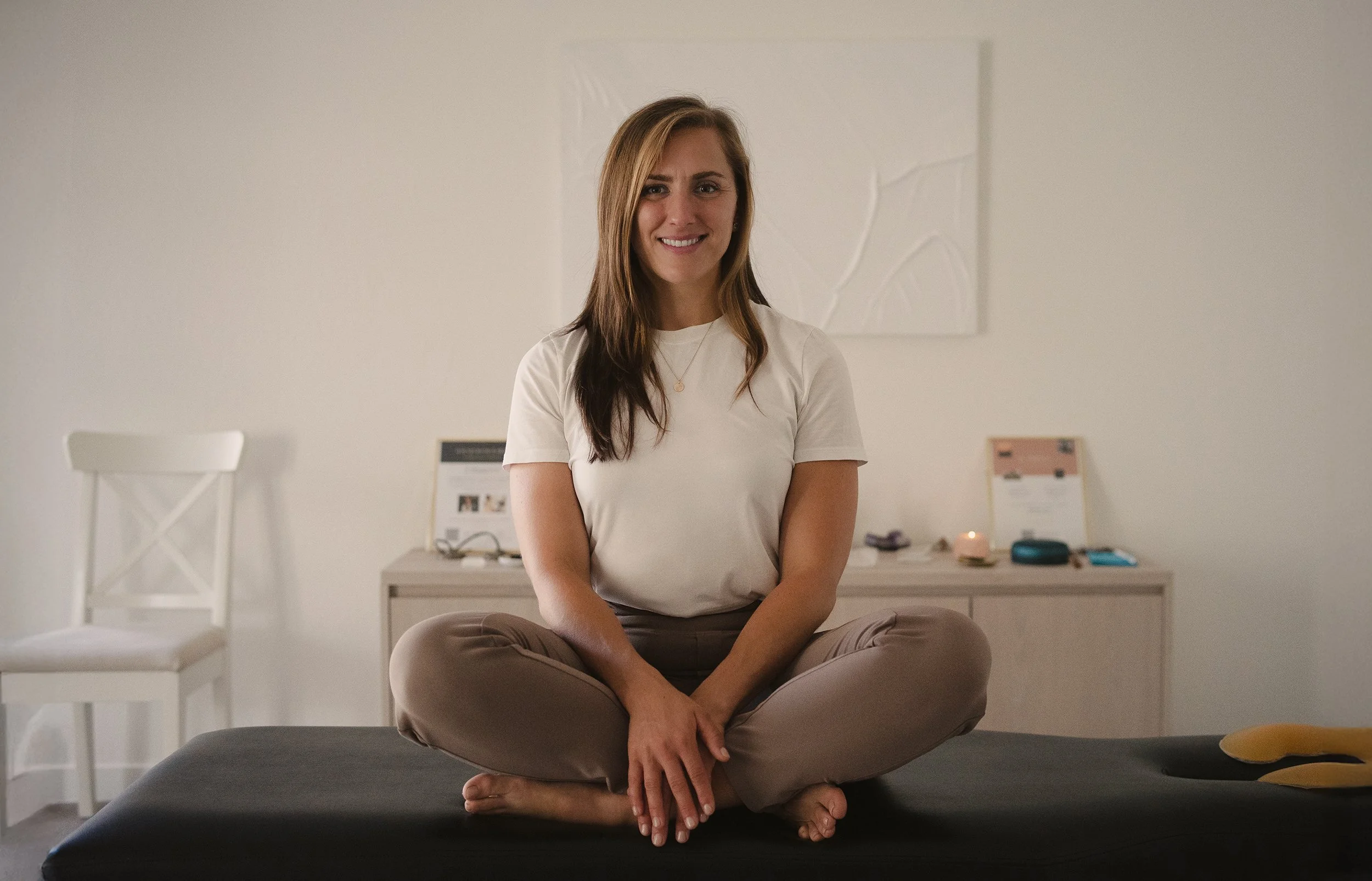
Dr. Alandi Stec is a Doctor of Chiropractic and Reiki Master specializing in nervous system-centered healing approaches. She serves the Pleasant Hill and Bay Area athletic community through Life Force Chiropractic, combining Bio-Geometric Integration with craniosacral work and somatic practices to support athletes in discovering their body's innate capacity for optimal performance and resilience.

A FREE PRACTICE TO TAKE WITH YOU
Find Your Way Back to Center
A free guided meditation for settling the body and quieting the mind.
This 20-minute guided meditation offers a simple space to slow down, soften your attention, and reconnect with yourself. Return to it whenever life feels full, your mind feels busy, or you simply need a moment to pause.
Recorded by Dr. Alandi Stec and delivered to your inbox when you join the newsletter.