
Strong but Stuck: Why Athletes Add Bodywork to Their Training

You're strong. You've put in the work. The numbers on the board have climbed, your form has sharpened, and you know how to push.
And yet something keeps catching.
The same hip that never quite opens, no matter how much you mobilize before a session. The shoulder that tweaks in the same spot every few months. The squat depth that won't budge. The old injury that healed but left a subtle hesitation the body still works around.
For a lot of athletes, the limiter isn't strength. It's tension.
When Strength Isn't the Thing Holding You Back
At Diablo CrossFit here in Pleasant Hill, I watch people challenge themselves every day through strength, mobility, coordination, balance, and skill. Through repetition and practice, the body learns new ways to move, stabilize, and generate power.
That kind of movement matters. It's how the body expands what it believes is possible.
But movement has a partner it can't fully replace.
Sometimes an athlete isn't limited by what they can't yet do. They're limited by what the body is still holding: old injuries, compensation patterns, and the way the system has gradually adapted to years of impact, training load, sitting, and stress. You can add mobility drills, foam rolling, and a longer warmup, and still find the same wall in the same place.
That's usually a sign the wall isn't a strength problem. It's a pattern problem.
Why the Pattern Keeps Winning
When the body experiences an injury, a repetitive load, or a period of high stress, it adapts. It braces, shifts, and reorganizes to protect itself and keep you moving. Those adaptations are intelligent. They're also sticky.
Long after the original reason has passed, the nervous system can keep holding the pattern. The hip stays guarded. The shoulder keeps recruiting the wrong muscles first. The breath stays a little high and a little tight under load.
Mobility work asks the tissue to lengthen. But if the nervous system is still holding the region in a protective pattern, the tissue returns to where it was. You gain range in the session and lose it by the next one. The pattern wins because nothing has changed the signal underneath it.
This is where bodywork comes in.

How I Work With Athletes
Many people hear "chiropractic" and think about cracking joints or forcing alignment.
While joints are part of the picture, that's not how I work.
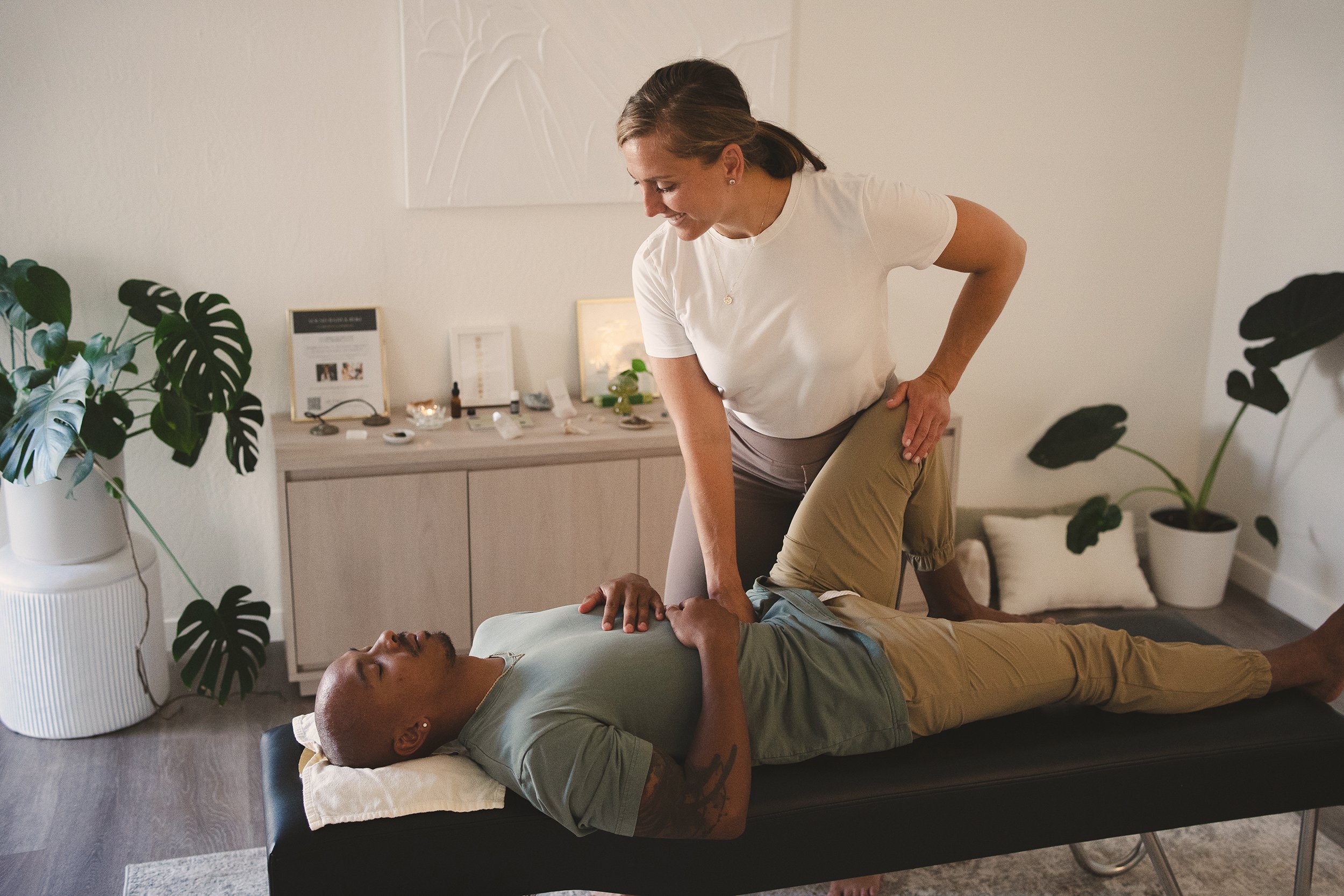
When I work with someone, I'm listening for where the body has lost ease. Where it has twisted, compensated, tightened, guarded, or adapted in ways that are no longer serving it. Sometimes that shows up in the muscles. Sometimes in connective tissue. Sometimes in posture, in breathing, or in the nervous system itself.
Using a blend of gentle chiropractic, soft tissue work, craniosacral techniques, and nervous system regulation, the goal isn't to force the body into alignment. The goal is to help the body let go of what's preventing alignment in the first place.
Sessions are gentle, unhurried, and performed fully clothed. Instead of asking only where it hurts, I follow how the whole system is organized: how the rib cage moves, where the breath stops, which regions are working overtime to cover for a region that stopped participating. Often the thing limiting a lift lives somewhere other than where you feel it.
What Athletes Tend to Notice
When a long-held pattern begins to release, athletes describe it less as "getting adjusted" and more as their body stopping a fight it had been quietly having with itself.
A hip that finally rotates evenly through a squat. A shoulder that stops flaring in the same spot. A breath that reaches lower under load. Positions that used to require force starting to feel available. Recovery between sessions that goes a little deeper, because the system isn't spending energy guarding all day.
Movement and bodywork are powerful partners. One teaches the body new possibilities. The other removes what's standing in the way. Together, they help you move through training, and through life, with more strength, awareness, resilience, and ease.
Frequently Asked Questions
Why isn't my mobility improving even though I stretch and mobilize?
Range you gain in a session often disappears by the next one when the nervous system is still holding a protective pattern in that region. Addressing the pattern, not just the tissue, is what tends to make new range stick.
Is this like a regular sports chiropractic adjustment?
The approach is gentle and nervous-system-centered rather than force-based. It integrates Bio-Geometric Integration, craniosacral therapy, soft tissue work, and Reiki to help the body reorganize rather than being pushed into position.
Can bodywork help an old injury that already healed?
Often, yes. Injuries can leave compensation patterns behind long after the tissue has healed. Working with those patterns can help restore movement and ease the guarding the body learned around the original injury.
Do I have to stop training to do this work?
No. Bodywork is designed to complement training, not replace it. Many athletes use it to support recovery and to move past plateaus while continuing to train.
About Dr. Alandi Stec
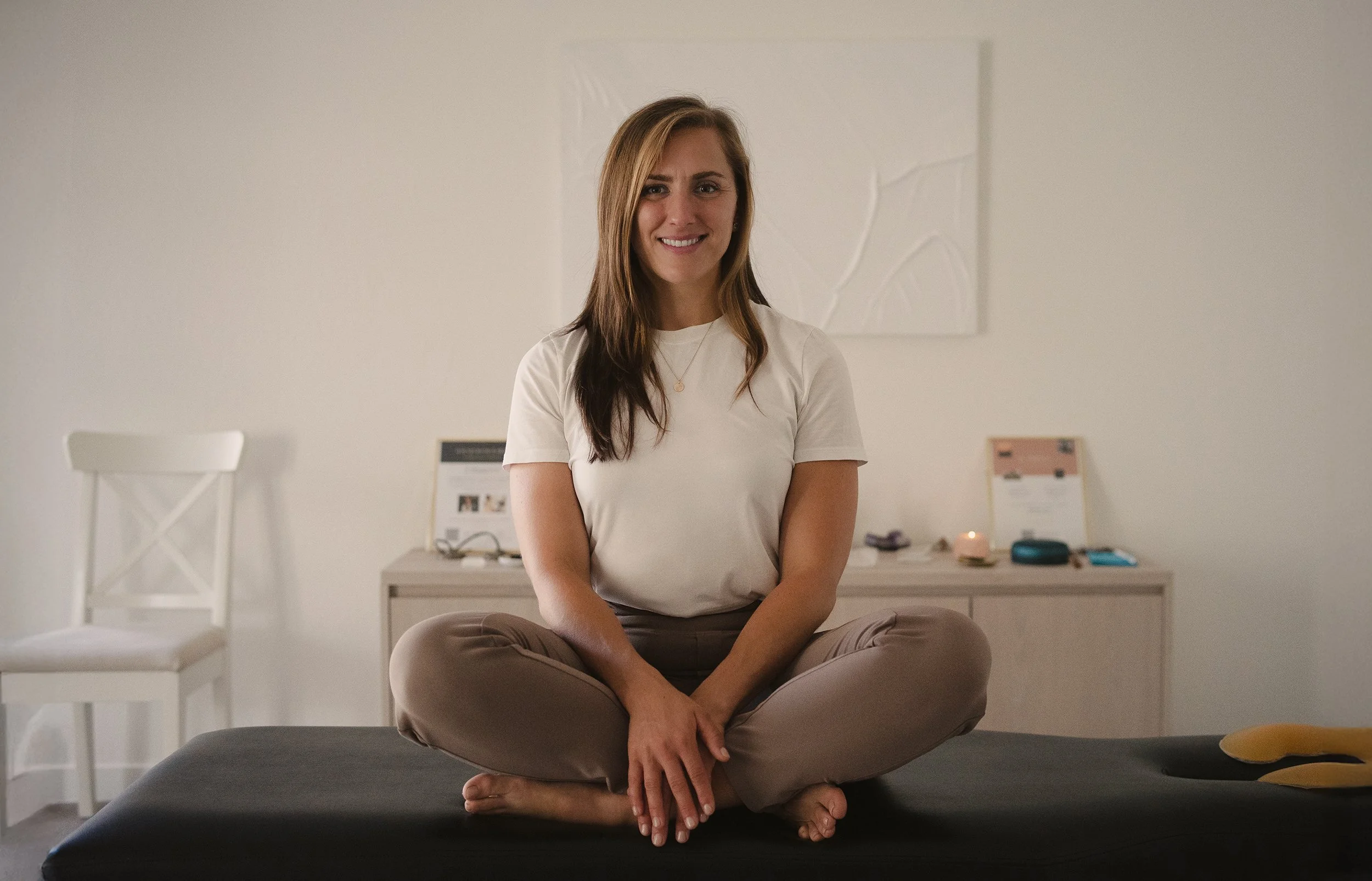
Dr. Alandi Stec is a Doctor of Chiropractic and Reiki Master specializing in nervous system-centered healing approaches. She serves the Pleasant Hill and Bay Area athletic community through Life Force Chiropractic, combining Bio-Geometric Integration with craniosacral work and somatic practices to support athletes in discovering their body's innate capacity for optimal performance and resilience.

A FREE PRACTICE TO TAKE WITH YOU
Find Your Way Back to Center
A free guided meditation for settling the body and quieting the mind.
This 20-minute guided meditation offers a simple space to slow down, soften your attention, and reconnect with yourself. Return to it whenever life feels full, your mind feels busy, or you simply need a moment to pause.
Recorded by Dr. Alandi Stec and delivered to your inbox when you join the newsletter.