
Gentle Care During Pregnancy and Postpartum: What Nervous System-Centered Chiropractic Looks Like

There's a particular moment that happens often in first prenatal sessions. The client gets settled on the table with bolsters and pillows arranged for comfort, the practitioner places a hand somewhere intentional, and within a minute or two the client lets out a long exhale. Sometimes a tear. And often the same sentence: "I haven't been still in months."
It comes up again in postpartum sessions, sometimes with more emotion. "This is the first time someone has touched me without needing something from me since the baby was born."
These small moments name something the bigger conversation around prenatal and postpartum chiropractic often misses. People who are pregnant or recently postpartum aren't just bodies with specific aches and pains to be fixed. They're nervous systems carrying an extraordinary load, in a season where the cultural script asks them to absorb whatever is required and keep moving.
Most chiropractic content for this audience focuses on adjustments and outcomes. This post is about something different: what it looks like when the work is gentle, listening-based, and oriented toward the nervous system rather than toward specific clinical claims.
What "Gentle and Nervous System-Centered" Actually Means
The phrase "gentle chiropractic" gets used widely, and it can mean different things depending on the practitioner. Here it means something specific.
No high-velocity adjusting.
No cracking. No popping. No quick thrusts on the spine or pelvis. The work doesn't include any of the techniques that pregnant and postpartum people most often have concerns about, even from practitioners who say they specialize in prenatal care.
Tissue-based, slow, listening work.
Through Bio-Geometric Integration, craniosacral attention, and Reiki-informed touch, the practitioner is paying attention to where the body is bracing and following what it shows, rather than imposing a structural goal on the session. The contact is light. The pace is unhurried by design.
Nervous system-centered framing.
The orientation isn't "here's what's wrong, let's correct it." It's closer to "here's what your body has been holding, let's give it conditions where it can let go." Pregnancy and postpartum are seasons that already ask the nervous system to do enormous work. The role of the session is to support that system, not to add another set of corrections it has to integrate.
Positioning that respects what your body actually needs.
Side-lying with full pillow support, semi-reclined positioning, supported lying down. No face-down adjusting on the abdomen. No pressure that would put weight on the belly or restrict circulation. The setup of the room is part of the care.
This is distinct from many forms of prenatal chiropractic, including approaches that use specific techniques to attempt to influence pelvic positioning or fetal position. Those techniques are practiced widely and have their own evidence base. They're just not what this practice does. The work here is in a different category.

The Nervous System Load of Pregnancy
Pregnancy is sometimes talked about as a series of physical changes to be managed. That framing misses how much the nervous system is doing underneath.
Hormonal shifts that affect mood, sleep, digestion, and stress response. Sustained physiological output to support a developing pregnancy. The cumulative load of medical appointments, decisions, and information. The emotional and identity-level processing of becoming a parent (or expanding a family). The sleep disruption that often starts well before delivery. The cultural script that asks pregnant people to be glowing, grateful, and well-adjusted at all times, regardless of what's actually happening internally.
For a body and a nervous system, this is a lot. It is a real load. And it doesn't always get recognized as one, especially when the pregnancy itself is healthy and uncomplicated.
What sometimes shows up in pregnant clients who come in for sessions:
The body that won't stop "doing" even when there's nothing left to do. The chronic shallow breath. The held shoulders. The jaw that's been set since the first trimester. The hip and low back patterns that don't seem to come from anything specific. The exhaustion that feels different from regular tiredness, the kind that no nap quite reaches. The wired-tired pattern that runs into the night when the body wants to be sleeping. (If that experience sounds familiar, the tired but wired pattern often shows up especially intensely during pregnancy.)
Gentle, nervous system-centered care doesn't fix any of this. What it offers is a regular space where the body has permission to put down what it's been carrying, in a setting that's specifically designed to support a pregnant nervous system. Forty-five minutes of being met, supported, and not asked to be anything in particular. For many pregnant people, that is rare enough to be its own kind of care.

What a Session Actually Looks Like
For someone who hasn't experienced this kind of work before, a session often looks something like this.
The setup.
You arrive at the office and get a few minutes to settle in. Shoes off, comfortable clothes you can move in. The room is quiet. The lighting is low. The table has been set up with whatever combination of bolsters, pillows, and blankets makes your particular body comfortable on this particular day. Side-lying is common, especially in later pregnancy. Semi-reclined or back-lying with bolsters under the knees works well in earlier pregnancy.
The conversation first.
Before anything physical happens, you talk. How are you actually doing. What's been hard this week. What your sleep has been like. Where your body has been speaking up. Whether anything has shifted since the last visit. The conversation isn't a clinical history-taking. It's part of the work.
The contact.
When the hands-on work begins, the contact is light. Sometimes barely noticeable from the outside. The practitioner's attention is on what your body is doing under the contact, not on producing a particular movement. There's a lot of waiting. A lot of listening. The work follows what your body shows rather than imposing what the practitioner thinks it should do.
The release.
Things often shift quietly during the session. A breath drops. A long-held area softens. Sometimes there's an audible exhale. Sometimes nothing visible from the outside happens and the shifts arrive in the hours after. Either is normal.
The closing.
Sessions end with a few minutes of stillness. You're not asked to get up immediately. The body needs time to integrate what just happened. Then you sit up slowly, hydrate, and the conversation closes with anything you want to share about what came up.
A first session typically runs 60 minutes. Subsequent sessions can be 30 or 60 depending on what your body wants. Most people in pregnancy come in once every two to four weeks, depending on how the body is doing and what the season is asking. There's no required schedule.

The Postpartum Layer
Postpartum nervous system support is one of the most underserved areas in body care. The cultural attention pours into the pregnancy, the birth, and the baby. The person who just gave birth often becomes the least-tended-to person in the room.
The body has just done one of the most physiologically intense things a body can do. The nervous system is processing a major identity transition. Sleep is fragmented or absent. The body is healing while also being constantly held, fed from, leaked through, or all of the above. The hours of holding, rocking, nursing, pumping, or bottle-feeding take a steady toll on the upper back, neck, jaw, and shoulders. The pelvis is reorganizing. The ribs are reorganizing. The diaphragm is reorganizing.
Most postpartum care addresses very specific things: the six-week clearance from the OB or midwife, lactation support, pelvic floor PT for those who pursue it, mental health screening. All of that is important. None of it specifically addresses what the nervous system is carrying.
What postpartum clients often come in describing:
The buzz that doesn't stop, even when the baby is finally asleep. The tension in the shoulders that's been building since before the baby came home. The jaw that's been clenched for months. The feeling of being constantly "on" with no time to land. The sense of being touched all day but never being met, of being needed by everyone but having no one paying attention to them. The exhaustion that runs deeper than sleep deprivation alone can explain.
A postpartum session offers something specific: time spent being supported by a practitioner whose only job in those minutes is to pay attention to your body. No expectations. No tasks. No baby to track. Just you, lying down, in quiet, being met.
This is often the most relational care many postpartum clients receive in the early months. For some, it's the first hour they've had to themselves since the birth.
When This Care Might Be a Fit
Gentle, nervous system-centered chiropractic during pregnancy and postpartum tends to fit people who:
• Are looking for genuinely gentle care, with no high-velocity adjusting
• Have been hesitant about chiropractic specifically because of the cracking and forceful imagery
• Want to be listened to rather than treated as a series of symptoms
• Are interested in nervous system support as much as or more than structural work
• Value the relational and emotional dimensions of body care
• Have an OB or midwife they trust handling their primary medical care, and want a complementary support that focuses on something different
It's less likely to be the right fit for people who:
• Want specific outcome-focused work (e.g., specific techniques aimed at fetal positioning)
• Are looking for short, transactional sessions
• Want their care framed in clinical correction language
This isn't a value judgment about which approach is right. They're different kinds of care for different kinds of people. The honest framing of this practice is that the work is slow, listening-based, and oriented toward the nervous system. Some pregnant and postpartum people are looking for exactly that. Others want something different, and that's also fine.
Important Notes on Safety and Medical Care
A few things worth saying clearly.
This care is a complement to, not a replacement for, your primary prenatal medical care. Your OB or midwife is the right person to speak with about anything related to the pregnancy itself, fetal development, labor preparation, and postpartum recovery in the medical sense.
Talk to your OB or midwife before starting any new care during pregnancy. This is true for chiropractic, massage, acupuncture, or any other complementary modality. Most providers are familiar with gentle bodywork during pregnancy and can advise on whether there are any specific reasons in your particular situation to wait or modify the approach.
Some pregnancy situations call for different care. Conditions like placenta previa, vaginal bleeding, preeclampsia, or other higher-risk situations warrant your medical provider's specific guidance about what kinds of bodywork are appropriate. If anything is happening in your pregnancy that you're uncertain about, the answer is always to talk to your OB or midwife first.
During postpartum, the typical guidance is to wait until your six-week clearance from your OB or midwife before starting new bodywork, unless your provider specifically indicates otherwise. This is general practice, not a rule unique to this office.
The work here is gentle by design and avoids the techniques most people have concerns about. But none of that replaces good communication with your medical care team.
Frequently Asked Questions
Is chiropractic safe during pregnancy?
Many pregnant people receive chiropractic care, and the gentle, nervous system-centered approach used in this practice avoids the high-velocity techniques that some pregnant people are most concerned about. That said, it's important to discuss any new care with your OB or midwife before starting, especially if you have any specific medical concerns. They can advise on whether there's anything in your particular pregnancy that would make a complementary practice worth waiting on or modifying.
What's the difference between this and "regular" prenatal chiropractic?
The main differences are technique and orientation. This practice doesn't use high-velocity adjusting, doesn't focus on specific structural correction goals, and doesn't make claims about influencing labor outcomes or fetal positioning. The work is tissue-based, slow, and oriented toward nervous system support. Other prenatal chiropractic approaches are different in technique and focus, and many people find those approaches valuable for their own reasons. The two aren't the same kind of care.
Can I come in during the first trimester?
Yes, with your OB or midwife's awareness. Some people are most drawn to this kind of care in early pregnancy, when the nervous system load of the first trimester is significant but often invisible to the outside world. Others wait until later in pregnancy when physical changes are more pronounced. Either timing works.
How is the table set up for a pregnant body?
You won't be asked to lie flat on your stomach. Side-lying with full pillow support is common, especially in mid-to-late pregnancy. Semi-reclined or supported back-lying with bolsters under the knees works well in earlier stages. The setup is adjusted each session based on what your body wants that day.
When should I come in postpartum?
The typical timeline is to wait until you've had your six-week clearance from your OB or midwife, unless they specifically advise otherwise. Some people come in shortly after that clearance. Others wait until three or four months postpartum when they realize the nervous system load isn't lifting on its own. There's no required timeline. Whenever you're ready.
Can I bring my baby?
Yes. Many postpartum clients bring infants to sessions, especially in the first months. The room can accommodate a car seat, a baby in arms, or a baby being held by a partner if one comes along. If your baby needs feeding during the session, that's fine too.
Does Dr. Alandi work with babies and children?
Yes, separately from the parent's care. Dr. Alandi works with newborns through teens using the same gentle, nervous system-centered approach. Some families schedule sessions for parent and baby on the same visit. If that's of interest, you can mention it when booking.
How often should I come during pregnancy and postpartum?
There's no required schedule. Most pregnant clients come in every two to four weeks, sometimes more frequently in the third trimester if it's helpful. Postpartum, some people come weekly for a stretch when the nervous system load is highest, then less frequently as things settle. Your body and your life will tell you what fits.
A Different Kind of Support Through This Season
If you're pregnant or recently postpartum and you've been looking for body care that doesn't involve forceful adjusting, that takes the nervous system seriously, and that treats you as a whole person rather than a list of symptoms to manage, you're welcome to book a session at the Pleasant Hill or San Francisco office. Sessions are 30 or 60 minutes, with most pregnant and postpartum clients starting with a 60-minute first visit to allow time for full intake and unhurried care.
For families across the East Bay, including Walnut Creek, Lafayette, Concord, Orinda, Alamo, Danville, and San Ramon, the Pleasant Hill office is centrally located and accessible.
If you're not ready for an in-person session but want to start somewhere supportive at home, the 5-Day Mindful Reset Guide is a free starting point with five short guided practices, available through June 30 with newsletter signup. The Yoga Nidra at Home practice ($35) is also a useful tool for the deep rest that pregnant and postpartum bodies often most need and least get.
Whatever path you choose, the underlying truth is the same. Pregnancy and postpartum aren't just physical states. They're seasons of profound nervous system load. Your body deserves to be met during this time, not just managed through it.
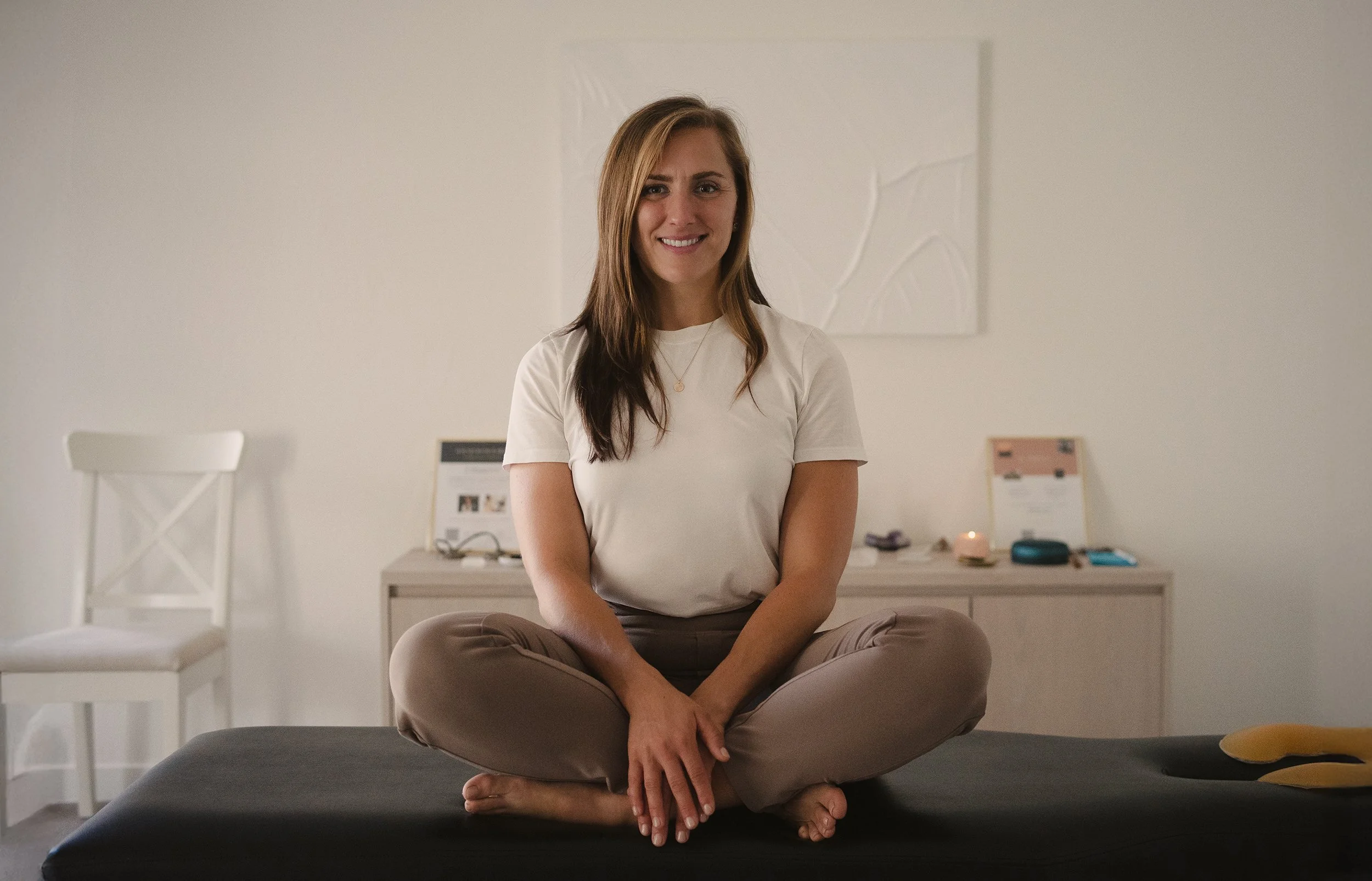
About Dr. Alandi Stec
Dr. Alandi Stec is a Doctor of Chiropractic and Reiki Master specializing in nervous system-centered healing approaches. She serves the Pleasant Hill and Bay Area athletic community through Life Force Chiropractic, combining Bio-Geometric Integration with craniosacral work and somatic practices to support athletes in discovering their body's innate capacity for optimal performance and resilience.