
Yoga Nidra for a Tired, Wired Nervous System: What It Is and Why It Works
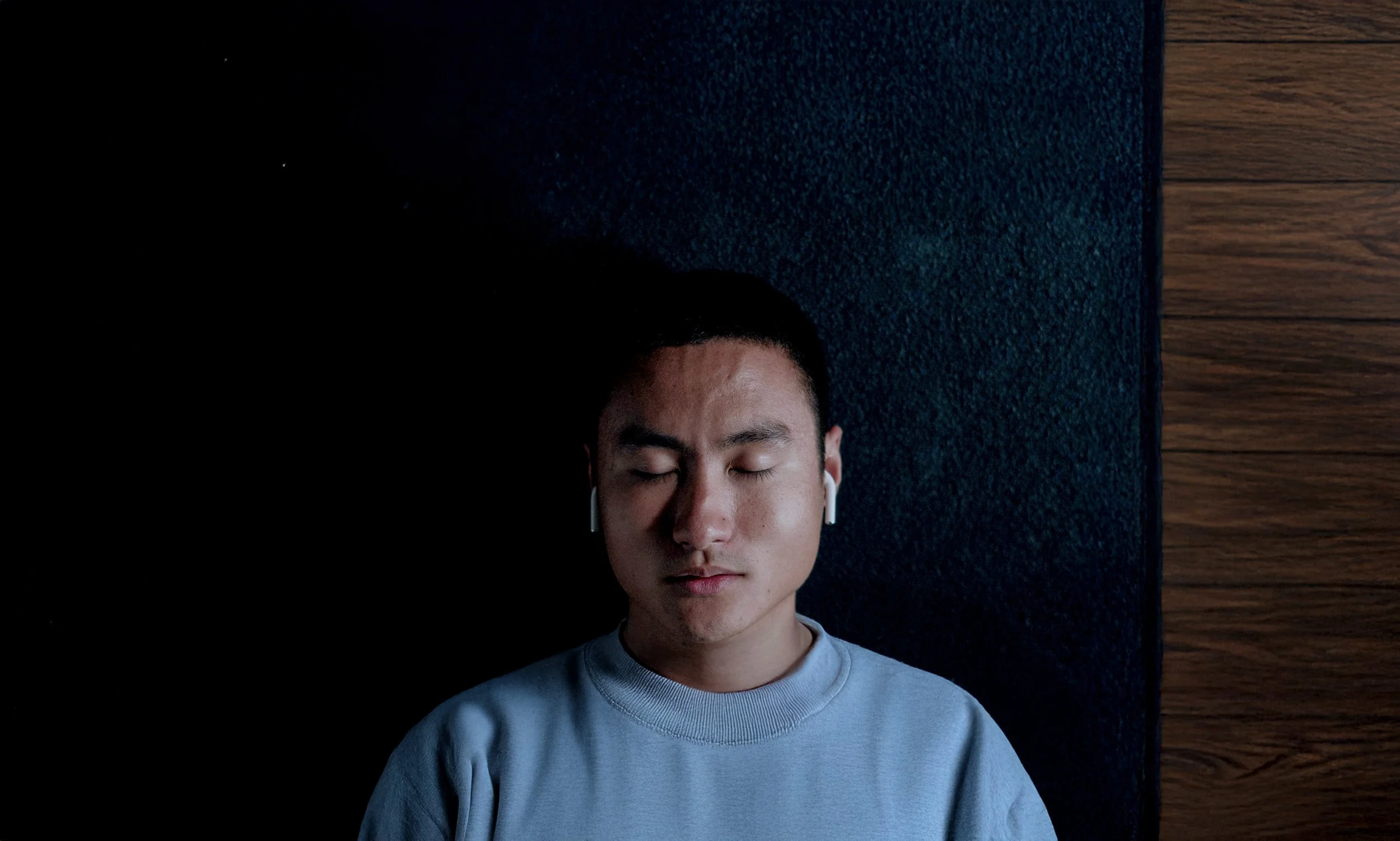
In late 2025, a meta-analysis published in the Annals of the New York Academy of Sciences pulled together 73 studies and 5,201 participants to ask one question. Does Yoga Nidra actually do what it says it does for stress, anxiety, and depression?
The answer was yes, with significant effects across all three categories. The researchers were careful to note that the body of evidence still has methodological gaps, and the largest effect sizes likely overstate the real-world impact. But the pattern across decades of research is consistent. People who practice Yoga Nidra regularly experience measurable shifts in stress response, sleep quality, and nervous system regulation.
Which is interesting, because Yoga Nidra is one of the most misunderstood practices in the wellness world right now. It's not meditation. It's not napping. It's not deep relaxation, exactly. It sits in a category of its own and reaches a layer of the nervous system that most other practices can't quite touch.
Especially for the people who land in practice most often. The ones who are exhausted and still can't fully let go.
What Yoga Nidra Actually Is
Yoga Nidra is a Sanskrit term that translates roughly as "yogic sleep." The practice is several thousand years old in its earliest forms, and the modern version most people encounter today was developed and codified in the mid-twentieth century.
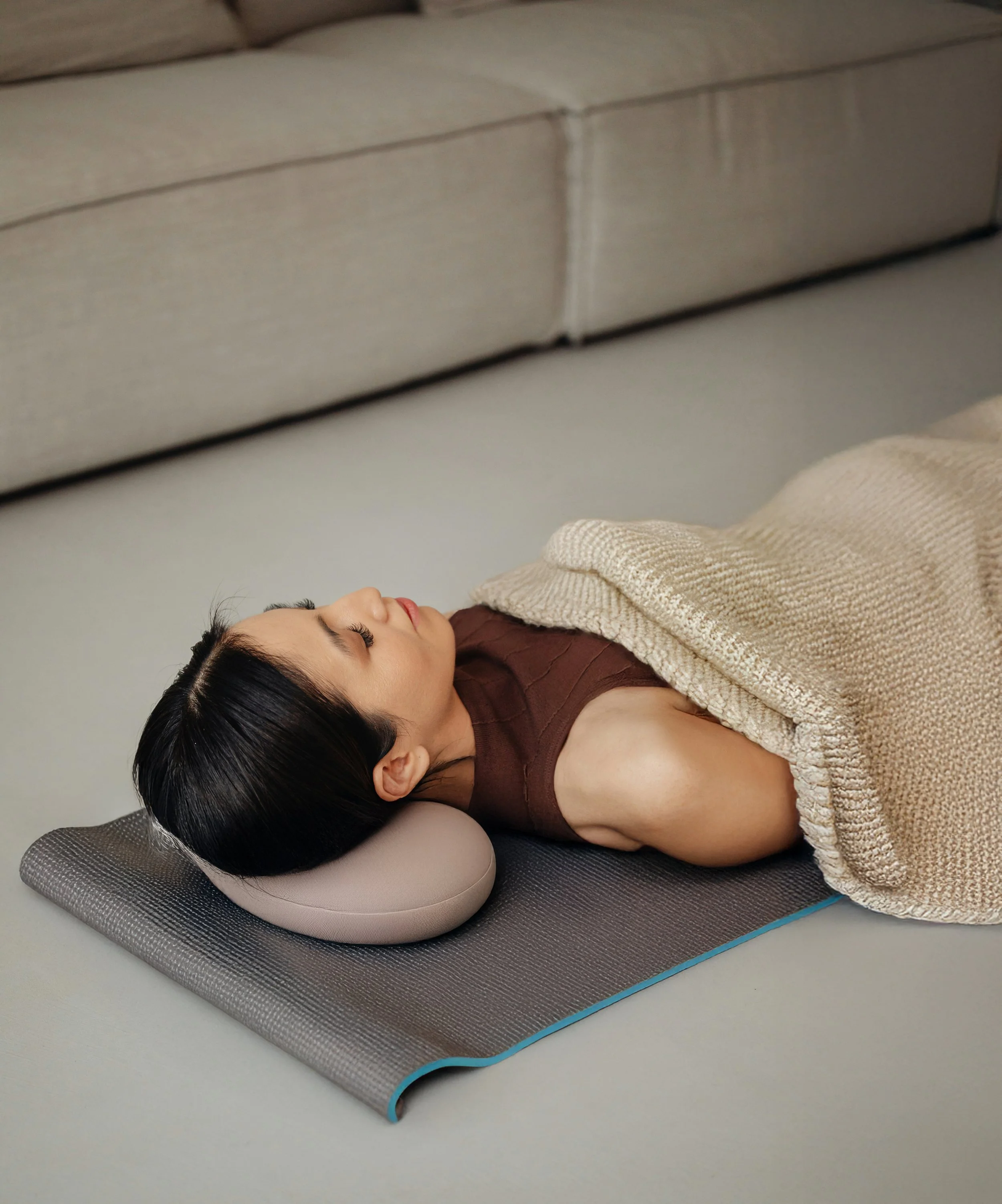
Unlike most yoga, there are no postures. The practitioner lies down on their back, fully clothed, often with a bolster under the knees and a blanket for warmth. A teacher guides the practice through a structured sequence that typically includes setting an intention, body scanning, breath awareness, and guided imagery.
The body enters very deep rest. The mind stays softly awake. This is the distinguishing feature, and it's what separates Yoga Nidra from sleep, from regular meditation, and from "guided relaxation" as it's usually understood.
Some people now refer to it as NSDR, or non-sleep deep rest, a term that's been popularized by neuroscientists like Andrew Huberman. The terminology is newer. The practice is ancient.
A typical session runs 20 to 45 minutes. Some traditions go longer. Some shorter sessions in research studies have been just 11 minutes and still produced measurable effects.

What's Happening in Your Nervous System
When the practice begins, your body and your nervous system start a series of quiet, observable shifts.
Your brainwaves slow down.
In ordinary waking activity, your brain produces beta waves, the faster frequencies associated with thinking, planning, and problem-solving. As you settle into Yoga Nidra, you move into alpha (relaxed but alert), then into theta (the dreamy, hypnagogic state at the edge of sleep), and sometimes briefly into delta (the slow waves of the deepest stages of sleep). Most people don't reach delta in regular meditation. Yoga Nidra creates conditions where it can happen.
Your sympathetic nervous system stands down.
The fight-or-flight branch quiets. Cortisol drops. Adrenaline output decreases. Your body stops bracing for what's next.
Your parasympathetic system takes over.
The rest-and-digest branch comes online more fully than it usually gets to during the day. Heart rate slows. Blood pressure drops. Digestion becomes possible. The system gets to do the maintenance work it can't do when you're activated. (For more on the role of the parasympathetic system in nervous system regulation, see the complete guide to your vagus nerve.)
Your breath shifts on its own.
The diaphragm releases. Breath drops lower into the belly. Breathing rate often slows by 30 to 50 percent without any conscious effort. This is the body finally letting go of the high-chest, shallow breathing pattern that keeps the nervous system in subtle alarm.
Tissue softens.
Long-held bracing patterns in the jaw, shoulders, hips, and pelvis often release during the practice, sometimes more in the hours and days afterward. This is one of the reasons Yoga Nidra integrates so well with bodywork, including chiropractic care.
The 2026 meta-analysis showed that across all of this, the measurable outcomes are real. Lower self-reported stress, reduced anxiety, improved sleep, less depression. The mechanisms align with what's been observed in sleep lab studies that measure brainwaves, heart rate variability, and respiratory patterns directly.

Why It Works When You're Tired But Wired
This is where Yoga Nidra becomes especially relevant for people who recognize the tired but wired pattern.
Most rest practices require the body to let go before they work. Sit still. Quiet the mind. Release the tension. Then the rest happens.
For someone whose nervous system is stuck in protection mode, this is exactly the wrong order. Asking a wired body to "just relax" is asking it to do something it can't do on command. The harder the person tries, the more activated they often get.
Yoga Nidra works the other way. The structured guidance gives the nervous system an experience of rest first, and the letting-go follows on its own. The voice of the teacher, the sequence of attention shifts, the rotation through different parts of the body, the breath awareness, all of it functions as scaffolding. The practitioner doesn't have to figure out how to relax. They just have to follow.
This matters for several specific groups of people.
People with chronic stress or burnout.
Their bodies have lost the muscle memory of letting go. Yoga Nidra returns it.
People with trauma or PTSD.
Sitting still in seated meditation can be activating, sometimes even destabilizing. Yoga Nidra is lying down, guided, and short, which often makes it more accessible than traditional meditation for trauma-affected nervous systems.
People who can't sleep despite being exhausted.
Twenty minutes of Yoga Nidra during the day can do for the nervous system what hours of poor-quality sleep can't. Practiced consistently, it often improves nighttime sleep because the body learns what deep rest feels like and can find its way back there at bedtime.
People in active recovery from illness, surgery, or grief.
Their bodies need extraordinary amounts of restoration that ordinary rest can't always provide. Yoga Nidra is uniquely positioned for this.
The 2024 Nature India study found that two weeks of daily Yoga Nidra improved slow-wave sleep, the deepest restorative phase, in healthy young adults. Other studies have shown specific benefits for people with chronic insomnia, including faster sleep onset and improved sleep maintenance. The research is most robust for sleep, anxiety, and stress, and growing in other areas.
How Yoga Nidra and Chiropractic Care Reinforce Each Other
These two practices come from very different lineages, but they work on the same nervous system from different angles. In a thoughtful integration, they amplify each other.
Gentle, nervous-system-centered chiropractic care works through tissue and structural patterns. Through Bio-Geometric Integration, craniosacral attention, and slow attuned touch, the work releases bracing held in the body, particularly in the diaphragm, jaw, pelvis, and cranial system. The body lets go of patterns it had been holding.
Yoga Nidra works through guided awareness and parasympathetic activation. It gives the body a structured experience of conscious rest, teaching the nervous system how to access deep restoration on its own.
When clients combine the two, something useful happens. Chiropractic care creates the structural conditions that allow rest to land deeper. Yoga Nidra builds the daily practice that reinforces the new pattern. The body releases what it was holding (chiropractic), and then has a way to keep returning to that softer state on its own (Yoga Nidra).
This is part of why Dr. Alandi teaches Yoga Nidra both as an at-home practice and as in-person group sessions. The work she does in one-on-one chiropractic sessions integrates beautifully with consistent Yoga Nidra practice. They're not competing modalities. They're complementary access points to the same nervous system.

How to Start Practicing
There are three reasonable paths into Yoga Nidra, depending on where you live and what fits your life.
At-home practice with guided audio.
This is the most accessible starting point. Find a quiet 25 minutes, lie down on a mat or bed, and let a teacher's voice guide you. TheYoga Nidra at Home courseis built specifically for this, with a 27-minute guided practice, a workbook explaining what's happening in your nervous system, and setup guidance for your home practice. $35 for lifetime access. You can practice once a week, daily, or anywhere in between.
In-person Yoga Nidra events.
Practicing in a small group, in a held space, with a teacher physically present, creates an experience that's different from headphones at home. The relational quality of being held in shared rest is regulating in a way that solo practice can't fully replicate. Dr. Alandi runs monthly Yoga Nidra events at the Pleasant Hill office, often in partnership with sound healer Tiffany Nelson for the Sound Bath & Reiki sessions. Spots are limited by design. Theevents calendar lists upcoming sessions.
Combining Yoga Nidra with chiropractic care.
For people in Pleasant Hill, Walnut Creek, Lafayette, Concord, Orinda, or anywhere across the East Bay, the combination of chiropractic sessions and a regular Yoga Nidra practice tends to produce the deepest results. Sessions release what the body has been holding. Yoga Nidra reinforces the new pattern between visits.
Most people start with one or two practices a week and build from there as it feels right. There's no requirement to practice daily for the benefits to land. Consistency matters more than frequency.
What to Expect Your First Time
A few things often come up for first-time practitioners that are worth naming ahead of time.
You might fall asleep.
This is fine. Many people do, especially in the first few sessions. The body takes the rest it most needs. As you build the practice, you may find yourself staying in that conscious-resting state more easily.
Your mind might wander.
This is also fine. Yoga Nidra isn't a perfect-attention practice. The voice of the teacher will guide you back. The benefit isn't dependent on perfect focus.
You may feel emotional.
Sometimes deep rest releases emotion that was being held. Tears, sighs, or a quiet sense of being moved are common. The practice can hold this.
You might doubt it's "working."
This one is the most common. Twenty-five minutes of lying down feels like nothing happened. Then you sit up and notice your shoulders are softer, your breath is deeper, your jaw is unclenched, and you slept better that night. The work was happening. You just couldn't feel it as it occurred.
Frequently Asked Questions
How is Yoga Nidra different from meditation?
Most meditation involves sitting upright with focused awareness, typically on the breath, a mantra, or present-moment sensation. Yoga Nidra is practiced lying down with the body in a state of full release, while a teacher guides awareness through a structured sequence. Meditation builds the capacity for sustained focus during waking activity. Yoga Nidra accesses deep rest while the mind stays softly awake. Both support the nervous system. They do different things.
Is it normal to fall asleep during Yoga Nidra?
Yes, especially when you're sleep-deprived or running on chronic stress. Falling asleep during Yoga Nidra is your body taking the rest it most needs in the moment. Over time, as your nervous system has more reserves, you'll often find yourself able to stay in the conscious-resting state more consistently. There's no need to force wakefulness.
How often should I practice Yoga Nidra?
For most people, practicing two to three times a week creates noticeable shifts within a few weeks. Daily practice is wonderful when it fits, but isn't required for the benefits to land. Consistency over time matters more than frequency in any given week. Even one practice a week, sustained over months, can produce real change.
Can Yoga Nidra replace sleep?
No, but it can complement it. The often-cited claim that "thirty minutes of Yoga Nidra equals three hours of sleep" is a metaphor, not a measurement. Your body still needs nighttime sleep for the physiological processes that only happen during full sleep cycles. Yoga Nidra can supplement sleep, support better quality sleep when practiced regularly, and provide deep restoration during the day, but it isn't a substitute for adequate nighttime rest.
Is Yoga Nidra safe for everyone?
For most people, yes. The practice is gentle, lying down, and self-paced in the sense that you can open your eyes or come out of it at any time. People with active psychosis, severe dissociation, or untreated severe trauma may want to start with a trauma-informed teacher rather than self-guided audio, since deep relaxation can occasionally surface difficult material. If you have any specific medical or mental health concerns, speak with your provider before starting a regular practice.
What if I can't relax during Yoga Nidra?
This is more common than people realize, especially in the first few sessions. The body sometimes treats stillness as a threat when it's been in chronic activation. If you find yourself agitated during the practice, that's information, not failure. Shorter sessions (10 to 15 minutes) often work better than longer ones in the beginning. Practicing earlier in the day rather than at bedtime can also help. Combining the practice with hands-on nervous system care, like gentle chiropractic, often makes the relaxation accessible faster than practicing alone.
Where can I find good guided Yoga Nidra recordings?
The quality of the teacher's voice and pacing makes a noticeable difference. A trauma-informed practitioner trained in nervous system work will guide differently than a generic relaxation app. Dr. Alandi's Yoga Nidra at Home course is specifically designed for nervous system regulation, with a 27-minute guided practice, accompanying workbook, and setup guidance for $35 lifetime access.
Is NSDR the same as Yoga Nidra?
NSDR (non-sleep deep rest) is a term popularized in recent years by neuroscientist Andrew Huberman to describe protocols that produce a similar state to Yoga Nidra without the spiritual or yogic framing. The terms overlap significantly, and many NSDR scripts are functionally Yoga Nidra under a different name. Where they differ: NSDR tends to be shorter (often 10 to 20 minutes) and more focused on cognitive performance and recovery. Yoga Nidra typically runs 25 to 45 minutes, includes intention-setting and imagery, and is rooted in a longer contemplative tradition. For most practical purposes, they reach the same nervous system state and produce similar physiological effects. Choose whichever framing resonates with you.
Where to Start
If you've made it this far, you're probably someone whose nervous system is asking for this kind of practice.
The most accessible starting point is the Yoga Nidra at Home course. Twenty-seven minutes of guided practice with Dr. Alandi's voice, a workbook that explains what's happening in your body during the practice, and setup guidance for creating a home rest ritual. $35, lifetime access. You can practice tonight.
If you're in the Bay Area and want to experience Yoga Nidra in person, the Pleasant Hill office runs monthly Yoga Nidra events, some standalone, some integrated with sound healing and Reiki. Spots are limited by design, and there's something about practicing in a held space with a teacher physically present that solo practice can't fully replicate.
If your version of tired but wired is held in your body in ways daily practice isn't reaching, and you're in the East Bay, you're welcome to add a chiropractic session to your regular Yoga Nidra practice. The work amplifies in both directions when paired.
The body knows how to rest. Yoga Nidra is one of the clearest paths back to that knowing, especially for the nervous system that's been telling you it's exhausted and somehow still can't let go.
About Dr. Alandi Stec
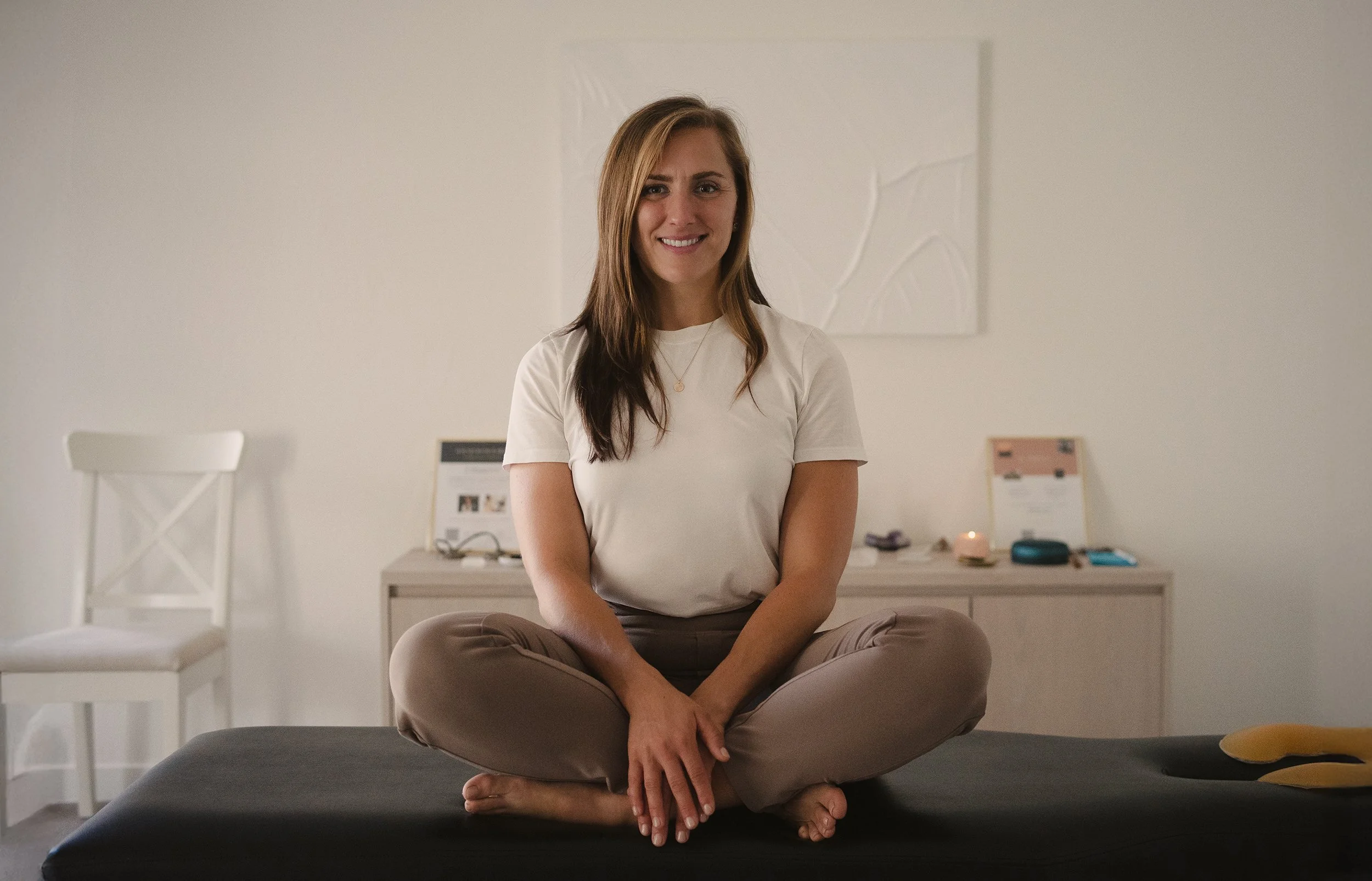
Dr. Alandi Stec is a Doctor of Chiropractic and Reiki Master specializing in nervous system-centered healing approaches. She serves the Pleasant Hill and Bay Area athletic community through Life Force Chiropractic, combining Bio-Geometric Integration with craniosacral work and somatic practices to support athletes in discovering their body's innate capacity for optimal performance and resilience.