
Rooting
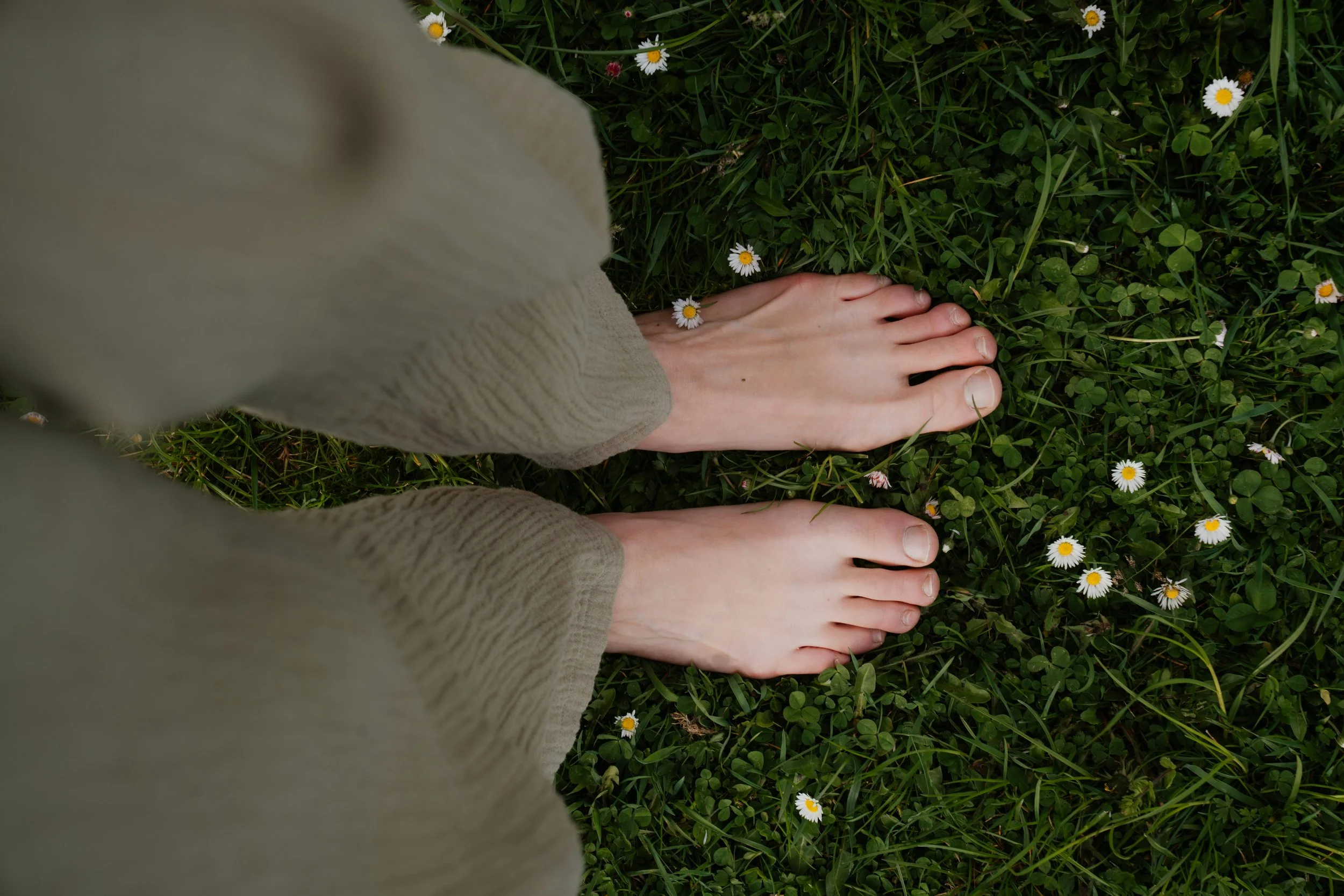
A one-minute grounding practice for nervous system settling
Most days, your attention runs a little ahead of your body. It reaches toward the next task, the next thing waiting to be done, while the body follows a step behind, rarely felt.
Meanwhile, your body is still here.
Feet touching the floor.
Breath moving in and out.
The steady support of the ground beneath you.
When life moves quickly, we often lose contact with those simple points of connection. The feet move from floor to pavement to pedal and back again without ever really being felt. Some part of the body stays lightly braced, preparing for what comes next even when there is nothing immediate to respond to.
Rooting is a way of returning.
By bringing your attention to the contact between your feet and the ground, you give your nervous system fresh information about where you are right now. Your body receives a simple message: I am here. I am supported.
Often, that is enough.
The breath deepens a little on its own.
The jaw softens.
The mind becomes less occupied with what comes next.
The body begins to settle back into the present moment.
TRY THIS
1. Stand or sit with your feet resting firmly on the ground. Bare feet are ideal, though any steady surface works.
2. Notice where your feet meet the ground. The heels. The balls of the feet. The outer edges.
3. Let a little more of your weight settle downward.
4. Imagine roots extending from your feet into the earth beneath you.
5. Allow your breath to soften and move naturally.
6. Stay for thirty to sixty seconds and notice what shifts.
Why This Works
The soles of your feet contain thousands of sensory receptors that continuously gather information about pressure, balance, and your body’s relationship to the world around it.
When you bring awareness to that contact, your nervous system receives clear, present-tense information: there is support beneath me.
As attention moves from anticipation into sensation, the body often responds by softening. Muscles release. Breathing becomes easier. The parasympathetic branch has more room to come online.
It is part of why standing barefoot on grass, sand, or earth can feel so naturally settling. The body receives steady evidence that it is supported.
Use This Practice
• In the morning before the pace of the day takes over
• When your thoughts feel several steps ahead of where your body is
• After time on screens or periods of sustained focus
• Before an important conversation or event
• Outside during the warmer months, with bare feet on grass, soil, or sand
The ground has been holding you the whole time.
Rooting is simply how you let your body feel it.
The information your body needs to settle is already in the room. This practice is how you let it in.