
Why You Feel Tired But Can't Fully Relax (Your Nervous System Is Stuck in "Go")

Most fatigue gets better with rest. Tired but wired is the kind that doesn't.
It's the exhaustion with a buzz underneath. The body sits down on the couch at the end of the day and doesn't quite land. Shoulders ride up near the ears. Jaw stays set. Breath sits high in the chest. The phone comes out, the show goes on, and somehow none of it actually lets the system soften.
Most people who live in this pattern don't think of themselves as stressed. They just feel like their off switch is broken.
This is what people are calling tired but wired, and it's a real physiological state, not a willpower problem. The nervous system is stuck in "go" mode, and it can't downshift on command no matter how much you want it to.
What You've Already Tried (And Why It Hasn't Worked)
If this loop sounds familiar, you've probably tried at least some of the standard advice.
You've cut caffeine after noon, or maybe after 10am. You've taken magnesium. You've ordered the adaptogens. You've experimented with whatever supplement was being recommended this month for stress.
You've tried the sleep hygiene checklist. Cool room. Blackout curtains. Phone in another room. No screens for an hour before bed. You've downloaded the meditation apps and set the gentle alarm and bought the weighted blanket.
You've gone for walks. You've done long workouts. You've tried not working out, in case it was the cortisol. You've journaled. You've stared at the ceiling.
Some of it helps for a night or two. Most of it doesn't last.
And the pattern always comes back. The afternoon crash. The 9pm second wind. The morning that doesn't feel like rest happened. The constant background buzz, even when you're sitting still on the couch with nowhere to be.
By now, you might be wondering if this is just how your body is now. If the wired underneath is permanent. If you've used up your capacity for rest somehow.
You haven't. Your body still knows how to settle. There's just a layer underneath all the strategies you've tried that none of them are actually addressing.
What "Tired But Wired" Actually Is
The phrase tired but wired describes a real physiological state. Not a willpower problem. Not a character flaw. Not something you can think your way out of.
Your autonomic nervous system has two main branches that work together. The sympathetic branch mobilizes you. It gives you energy, sharpens focus, and helps you respond to demands. The parasympathetic branch downshifts you. It supports rest, repair, digestion, and sleep. In a regulated system, you move between them throughout the day. Activate when needed, settle when the demand is over.
When you're stuck in tired but wired, those branches stop trading off cleanly. Your sympathetic system stays partially on, even when there's nothing to respond to. Your parasympathetic system can't fully take over, even when you're trying to rest. So your body holds two contradictory signals at the same time. Energy depleted, alarm still ringing.
The Vagus Nerve Isn't Sending the All-Clear
Your vagus nerve is the longest cranial nerve in your body. It runs from your brainstem down through your throat, lungs, heart, diaphragm, and into your gut. It's the main pathway your body uses to send "you're safe, you can rest" signals up to your brain.
When vagal tone is good, your body settles easily. Heart rate slows after stress. Breath deepens. Digestion runs. Sleep comes.
When vagal tone is depleted from chronic stress, illness, or accumulated low-grade strain, the all-clear signal never quite arrives. Your body doesn't know it's safe to land. So it stays partially activated, even on the couch, even at bedtime, even when nothing is wrong.
This pattern usually doesn't arrive all at once. It builds. A demanding stretch of work. A loss. A round of poor sleep. A baby. A move. A long-running stressor your system adapted to and never fully discharged. Each layer of activation that doesn't get to complete adds to the holding pattern. Over months or years, your body's baseline shifts. The state that used to be "responding to a hard week" becomes the state you're in on Tuesday afternoon for no reason.

Your Body Is Holding the Pattern in Tissue
Here's what most articles about tired but wired miss. The activation isn't only in your brain or your hormones. It's held in your tissue.
Your psoas, the deep hip flexor that connects your spine to your legs, is closely tied to your stress response. When your system stays in subtle bracing, your psoas stays partially contracted. This compresses your low back, restricts your diaphragm, and keeps your breath shallow and high in your chest. Shallow breath signals threat. Threat signal tells your nervous system to stay vigilant. The loop reinforces itself.
Your jaw and the base of your skull do the same thing. Long-held tension in the suboccipital muscles, the small muscles where your skull meets your neck, can affect cranial rhythm and keep your nervous system in a state of subtle alarm. Your shoulders ride up. Your ribcage tightens. Your fascia, the continuous web of connective tissue that links every part of you, holds the shape of activation.
This is biotensegrity. The body is one continuous structural network where tension and compression distribute through the entire system. So when your nervous system stays in protection mode, every layer of your body holds it. And when your body holds it, your nervous system reads its own tension as a reason to stay activated.
That's why you can't think your way out. The pattern is in your tissue.
Why Caffeine Cuts and Magnesium Aren't Enough
This is the part most people don't hear. The standard tired but wired advice isn't wrong. It's just incomplete.
Caffeine cuts and stimulant audits.
Reducing caffeine helps if your activation is being topped off by stimulants. But if your nervous system is stuck in protection mode independent of caffeine, removing it won't reach the underlying pattern. You'll feel slightly less wired and just as tired.
Magnesium and adaptogens.
Magnesium supports the chemistry of relaxation. Adaptogens like ashwagandha can dampen cortisol output. Both can be useful. Neither changes the structural and neurological pattern keeping your body in vigilance. You'll burn through them and the buzz returns.
Sleep hygiene.
A cool, dark, screen-free room creates good conditions for rest. But conditions aren't the same as readiness. Your body has to feel safe enough to surrender into sleep. If your nervous system is still scanning, even the perfect sleep environment won't be enough. (If your version of tired but wired shows up most strongly at bedtime, you may want to read more about why your nervous system might be blocking sleep.)
Meditation apps and breathwork.
These can support regulation, especially over time. But many people experience the opposite when they try to meditate while activated. Sitting still with a racing mind is the kind of stillness their nervous system reads as more threat, not less. The practice that's supposed to calm them ends up making them feel more wound up.
The gap in all of these is the same. They address what's on top of the activation pattern. They don't address the pattern itself, the structural and neural holding keeping your body unable to land.
The body needs an actual experience of safety, delivered through tissue and breath and slow attention, before it will let go.


How This Practice Works With Tired But Wired
In the Pleasant Hill office, the work with someone in this state isn't loud or fast. There's no cracking. No forcing. No "let me just adjust your neck."
The first thing that happens is listening. Where is the bracing pattern living? The diaphragm? The pelvis? The base of the skull? The shoulders? The body usually has a place it's holding most tightly, and that spot is rarely the place that hurts.
The work is gentle, tissue-based, and nervous-system-centered. Through Bio-Geometric Integration, craniosacral attention, and Reiki-informed touch, the goal is to give your body an experience it hasn't had in a long time. Being met without being pushed. Being supported without being directed. Being allowed to soften.
This matters because the nervous system needs an actual signal of safety to let go. Words don't do it. Willpower doesn't do it. Even the right breath practice often can't do it on its own when the bracing is held this deeply in tissue. Slow, attuned touch does.
A session for someone in this pattern usually starts with the body in stillness, fully clothed, lying down. The pace is unhurried by design. The contact is light, sometimes barely noticeable from outside the work, because the goal isn't to push tissue around. The goal is to listen to where the body is bracing and follow what it shows. When the right place gets met with the right quality of attention, the body usually responds on its own. A breath drops. A long-held area releases. The system reorganizes around the new information.
What Clients Often Notice After a Few Sessions
The shifts are usually quiet at first. Most people don't walk out feeling fundamentally different. They walk out feeling slightly more landed.
Then in the days after the session, things start to change.
Their breath drops lower. They notice they're sighing more, the long exhale that shows up when the diaphragm releases. Their shoulders aren't living up by their ears. They yawn during the day, sometimes a lot. Their jaw is softer when they wake up.
Sleep often shifts within two to three sessions. Not perfectly, not all at once, but in a way they can feel. Falling asleep gets easier. The 3am wake-ups happen less often. They wake up and realize they actually slept.
The afternoon crash gets gentler. The evening second wind quiets. The buzz under everything starts to thin out. They start to remember what it feels like to actually rest, not just stop moving.
This is what regulation looks like in practice. Not zero stress. Not a permanent state of calm. Just the return of capacity. The body remembering it can shift between activation and rest the way it used to.
For people in Pleasant Hill, Walnut Creek, Lafayette, Concord, Orinda, or anywhere in the East Bay who've been carrying tired but wired for a long time, this kind of care can be one of the most direct ways to change the pattern. The body has been holding it in tissue. The work meets it there.
Frequently Asked Questions
What does "tired but wired" actually mean?
Tired but wired describes a state where your body is depleted but your nervous system is still partially activated. You feel exhausted and energized at the same time, often most noticeably in the late afternoon, evening, or at bedtime. Physiologically, it reflects a sympathetic nervous system that won't fully downshift, often paired with reduced vagal tone and held tension in the body. It's a real physiological pattern, not a personal failure.
Why am I exhausted but can't sleep at night?
The most common reason is that your nervous system is interpreting rest as a threat. Sleep is a vulnerable state, and if your body has been in chronic activation, it stays vigilant even when you're tired, because vigilance has felt necessary. Lower vagal tone, held tension in your diaphragm and psoas, and a brain still scanning for tomorrow can all keep you locked in this in-between state.
Can chiropractic help with tired but wired?
Gentle, nervous-system-centered chiropractic care can help, especially when the activation is held in tissue patterns the body can't release on its own. Forceful adjusting isn't the goal. The goal is to support your nervous system in finding safety again, often through slow, tissue-based work that allows your diaphragm, jaw, pelvis, and cranial system to settle. Many people experience deeper sleep, easier breath, and reduced background tension within a few sessions.
How long does it take to feel less wired?
Most people notice small shifts within two to four weeks of consistent regulation work. Deeper change, where tired but wired stops being your daily baseline, usually takes two to three months. Your nervous system needs repetition to trust that the new pattern is safe. The body learned activation over time. It also unlearns it over time.
Is "tired but wired" the same as burnout?
They overlap but aren't identical. Burnout is a broader experience of depletion across emotional, physical, and motivational systems, often tied to chronic overwork or caregiving. Tired but wired is one specific physiological pattern within or alongside burnout, the experience of exhaustion paired with sustained activation. You can have tired but wired without full burnout, and burnout often includes tired but wired as one of its features.
Why doesn't meditation help when I'm tired but wired?
Meditation can be hard to access when your nervous system is highly activated, because sitting still with a busy mind sometimes increases the sense of internal pressure rather than reducing it. Practices that work with the body first, like Yoga Nidra, gentle somatic regulation, or slow conscious breathwork, often land more easily when you're in this state. Once your nervous system has a foothold in regulation, traditional meditation often gets easier.
Does one session help, or do I need to come regularly?
Most people feel something shift in a single session, often a quieter mind, a deeper breath, or noticeably better sleep that night. That said, tired but wired is usually a pattern that built over months or years, and it tends to soften most reliably over a series of sessions. A common rhythm is weekly or every other week for the first six to eight weeks, then less frequently as the body settles into a more regulated baseline. Your nervous system, your history, and your current load all shape what's right for you, which is part of what gets discussed at the first visit.

You Don't Have to Stay in This Loop
Your body has not forgotten how to rest. It has adapted to staying alert because it perceived staying alert as necessary. That adaptation is doing exactly what it was designed to do.
But it doesn't have to be your baseline anymore.
The first step in changing tired but wired is giving your nervous system enough actual experiences of safety that the pattern starts to soften. Some of that comes from practices you can do at home. Some of it comes from being met in your body by someone paying close attention.
If you're in the East Bay and you've been carrying this pattern for a while, you're welcome to book a session at the Pleasant Hill or San Francisco office. The work is gentle, presence-based, and specifically designed for nervous systems that have been holding too much for too long.
If you're outside the area, or you'd like to start with daily practices at home, the 12-Day Nervous System Regulation course offers a structured way to begin retraining your body's capacity to rest. It's $50 for lifetime access.
For the specific tired-but-wired-at-night layer, the Yoga Nidra at Home practice ($35) teaches your body what conscious rest feels like, without the pressure to fall asleep.
The body knows how to settle. Sometimes it just needs the right kind of support to remember.
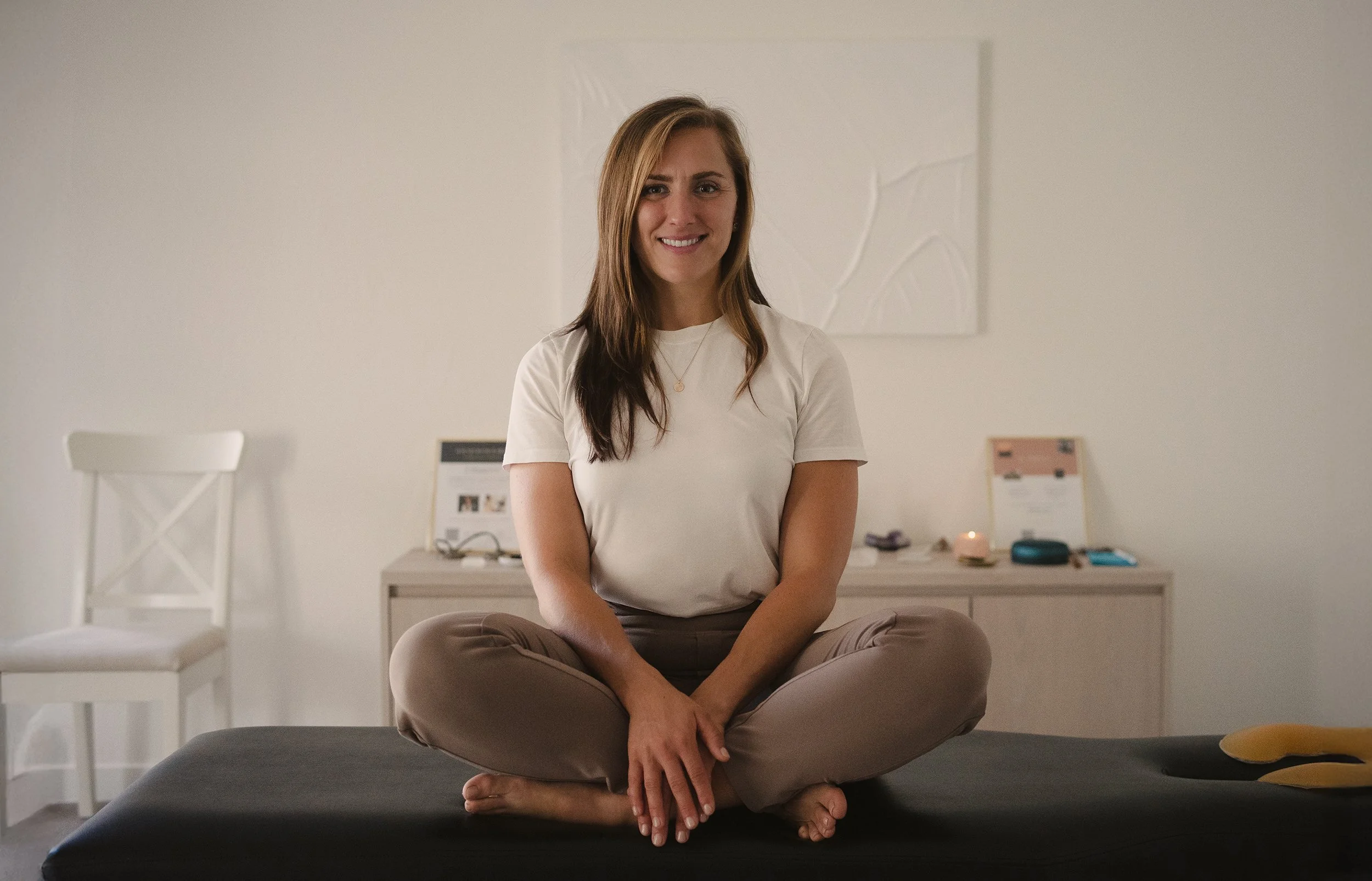
About Dr. Alandi Stec
Dr. Alandi Stec is a Doctor of Chiropractic and Reiki Master specializing in nervous system-centered healing approaches. She serves the Pleasant Hill and Bay Area athletic community through Life Force Chiropractic, combining Bio-Geometric Integration with craniosacral work and somatic practices to support athletes in discovering their body's innate capacity for optimal performance and resilience.