
Nervous System Reset Programs: DIY vs. Guided (What to Expect)

You know you want to do the work. You've watched the YouTube videos. You've saved the Instagram posts. You've maybe even started a free seven-day reset, gotten three days in, and stopped.
Now you're trying to figure out what to actually commit to. Free vs. paid. Self-paced vs. structured. App vs. course vs. real human.
And every option seems to promise the same thing. Your nervous system, regulated. Your stress, dissolved. Your sleep, restored. Your life, transformed.
So how do you know which one is going to actually work for you?
This is an honest look at what's out there, what each path actually offers, and how to tell when DIY is enough vs. when guided support will move you faster.
What's Actually Out There
The landscape of nervous system reset programs has exploded in the last two years. It's worth seeing the full spread before you choose a path, because the language overlaps and the prices don't always reflect what you're actually getting.
Free DIY content.
YouTube videos, podcast episodes, Instagram reels, free PDFs, social media accounts run by therapists and somatic practitioners. There's a lot of genuinely good information here. There's also a lot of recycled tips packaged as a "reset."
Apps.
Calm, Insight Timer, Othership, Healthy Minds. Some are free, some are subscription-based, most lean toward meditation and breathwork rather than full nervous system regulation.
Low-cost structured programs.
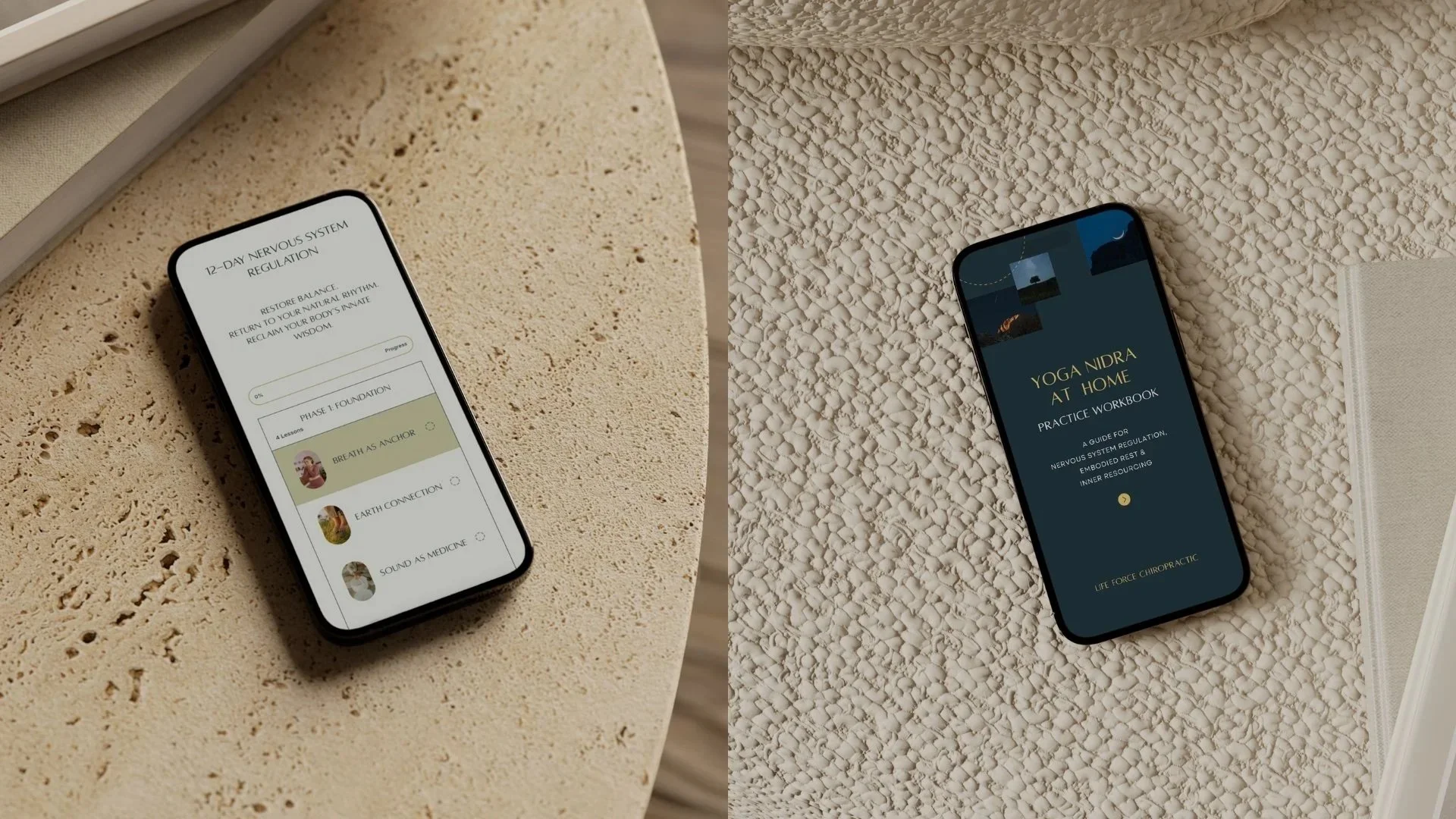
$30 to $80 self-paced courses, lifetime access. Usually short, sequenced, with daily practices. The 12-Day Nervous System Regulation course is in this tier. So is Yoga Nidra at Home.
Mid-tier guided programs.
$150 to $500 courses, often longer (21 days, six weeks, eight weeks), self-paced or semi-paced. More depth, often more comprehensive sequencing, more written and audio material. Attuning Into You sits here.
Premium programs.
$500 to $2,500 cohort-based or extensive self-study. Often include community access, weekly live calls, deeper somatic work, sometimes practitioner support. Examples: Primal Trust, Smart Body Smart Mind, RESET, several therapist-led programs.
One-on-one work.
Chiropractic, somatic therapy, coaching, craniosacral work. Most personalized, most embodied, most expensive per session.
That's the spread. The question isn't which one is "best." It's which one matches where you are right now.

When DIY Actually Works
DIY nervous system work can be genuinely effective, and dismissing it is dishonest. Here's when it tends to be enough.
You already have decent baseline regulation.
You can drop into your body without effort. You can feel your breath. You can sit with sensation without escalating into panic or shutdown. You're not starting from a place of significant dysregulation, you're maintaining or fine-tuning.
You're a consistent self-starter.
You've followed through on independent practices before. Yoga, meditation, journaling, fitness routines. You know how to hold yourself to a daily practice without external accountability. This isn't most people. If it's you, free and low-cost resources can take you a long way.
Your activation is situational, not chronic.
You're stressed because of a hard month, a deadline, a season. The pattern is fresh, not embedded. Your nervous system mostly remembers regulation, it just needs a path back. A free 14-day reset or a $35 Yoga Nidra practice may give you exactly the prompt your body was looking for.
You've already built embodied awareness somewhere else.
Years of yoga, dance, meditation, therapy, athletic training. You have a vocabulary for what your body is doing. You can tell when something is working. Free resources can be powerful in this case because you have the discernment to know what to keep and what to drop.If most of those describe you, you may not need a paid program at all. The free 5-Day Mindful Reset Guide, paired with consistent application, may be enough. You can read more about the techniques themselves in The Complete Guide to Nervous System Reset.
When DIY Runs Out of Steam
DIY stops working in pretty predictable ways. If any of these sound familiar, you're not failing at self-help. You're hitting the ceiling of what unstructured solo work can do.
You start things and don't finish them.
You've signed up for three free programs in the last year. You completed parts of all of them. You haven't finished any. The pattern itself is data. Your nervous system is having trouble holding a structure that has no external support.
Sitting still with your body feels hard, scary, or just impossible.
When practices ask you to "feel your breath" or "notice the sensations in your body," you either dissociate, get anxious, or feel nothing. This is a sign that your activation is significant enough that unguided practice may push you outside your window of tolerance instead of supporting you back into it. (If this resonates, the tired but wired experience is often part of why this happens.)
You can't tell what's working.
You've tried fifteen techniques. Some felt good in the moment. None feel like they've changed anything underneath. Without sequencing and feedback, it's hard to know what's actually moving the needle and what's just providing temporary relief.
The dysregulation is older than you can name.
It's not from this year. It's not from this job. It's been there for as long as you remember being aware of your body. There's likely a deeper layer of trauma, attachment, or developmental experience involved, and unguided self-help often can't reach it on its own.
You need someone else to hold the structure.
This isn't a character flaw. Most humans regulate better with co-regulation. The structure of someone leading you, even through pre-recorded audio, is doing real work for your nervous system. It's external scaffolding while you build internal capacity.
When DIY runs out of steam, the move isn't to find a better DIY resource. The move is to add structure, support, or both.
What "Guided" Actually Means
Guided is a broad word. The difference between a $50 self-paced course and a $1,500 live cohort is not a matter of more vs. less of the same thing. They're different tools.
Low-Cost Structured (Self-Paced, Pre-Recorded)
Programs in the $30 to $80 range usually offer:
• A clear sequence (day 1 leads to day 2 leads to day 3)
• Daily prompts or audio practices
• Lifetime access
• No live component, no community
What they do well: take the planning out of practice. Your only job is to show up. Someone else has thought about the order, the duration, and the focus for each day. That's a real load off your nervous system, especially if decision fatigue is part of what's keeping you stuck.
What they don't do: respond to you specifically. They can't see when you're skipping the body scans because they activate you. They can't troubleshoot your specific resistance.
The 12-Day Nervous System Regulation course sits here.
So does Yoga Nidra at Home, on the rest-specific end.
Mid-Tier Guided Programs
Programs in the $150 to $500 range usually offer:
• A longer arc (21 days to 8 weeks)
• More depth in the sequencing
• More written and audio material
• Often bonus content like workbooks, community access, or email touchpoints
What they do well: integrate. The longer arc gives your nervous system actual time to lay down new patterns rather than just sample tools. Twenty-one days is closer to the threshold where new wiring starts to take.
What they don't do: provide live human contact. The structure is richer, but the witness isn't real-time.
Attuning Into You is in this tier. It runs 21 days, threads through nervous system themes, and goes deeper than a 12-day reset can.
Live Cohorts and Practitioner-Led Programs
Programs in the $500 to $2,500 range usually offer:
• Weekly live calls
• Real-time community
• Direct access to a practitioner (sometimes)
• Longer duration (8 to 16 weeks, sometimes longer)
What they do well: co-regulation. Being witnessed by a real person, in real time, while you're doing the work matters. The nervous system reads "someone is paying attention to me right now" as a profoundly different signal than "I'm doing this alone with my headphones in." For trauma-rooted dysregulation, this can be the difference.
What they don't do: replace one-on-one work. Even in a small cohort, the practitioner can't track you specifically the way they could in a 1:1 session.
One-on-One Work
Chiropractic, somatic therapy, coaching, craniosacral work. The price varies widely depending on modality and location.
What it does well: individualizes everything. Your specific holding pattern, your specific history, your specific tissue. This is also where in-body work can happen, which no online program can fully replicate.
What it doesn't do: scale. You're trading higher cost for higher specificity.
The Piece Most Online Programs Can't Replicate
There's a layer of nervous system regulation that lives in tissue. Your psoas, your diaphragm, the base of your skull, your jaw, your fascia. Long-held bracing patterns get stored in the body, and the body sometimes can't release them on its own no matter how good the daily practice is.
This is where in-person, hands-on work changes the equation. Slow, attuned touch is a different signal than even the best guided audio. The nervous system reads it differently. The body responds to it differently.
For people in Pleasant Hill, Walnut Creek, Lafayette, Concord, or anywhere in the East Bay, this is part of what gentle, nervous-system-centered chiropractic care offers. Not a replacement for daily practice. A complement to it. The structural work creates conditions where the daily practice can actually land.
For people outside the area, the equivalent move is finding a practitioner who works at this layer locally, like a craniosacral therapist, a somatic experiencing practitioner, or a gentle chiropractor trained in nervous-system-centered approaches.
This is the layer most online programs simply cannot reach. They don't claim to. The honest framing is that online programs build internal capacity, and in-person work releases held patterns. Both serve different purposes. Most people benefit from both at different stages.

How to Choose Where to Start
If you've read this far, you probably already have a sense of which path matches you. Three honest starting points based on where most people land.
If you're newer to nervous system work, want to test the waters, and don't want to commit money yet:
Start with the free 5-Day Mindful Reset Guide. It's a no-cost on-ramp that gives you actual practice with Dr. Alandi's voice rather than another set of tips to read. Available through June 30 with newsletter signup. Use it to see if this kind of work resonates before investing further.
If you've done some self-work, can hold a daily practice, and want a structured short program:
Start with the 12-Day Nervous System Regulation course at $50. It's the entry point most people benefit from most. Twelve consecutive days of guided practice is enough to feel a real shift, and the price is low enough that it doesn't have to be a months-long deliberation.
If you've been at this for a while, the dysregulation is older or deeper, and you want something that integrates rather than just samples:
Look at Attuning Into You at $350 $105. Twenty-one days, more depth, seasonal framing, designed for the layer of nervous system work that asks for time to actually settle.
If your version of dysregulation feels held in your body in ways daily practice isn't reaching, and you're in the East Bay:
Add a session at the Pleasant Hill or San Francisco office to whichever course you start. The course builds the practice. The session releases what the body has been holding.
Frequently Asked Questions
What's the difference between a nervous system reset and nervous system regulation?
The terms get used interchangeably, but they describe slightly different things. A reset usually means a short, focused intervention to shift your system out of acute activation. Regulation is the broader skill of moving fluidly between activation and rest over time. Most "reset" programs are really teaching the foundational skills of regulation. The framing of "reset" tends to feel more accessible because it implies a shorter, finite commitment, but the underlying work is the same.
Are free YouTube videos enough to regulate my nervous system?
For mild, situational dysregulation, often yes. For chronic, deep, or trauma-rooted patterns, usually not on their own. Free content gives you tools, but it doesn't give you sequencing, accountability, or someone holding the structure for you. If you've consistently struggled to follow through on free content, that's a sign you'd benefit from a paid program with built-in structure, not from finding better free content.
How long does it take to see results from a nervous system reset program?
Most people notice some shift within the first week to two weeks of consistent practice. Deeper change, where the new pattern feels like your baseline rather than something you have to work for, usually takes two to three months of consistent work. This timeline is the same whether you're using free resources, a structured program, or one-on-one care. The variable that matters most is consistency.
Should I start with a course or with one-on-one care?
It depends on where the dysregulation lives. If it's primarily in your daily patterns (sleep, energy, reactivity), starting with a course is usually the most efficient move. If it's held in tissue (chronic tension, jaw clenching, locked hips, restricted breath), starting with in-person work, while supplementing with daily practice from a course, often gives faster traction. Both are reasonable starting points. Most people end up using both eventually.
Do I need a practitioner-led program if I have a regular therapist?
Therapy and nervous system regulation work differently. Therapy works with content, meaning, and emotional processing. Nervous system work works with state, capacity, and physiology. Many people find that nervous system work makes their therapy more effective because their system has more capacity to do the deeper emotional work. It's not either/or.
Is it worth paying for a course when there's so much free content available?
The honest answer is: it depends on what you're paying for. You're not paying for the information, most of which is available somewhere for free. You're paying for sequencing (someone has thought about the order), structure (you don't have to design your own practice), and the relational layer of being guided by a specific practitioner whose approach resonates with you. For some people, that's worth it. For others, free content with self-discipline works just as well.
Where to Start
Most people don't actually need the most expensive program. They need the right program for where they are right now.
If you're in the early stages, the free 5-Day Mindful Reset Guide is the most useful starting point. It's no-cost, it's specifically designed to introduce nervous system practice in a way that meets a beginner's nervous system, and it doesn't ask you to commit before you know if this work is for you. Available through June 30.
If you're past that and ready for a structured short program, the 12-Day Nervous System Regulation course is the next natural step. Twelve days. Daily guided practice. $50, lifetime access.
If you've already done some of this work and want something that integrates rather than samples, Attuning Into You is the longer, deeper option at $350 $105.
For people in the East Bay who want to add the in-body layer that online courses can't fully reach, you're welcome to book a session at the Pleasant Hill or San Francisco office.
The body knows how to settle. Sometimes the right path is free practice. Sometimes it's a structured course. Sometimes it's hands-on care. Most of the time, it's some combination over time. The goal isn't finding the perfect program. It's giving your nervous system enough actual experiences of safety, in whatever form fits your life right now, that the pattern starts to soften.
About Dr. Alandi Stec
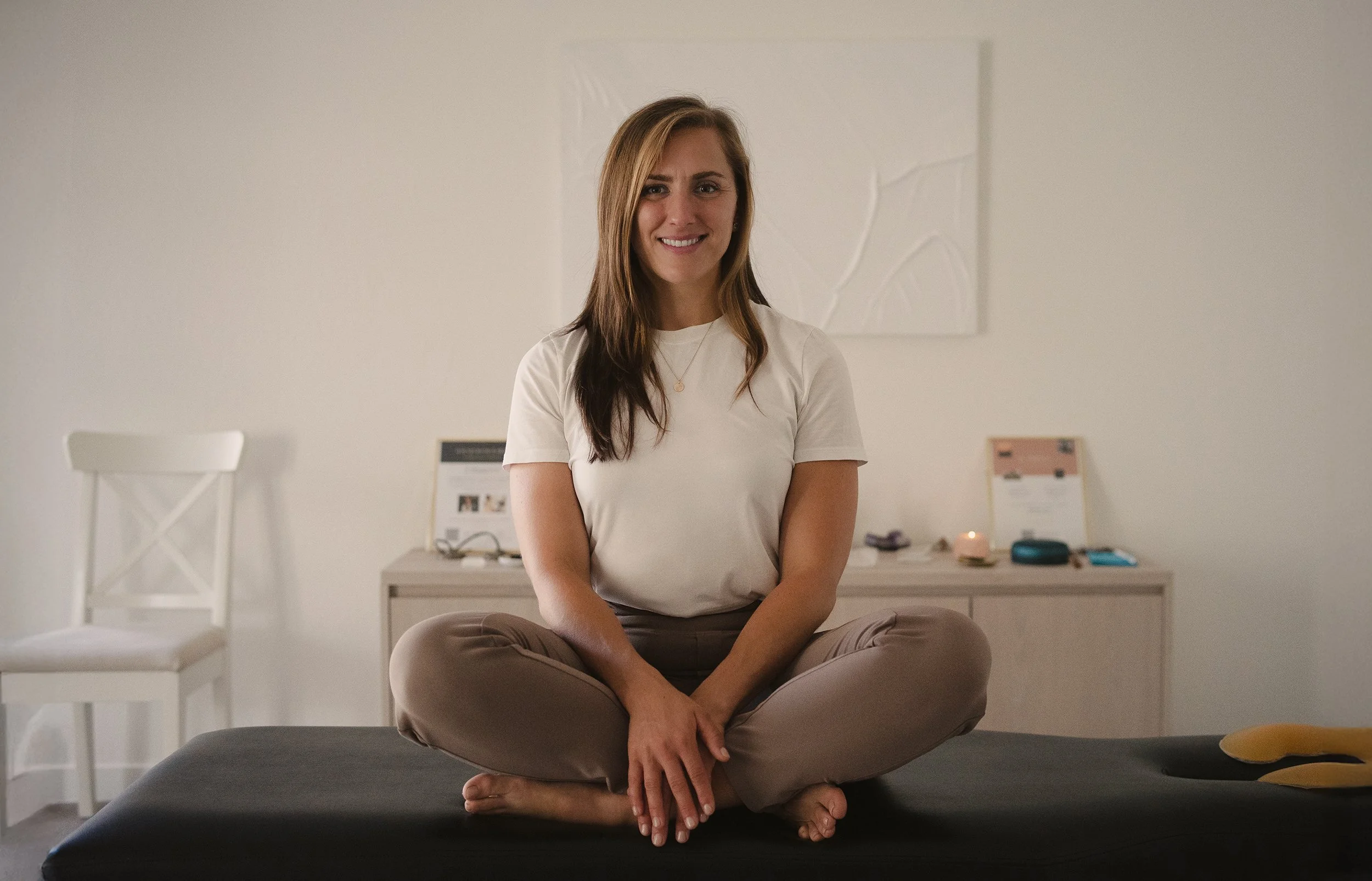
Dr. Alandi Stec is a Doctor of Chiropractic and Reiki Master specializing in nervous system-centered healing approaches. She serves the Pleasant Hill and Bay Area athletic community through Life Force Chiropractic, combining Bio-Geometric Integration with craniosacral work and somatic practices to support athletes in discovering their body's innate capacity for optimal performance and resilience.