
The Complete Guide to Nervous System Reset

You're exhausted. You've slept, eaten well, taken days off. Yet your body feels like it's running at full speed even when you're trying to relax.
Your jaw clenches. Your shoulders live near your ears. At night, you lie awake despite being tired, your mind spinning or your body too activated to settle. You stretch, try meditation apps, maybe get a massage. The relief lasts a few hours, then the pattern returns.
This is what a dysregulated nervous system feels like.
What You've Already Tried (And Why It Hasn't Quite Worked)
If this pattern resonates, you've probably tried at least some of these approaches:
Stretching and yoga.
You know the poses that feel good. You do them regularly. For a while after, your body feels looser. Then within hours or days, the tension returns.
Massage or self-myofascial release.
Same timeline. Relief is real but temporary. The tightness comes back because the signal causing the tightness never changed.
More sleep, better sleep hygiene, magnesium supplements.
You've optimized your evening routine. You've removed screens, kept the room cool, tried the melatonin or the adaptogens. But you still can't quite wind down.
Exercise.
You move your body. Maybe you run, lift, do intense workouts. Paradoxically, sometimes the harder you exercise, the more wired you feel afterward.
Positive thinking, gratitude practices, "just relax."
You know intellectually that everything is fine. Your nervous system hasn't gotten that memo. Willpower doesn't override how your body actually feels.
The frustration often sets in here. You're doing all the "right things." But something is still running underneath — something that stretching or supplements or willpower alone can't reach.
That something is your nervous system. And it needs a different kind of support.


The Nervous System Explained (In Plain Language)
Your nervous system is your body's command center for survival. It has two main branches, and understanding them is the key to understanding everything that follows.
The sympathetic nervous system is your accelerator.
It activates when you perceive danger. Your heart rate rises, breathing quickens, muscles tense, digestion slows. Blood moves to your large muscle groups. This is useful if you need to run from a threat. It's called "fight or flight" — and it evolved to keep you alive.
The parasympathetic nervous system is your brake.
It activates when your brain perceives safety. Your heart rate slows, breathing deepens, digestion resumes, muscles relax. This is the "rest and digest" state. Healing, growth, and recovery happen here.
Under normal circumstances, these systems work like a rhythm. You activate when you need to. You settle when you don't. The nervous system flexes.
But here's what happens when dysregulation sets in: Your sympathetic system stays partly activated even when there's no actual threat. Your nervous system has learned (from chronic stress, repeated patterns, unresolved injuries, or past experiences) that the world is not safe. So it stays vigilant. It stays braced. It stays ready.
This is called a holding pattern. Your body is doing exactly what it thinks it needs to do. It's not broken. It's protective. But this protection, when it becomes chronic, is exhausting.
Why Your Body Is Stuck in "Go" Mode
Think of your nervous system like a fire alarm. If it goes off once — you respond, evacuate, then turn it off. Normal.
But imagine the alarm starting going off every day. Sometimes for real fires, sometimes for smoke from dinner, sometimes for no visible reason at all. Eventually, your nervous system doesn't turn off between alarms anymore. The baseline shifts. You're always partway to panic.
This happens through accumulation. A minor car accident. A period of work stress. An old injury that never fully resolved. A breakup. Or sometimes just years of being "on" — busy, scheduled, responsible — without genuine rest.
Importantly, your nervous system doesn't distinguish between a genuine threat and a perceived one. If your brain believes you're unsafe, your body will respond as if you are — regardless of what's actually true.
Common triggers that keep dysregulation alive:
Ongoing stress (even "good" stress like a new job or renovation)
Unresolved physical injuries that altered your movement or posture
Chronic muscle tightness that your brain interprets as danger
Irregular sleep or circadian disruption (your body loses its rhythm)
Lack of safe, calm presence in your environment or relationships
Repetitive movement patterns (hunching at a desk, clenching your jaw when concentrating)
Lack of physical touch or sensing that it's safe to be touched
Breath patterns that are shallow or held (breath is directly wired to your sympathetic system)
The body is always communicating. The tightness, the exhaustion, the inability to relax — these are messages. Your system is saying "I don't feel safe yet."
The Nervous System Reset: What It Actually Is
A nervous system reset is not about forcing yourself to relax. It's not about willpower or positive thinking overriding what your body is telling you.
A reset is a gradual recalibration. It's your nervous system learning, step by step, that safety is actually possible. That it can lower its guard. That it can return to a baseline of ease rather than vigilance.
This recalibration happens through specific inputs that signal safety to your brain: certain types of movement, specific breathing patterns, gentle touch, predictable rhythms, adequate sleep, and a sense of being held or supported.
The key insight: Your nervous system is teachable. It learned to be dysregulated. It can learn to be regulated.
It just takes the right signals — consistently, over time.



How to Reset Your Nervous System: The Core Practices
1. Breathwork: Direct Access to Your Nervous System
Breath is the fastest way to shift your nervous system state. Unlike heart rate or digestion, which you can't consciously control, you can always access your breath.
Your nervous system pays close attention to your breathing pattern. A fast, shallow, high-chest breath signals "I'm in danger." A slow, deep, belly-centered breath signals "I'm safe."
Start here:
4-7-8 breathing (also called tactical breathing):
Inhale through your nose for a count of 4.
Hold for 7.
Exhale through your mouth for 8.
The extended exhale activates the parasympathetic system.
◴ Do this for 5-10 minutes daily, or whenever you notice tension rising.
Physiological sigh:
Two quick inhales through the nose, then one long exhale through the mouth.
This rapidly lowers the stress response and helps shift an overactivated system back toward baseline.
Long exhale breathing:
Deliberately make your exhale longer than your inhale (e.g., inhale for 4 counts, exhale for 6).
This is gentler than the 4-7-8 and sustainable throughout the day.
2. Movement: Recalibration Through the Body
Dysregulation gets held in the body — particularly in the hips, low back, chest, and jaw. Gentle, aware movement helps release this holding and signal to your nervous system that it's safe to let go.
This is not about intense exercise. In fact, very dysregulated nervous systems can become more activated by high-intensity workouts.
Effective movement for nervous system reset:
Yin or restorative yoga (long holds in gentle poses, allowing the nervous system to settle)
Walking (especially in nature, at a slow pace that allows conversation)
Tai chi or qigong (slow, intentional movement that's traditionally designed to balance the nervous system)
Gentle stretching with breath awareness (rather than forcing stretches, breathing into tightness and allowing release)
Dance or free movement (moving without a specific goal, just sensing how your body wants to move)
Swimming (the combination of movement, temperature, and water pressure is deeply regulating)
The common thread: movement that's slow, intentional, and connected to breath.
Not movement for speed or achievement.
3. Sleep: The Foundation Everything Else Rests On
A dysregulated nervous system often struggles with sleep. But sleep is also one of the most powerful nervous system reset tools available.
During deep sleep, your brain processes stress, consolidates learning, and literally clears toxins. You can do all the breathwork in the world, but if you're not sleeping 7-9 hours nightly, your nervous system won't have time to actually reorganize.
Sleep optimization for nervous system regulation:
Consistent sleep schedule (even on weekends — your nervous system craves rhythm)
Cool, dark room (optimal temperature is around 65-68°F)
Digital sunset (no screens after 8pm; blue light inhibits melatonin)
Evening wind-down routine (30-60 minutes of dimmed light, minimal stimulation, gentle movement or reading)
Limiting caffeine (after 2pm at the latest, earlier if you're sensitive)
Warm bath or shower (the temperature drop afterward signals bedtime to your body)
If sleep remains elusive despite these shifts, that's valuable information. It often means your nervous system needs additional support — perhaps through guided practices, professional bodywork, or both.
4. Lifestyle Rhythms: Predictability Settles the Nervous System
Your nervous system loves predictability. When your daily rhythms are chaotic — wake times, meal times, work intensity, rest periods — your nervous system has to stay partially vigilant, scanning for what comes next.
Grounding practices:
Regular meal times (every 3-4 hours, with protein and healthy fats)
Consistent wake and sleep times (even 30 minutes matters)
Scheduled movement (the same time each day signals to your body that this is safe)
Transition rituals (a specific routine between work and home, between activity and rest)
Weekly rhythms (e.g., Saturday mornings are always slow; Wednesday is your movement day)
This isn't about rigid control. It's about the comfort of rhythm.
5. Touch and Connection: You're Not Meant to Regulate Alone
This is the part that often gets overlooked in nervous system reset discussions. Your nervous system is fundamentally social. It regulates through connection.
Safe, consensual touch — a hug from someone you trust, a hand on your shoulder, a massage from someone attuned to your nervous system — directly signals safety to your brain.
If you live alone or lack safe touch in your daily life, this becomes even more important. Professional bodywork (chiropractic, massage, craniosacral therapy) isn't a luxury. It's a vital input for nervous system regulation.
Deepening connection:
Regular time with calm people (nervous systems co-regulate; being around dysregulated people is exhausting)
Physical affection from people you trust (cuddles, hand-holding, hugs all matter)
Professional bodywork (weekly or bi-weekly touch from someone trained in nervous-system-aware care)
Group practices (yoga classes, meditation groups, movement circles — the shared field of calm nervous systems is regulating)
6. Somatic Practices: Listening to Your Body's Wisdom
Somatic means "of the body." Somatic practices invite you to pay direct attention to your body's sensations and what it's trying to communicate.
This is more subtle than the previous practices, but powerful. It involves noticing — without trying to change — where you feel tension, where you feel spacious, where you feel guarded.
Simple somatic practice:
Sit quietly. Scan your body from head to feet. Notice sensations without judgment. Tight jaw? That's information. Held breath? That's information. A sense of spaciousness in your chest? That's information too. The practice is noticing, not forcing change.
Over time, this awareness itself creates change. Your nervous system begins to relax slightly just from being witnessed rather than fought.
When Self-Practice Isn't Enough: Knowing When to Seek Support
The practices above are foundational. Many people see significant shifts by implementing them consistently.
But some nervous systems have held dysregulation for so long, or have roots in trauma, that they need professional support to fully reset.
Signs you'd benefit from professional help:
• Your dysregulation has persisted for more than 3 months despite consistent practice
• Your nervous system activation interferes with daily life (panic, dissociation, chronic pain)
• You feel stuck in a specific part of your body (e.g., your jaw won't relax no matter what you do)
• Your sleep remains severely disrupted despite sleep hygiene
• Self-care practices sometimes make you feel worse rather than better
Some patterns need the presence of a trained practitioner to unwind safely.
Nervous System Reset Through Chiropractic Care
Dr. Alandi's approach is nervous-system-centered chiropractic. It doesn’t focus on structural alignment - putting bones "back in place." It doesn't force, it listens.
What nervous-system-informed chiropractic involves:
Slowing down to listen to how your body wants to move and where it's holding
Gentle touch that signals safety to your nervous system (rather than forceful adjustments)
Craniosacral work to release tension in the head, neck, and spine — areas where nervous system dysregulation is deeply held
Bio-Geometric Integration — understanding how your whole body is connected and how releasing one area allows the entire system to reorganize
Reiki-informed care — bringing attunement and energetic presence to the work
Integration time — actually giving your body time to settle after care, rather than rushing you out
When done this way, chiropractic care becomes a nervous system reset session. Your body feels the presence of someone who knows how to listen. Permission to relax begins to integrate. Breath deepens. Shoulders drop. The nervous system learns, in your cells, that it's safe.
Many people notice changes after a single session, but lasting reset happens through consistent care over weeks or months, combined with the home practices above.
How Long Does Nervous System Reset Actually Take?
This is the question everyone asks, and the honest answer is: it depends.
For mild dysregulation (recent stress, new tension patterns): 2-4 weeks of consistent daily practice.
For moderate dysregulation (chronic stress, lingering effects of old injuries): 6-12 weeks of daily practice plus professional support 1-2x per month.
For deep dysregulation (trauma history, years of chronic stress, dissociation): 3-6 months of regular practice, weekly professional support, and possibly therapeutic work.
The timeline accelerates when you combine multiple modalities. Breathwork + movement + sleep optimization + professional bodywork works faster than breathwork alone.
But here's what matters most: nervous system reset isn't a destination. It's a skill your body is learning. Once learned, it becomes a tool you carry.
You may always be more sensitive to stress than someone with a naturally calm baseline, but your capacity to return to calm becomes genuine.
The Practices That Make the Biggest Difference
Not all of the above practices carry equal weight. If you're implementing everything and it feels overwhelming, prioritize these three:
1. Sleep — Without adequate sleep, nothing else works as well.
2. Breathwork — Takes 5-10 minutes daily and creates immediate shifts.
3. Professional bodywork (if accessible) — One session per month with a nervous-system-aware practitioner accelerates everything else.
Add in movement and consistent meal times and you have a powerful foundation.
Your Nervous System Is Teachable
Your body isn't broken. It's not dysfunctional. It's been doing exactly what it learned to do — staying vigilant to keep you safe.
But vigilance was the right response for a different time. Now your system needs new information. It needs to learn that the constant threat has passed. That rest is possible. That your body can settle.
This learning happens through the practices above — through breath, movement, sleep, rhythm, touch, and listening. It happens through time, consistency, and sometimes professional support that creates the conditions for real change.
If you're tired of your body running at full speed. If you're ready to feel what genuine ease feels like.
If you want to know what it's like to actually settle into your nervous system instead of fighting it.
There are pathways available to you.


Your Pathways to Support
If you're in the East Bay (Pleasant Hill, Walnut Creek, Lafayette, or nearby):
Consider scheduling a session with Dr. Alandi. Nervous-system-centered chiropractic care creates the conditions for the reset your body is ready for. Whether it's your first time or you're deepening existing practice, sessions are designed to give your nervous system the time and attunement it needs to reorganize. Book a session
If you want a structured, self-guided pathway:
The 12-Day Nervous System Regulation course ($50) gives you daily practices specifically designed to signal safety to your nervous system. Guided by Dr. Alandi's voice and grounded in nervous system science, it's a complete introduction to the practices that work. Explore the 12-Day course
If you're dealing with tired-but-wired sleep issues:
The Yoga Nidra at Home course ($35) is a guided practice that meets your nervous system exactly where it is. Yoga Nidra is specifically designed to move the system from activation into the deepest rest state. Many people notice the shift after a single practice.
If you're seeking deeper nervous system integration:
The Attuning Into You course ($350) $105 is a comprehensive somatic journey into your nervous system, your body's wisdom, and the practices that create lasting transformation. It's for people ready to do deeper work. Learn about Attuning Into You
One More Thing
Your nervous system has been working for you. Even when it's stuck. Even when the constant vigilance feels exhausting.
Now, with the right support and consistent practice, it can learn something new: that rest is safe. That ease is possible. That you can settle all the way down and still be protected.
This is what nervous system reset actually is. Not forcing relaxation. Not pushing through. But gradually, gently, teaching your body that it can come home to itself.
Your body knows the way. It just needs the conditions to remember.
Frequently Asked Questions
Q: How long does it take to reset your nervous system?
A: Most people notice subtle shifts within 2-3 weeks of consistent daily practices like breathwork, movement, and nervous system-aware lifestyle changes. For deeply rooted dysregulation from chronic stress or past trauma, expect 6-12 weeks of practice, or longer with professional support like chiropractic care or somatic therapy.
Q: What's the difference between nervous system regulation and just meditation?
A: Meditation is one tool for calm. Nervous system regulation addresses why your system got dysregulated in the first place — and uses multiple pathways (breath, movement, touch, nervous system-centered bodywork) to create lasting change. Meditation helps when your nervous system is already partly regulated. Nervous system work gives your system the foundation to benefit from meditation.
Q: Why does my nervous system feel stuck in fight-or-flight?
A: Your nervous system becomes "stuck" when it receives chronic signals of threat or instability — ongoing stress, past trauma, unresolved injuries, or even repetitive physical patterns like tight hips or a clenched jaw. The body is intelligent. It adapts by staying vigilant. This protection made sense at the time. Now your system needs permission to relax.
Q: Can chiropractic care help reset the nervous system?
A: Yes, specifically when the chiropractic approach is nervous-system centered. Rather than forcing bones into alignment, nervous-system-informed chiropractic (like Bio-Geometric Integration or craniosacral work) listens to the body and supports it in reorganizing. Gentle touch signals safety to the brain. When the nervous system senses safety, muscles stop guarding, breath deepens, and real change happens.
Q: Can I reset my nervous system at home, or do I need professional help?
A: You can begin nervous system regulation at home with breathwork, movement, sleep optimization, and lifestyle shifts. These are foundational and valuable. But if your dysregulation is chronic or trauma-rooted, professional support (chiropractic care, somatic therapy, or guided courses) accelerates the process and prevents you from re-traumatizing yourself through incomplete practice.
Q: What are the first signs that my nervous system needs a reset?
A: Common early signs include: trouble sleeping despite exhaustion (tired but wired), constant tension in your jaw or shoulders, shallow breathing, feeling startled easily, digestive upset without physical illness, chronic muscle tightness that stretching doesn't fix, or a persistent sense of being "on" even at rest. These are your body's messages that it doesn't feel safe.
About Dr. Alandi Stec
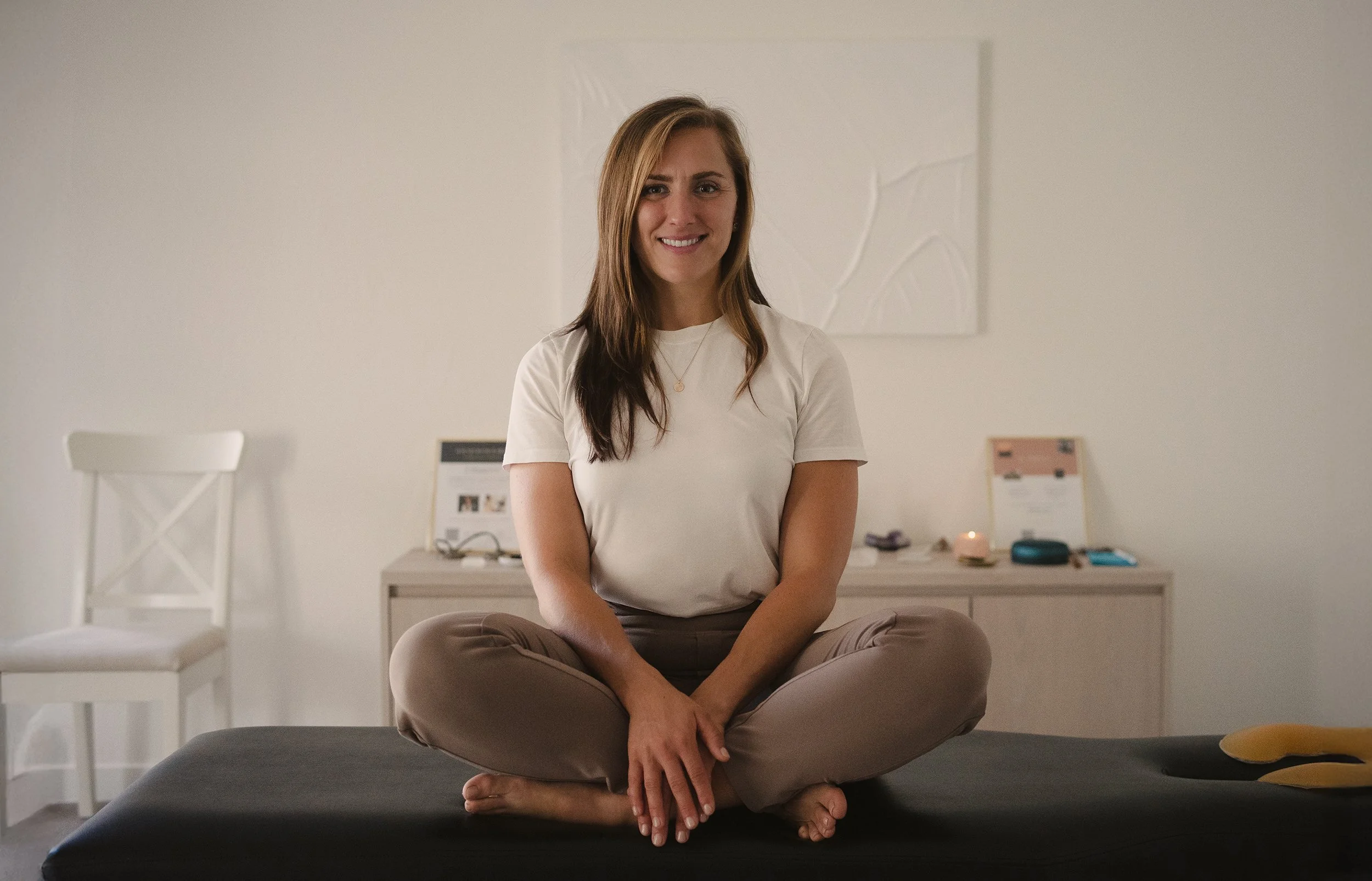
Dr. Alandi Stec is a Doctor of Chiropractic and Reiki Master specializing in nervous system-centered healing approaches. She serves the Pleasant Hill and Bay Area athletic community through Life Force Chiropractic, combining Bio-Geometric Integration with craniosacral work and somatic practices to support athletes in discovering their body's innate capacity for optimal performance and resilience.