
Why Your Back Pain Keeps Coming Back (It's Not Your Posture)

You wake up and your lower back feels locked. Not sharp pain exactly, more like everything tightened overnight.
You stretch, twist, try to crack it yourself. It loosens for a minute. Then it's back.
Or maybe you go to the gym, do your workouts, feel fine that day. The next morning? Locked again. You've started to wonder if this is just how your body is now. If this is something you'll manage forever.
This isn't a postural problem, and it is something that you can shift.
What You've Probably Already Tried (And Why It Didn't Stick)
You know the routine by now. Stretching routines on YouTube. Rolling out your back with a foam roller. Maybe even a massage, which felt incredible for about three days. You did the glute strengthening exercises, the core work, the planks. For a little while, it seemed to help. Then the tightness crept back.
You've had it checked out. No disc hernia. Nothing obviously structurally wrong. Your chiropractor cracked it, or your massage therapist worked it, and you felt relief. Until you didn't.
The frustration is real: how can pain keep coming back if nothing's actually broken?
That question matters. Because the answer changes everything about how you approach relief.
The Nervous System Holding Pattern
Here's what's actually happening underneath the surface: your nervous system is stuck in a protective stance.
When you've had back pain—especially if it's happened repeatedly—your body learns something. It learns that the low back is vulnerable. So it starts bracing. Tightening. Creating a protective pattern that says, I'm going to hold this area tight to keep it safe.
This is intelligent. It's not dysfunction. It's your nervous system doing exactly what it thinks it needs to do given the signals it's receiving. But intelligence doesn't mean relief.
The thing about a protective holding pattern is that stretching and strengthening don't actually change it. Think of it this way: you can lengthen a tight muscle repeatedly, but if the signal from your nervous system is still brace, protect, hold on, the muscle will tighten right back up as soon as you're done stretching.
Your nervous system is like a vigilant guard at the door. You can knock and say, I'm safe now, you can relax. But the guard has been on duty for weeks or months or years. One conversation doesn't change the post.
How One Muscle Connects Your Hips, Your Breathing, and Your Stress
This is where it gets specific. There's a deep muscle in your core called the psoas. It's unlike any other muscle in your body because it connects your pelvis to your spine, running from your lower ribs all the way down into your hip.
The psoas isn't just mechanical. It's directly tied to your nervous system's stress response. When you're stressed or in a state of protective guardedness, the psoas tightens. Automatically. Without you deciding to do it.
Here's the cascade: a tight psoas tilts your pelvis forward. That forward tilt increases pressure through your lower back. It also compresses your breath—your ribs can't expand freely when the psoas is clenched—and shallow breathing keeps your nervous system in a state of alert.
So you have three things locked in together: tight hips, compressed lower back, and shallow breathing. And each one is signaling to your nervous system, danger, stay protected.
This is why you can do all the stretching in the world but your back never truly releases. You're addressing the symptom—the tight muscles—without changing the nervous system signal that's creating the tension in the first place.
Why Conventional Approaches Reach a Ceiling
This is where it's worth understanding why relief stops working.
A massage therapist, a chiropractor who cracks and adjusts, foam rolling—these can all create temporary relief. They signal to your tissues: relax, you're okay. But they're speaking to the muscles, not to the nervous system's core security alarm.
Most approaches to back pain work on the principle: the pain is in the low back, so we treat the low back. Move it, stretch it, strengthen it, adjust it. The problem is that low back pain rarely starts in the low back. It starts in the nervous system's assessment of threat.
When your body decides the low back needs protecting, it braces through the hips, the psoas, the abdomen, even the muscles between your ribs. It's a full-system response. But most people—and most practitioners—chase the symptom, not the pattern.
That's why the pain keeps coming back. You're treating the output, not changing the input.
Dr. Alandi's Approach: Listening to What Your Body Is Actually Saying
Here's how this works differently when the nervous system is part of the equation.
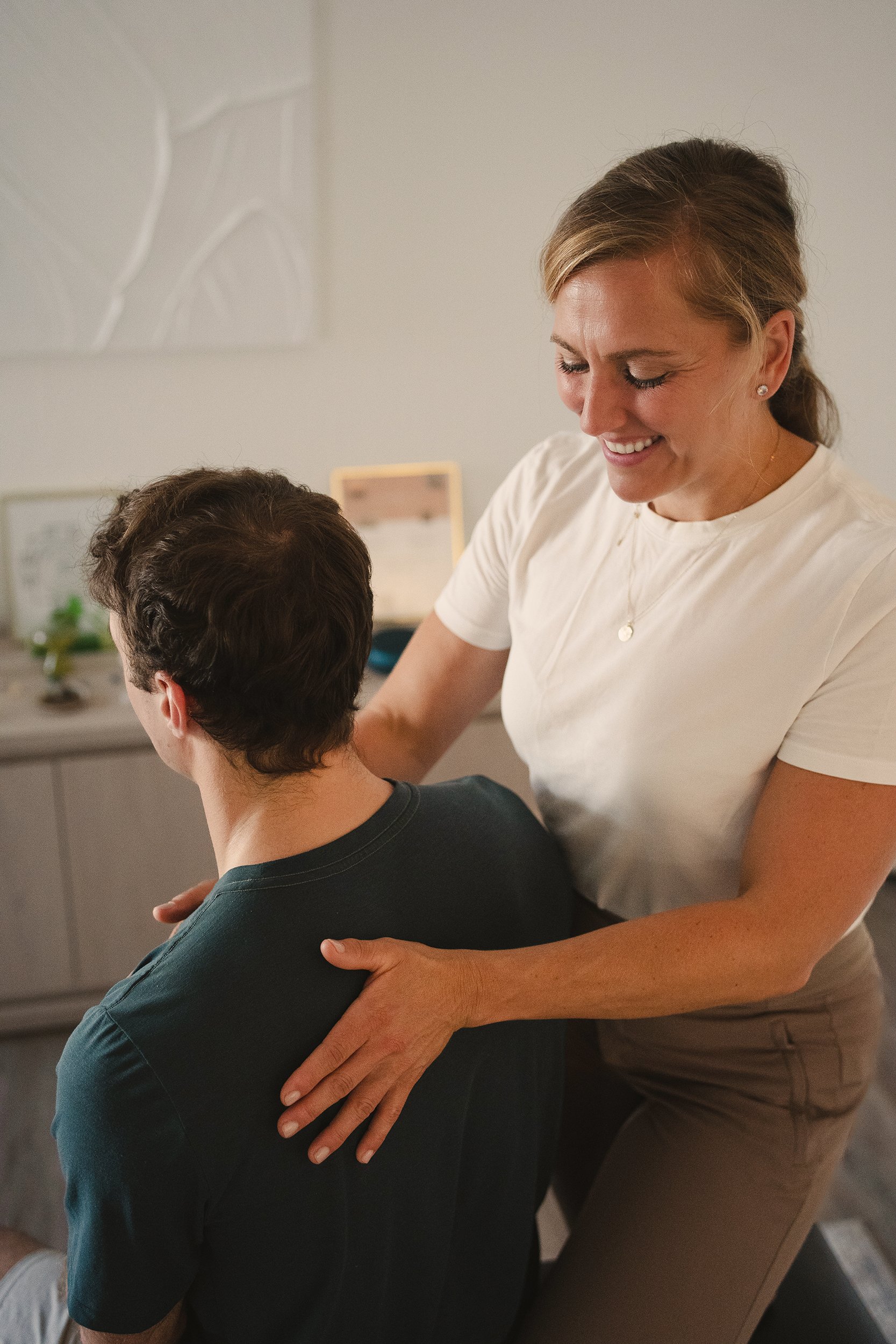
Dr. Alandi's approach to low back pain starts with listening. Not to your diagnosis or your imaging results, but to your body. She pays attention to how your hips are sitting relative to your pelvis. How your breath is moving—or not moving. How your ribs are positioned. The way your lower spine is responding to gentle touch.
This is called tissue tone matching. Instead of forcing your body into a particular position or doing something to your back, she's following what your body is showing her. And she's paying close attention to your nervous system's response.
A session addressing low back pain and a tight psoas doesn't look like a standard adjustment. It might involve gentle craniosacral work to downregulate your nervous system. Careful, attentive touch that tells your body, you're safe now, it's okay to let go. Sometimes it involves working with your breath, helping your diaphragm remember how to fully expand, which automatically softens the psoas.
This is important: when your nervous system genuinely feels safe, your muscles release differently. Not forced. Not through force. Through the body's own intelligence recognizing that protection is no longer needed.
What do people notice afterward? Often very specific things. A deepening of breath they haven't felt in months. Hips that feel less compressed. A sense of length through their low back instead of tightness. Movement that feels easier, more fluid. Sometimes it's even more subtle—a sense that the body stopped clenching even though they weren't consciously holding tension.
These shifts happen because the underlying pattern shifted. The nervous system received a clear signal: safety. And the body reorganized around that.
The Cascade That Creates Lasting Change
This is why combining nervous system work with movement practices creates results that stretching alone can't match.
Here's the sequence: First, your nervous system gets the signal that safety is possible. This happens through specific chiropractic care—through touch that your body recognizes as skillful, attentive, safe. Your guard starts to lower.
Then, from that state of relative ease, you layer in movement and breathing practices. Your body learns new patterns from a place of ease rather than from a place of bracing. Stretching from a nervous system that's downregulated works completely differently than stretching from a system that's still trying to protect.
Breath is often part of this. When you breathe fully—diaphragmatically, not just in your chest—your psoas naturally softens. You're literally signaling to your body with your breath: we're safe, we can relax. Over time, that breath pattern becomes your default, and the tight hips and compressed lower back start to normalize.
Within 2-3 weeks of this kind of consistent practice, many people notice their back pain changing.
Not necessarily gone, but different. Less reactive. Less likely to flare up with ordinary movement. Sometimes it shifts entirely. The timeline depends on how long the pattern has been there and what your body needs.
What You Can Start Noticing Right Now
You don't need to wait for a session to start seeing the nervous system connection. Notice what happens when you're stressed or anxious. Do your hips tighten? Does your lower back tension increase?
Notice too what happens when you genuinely relax. Not trying to relax, but actually settling. Does something shift in your lower back? Does your breathing deepen?
This feedback is your body showing you the connection. Your back isn't held tight by bad posture or weak muscles. It's held tight by your nervous system's decision to protect it. Which means it can be released by your nervous system's decision to let go.
When to Seek Support Beyond Your Own Practice
Daily nervous system practices—breathing work, gentle movement, rest—can shift a lot. And they're foundational. But there's something that hands-on, body-based chiropractic care does that you can't replicate alone.
A skilled practitioner can feel what your system is actually doing. Can follow the patterns your body is expressing. Can offer a kind of touch that downregulates your nervous system in a way that opens the door for the rest of your body to let go.
This is especially true if your back pain has been around for a while, or if it flares up frequently. The pattern has had time to embed itself. Your body needs more than your own effort to reorganize.
If you've tried stretching, strengthening, and rest—and the pain keeps returning—this is the piece that's usually missing. Not because there's anything wrong with you, but because nervous system patterns often need skilled support to shift.
There Is Another Way
That feeling of your back locking up when you wake. That frustration of doing all the right things and still having the pain return. That underlying worry that maybe this is just how your body is now.
None of that has to be permanent.
Your back isn't broken. Your nervous system isn't broken. Your body is doing exactly what it's learned to do—protecting what it believes is vulnerable. And what the nervous system has learned, it can unlearn.
The shift happens when three things come together: an approach that addresses the nervous system, not just the muscles; consistent practice that reinforces safety; and often, skilled hands-on support that signals to your body at a level below conscious thought: you're okay, you can let go.
This is the care that creates lasting change. Not the kind that feels good for three days. The kind where your back actually stops the pattern of returning.
Whether you're in Pleasant Hill, Walnut Creek, Lafayette, or nearby and you've been chasing the same tight spot without lasting change—it may not be the spot. It may be the pattern.


Ready to Explore a Different Approach?
If you're local to the East Bay and ready to work with someone who listens to your nervous system, sessions with Dr. Alandi focus on this exact kind of work. You're welcome to explore what it feels like when chiropractic care includes nervous system downregulation, craniosacral work, and attention to your body's actual patterns rather than a standardized approach.
For those outside the Bay Area or not quite ready to book: the 12-Day Nervous System Regulation course gives you the exact practices that support this kind of nervous system shift. Daily guided work that teaches your body how to genuinely relax, how to breathe fully, how to signal safety to your nervous system. Many people notice their physical tension—including low back pain—shifting within the first week as their nervous system settles.
The pain doesn't have to be a permanent feature of your body. It's a signal. And signals can change.
Frequently Asked Questions
Q: Why does my back pain keep coming back even after stretching?
A: Stretching and exercises target the muscles but don't address the nervous system holding pattern underneath. Your body is bracing against perceived danger, and that signal keeps tightening your muscles even when you stretch. Until the nervous system feels safe, relief stays temporary.
Q: Can tight hips cause low back pain?
A: Yes. A deep hip muscle called the psoas connects directly to your spine and breath pattern. When stress keeps the psoas tight, it tilts your pelvis and compresses your lower back. This is why hip tension and low back pain so often go together.
Q: Is my low back pain actually a posture problem?
A: Posture is part of the picture, but usually not the cause. If posture alone was the issue, correcting it would fix the pain. The fact that it keeps returning suggests your body has learned to brace—a nervous system response to accumulated stress, past injury, or ongoing tension.
Q: How long does it take to stop having recurring back pain?
A: Relief can start within days of nervous system downregulation work. Lasting change—where your body stops the protective bracing pattern—usually takes 2-4 weeks of consistent practice. Everyone's timeline is different based on how long the pattern has been there.
Q: What's the difference between chiropractic care and just doing exercises at home?
A: Exercises teach your body new movement patterns. Chiropractic care that addresses the nervous system does something different: it gives your body the direct signal that it's safe, so the bracing pattern can finally release. Combined, they're far more effective than either alone.
Q: Does low back pain mean I've damaged my spine?
A: Most low back pain isn't structural damage. Your nervous system may interpret stress, past injury, or movement patterns as danger and respond by tightening. The body's protective response is intelligent—not a sign that something's broken.
About Dr. Alandi Stec
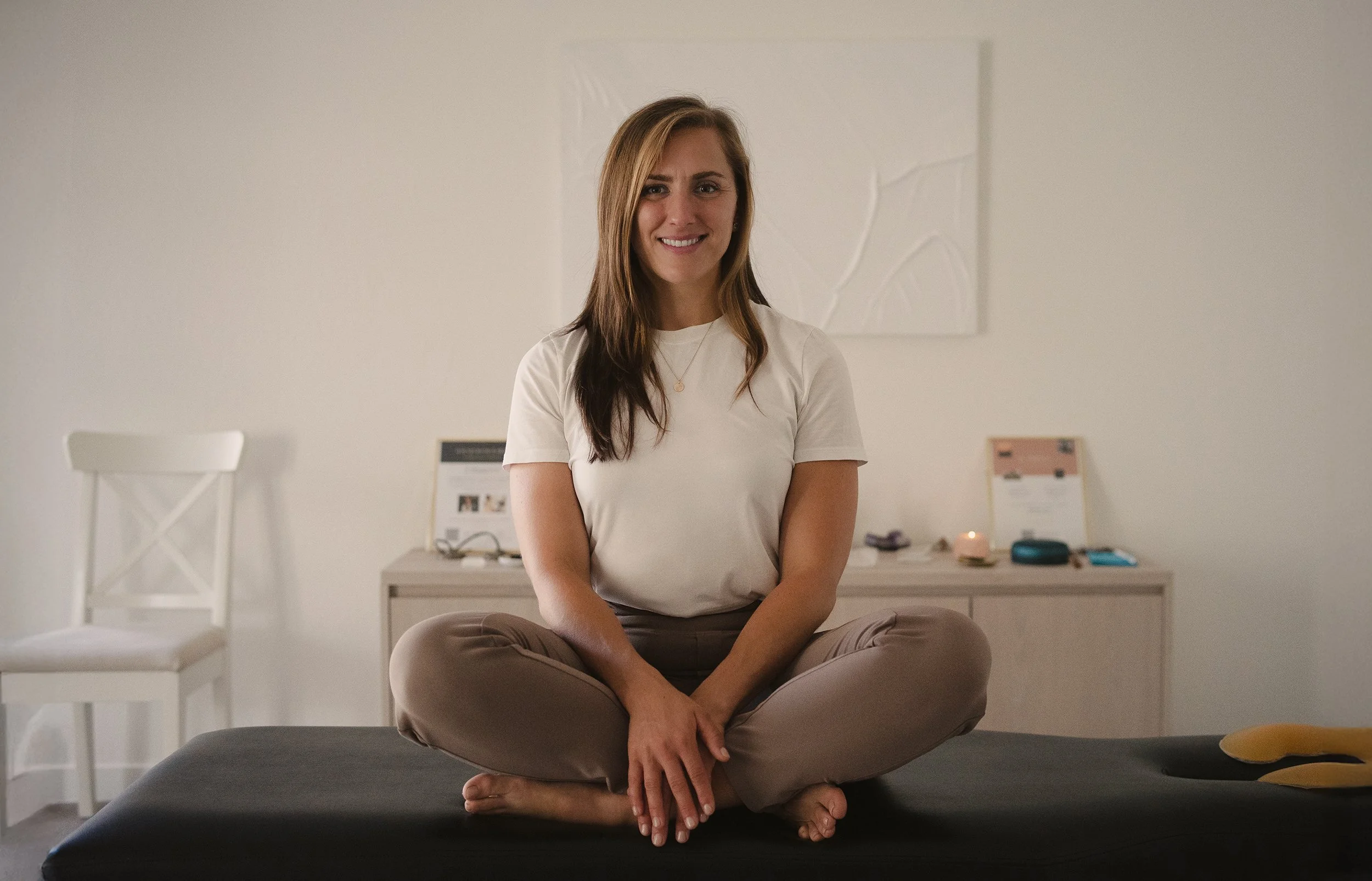
Dr. Alandi Stec is a Doctor of Chiropractic and Reiki Master specializing in nervous system-centered healing approaches. She serves the Pleasant Hill and Bay Area athletic community through Life Force Chiropractic, combining Bio-Geometric Integration with craniosacral work and somatic practices to support athletes in discovering their body's innate capacity for optimal performance and resilience.