
How Nervous System Regulation Improves Athletic Performance

You train consistently. You fuel properly. You prioritize recovery. But something feels off.
Maybe you're not hitting the times you know you're capable of. Maybe nagging injuries keep recurring. Maybe you recover slower than you used to. Maybe your body feels tight and restricted even when you stretch religiously.
You've tried sports massage, physical therapy, foam rolling, mobility work. Some things help temporarily. But the underlying pattern continues.
Here's what's often missing: your nervous system.
Peak athletic performance isn't just about muscle strength or cardiovascular capacity. It's about how well your nervous system coordinates movement, processes stress, and supports recovery. When your nervous system is dysregulated, everything downstream suffers.
The Athletic Nervous System
Your nervous system controls everything your body does. Every muscle contraction. Every breath. Every heartbeat. Every split-second adjustment your body makes during movement.
When you're running, cycling, swimming, lifting, your nervous system is orchestrating an incredibly complex coordination of thousands of muscle fibers, joint positions, and sensory inputs. All happening faster than conscious thought.
This coordination depends on accurate information flow. Your brain receives input from proprioceptors (sensors that tell you where your body is in space), processes that information, and sends output to muscles to create movement.
When this system works optimally, movement feels effortless. Your body responds exactly as you intend. You have access to your full power and coordination.
When this system is dysregulated, when there's interference in the information flow, movement requires more effort. Your coordination suffers. You can't access your full capacity even though the muscle strength is there.
This is why two athletes with similar physical conditioning can perform very differently. The difference often isn't in their muscles. It's in their nervous system function.
How Dysregulation Limits Performance
Chronic stress, whether from training, work, relationships, or life circumstances, creates nervous system dysregulation.
When you're in sympathetic activation, when your body is stuck in fight-or-flight patterns, several things happen that directly limit athletic performance.
Muscle tension becomes chronic.
Your body maintains protective bracing patterns. Hip flexors stay tight. Shoulders stay elevated. Your jaw clenches. This chronic tension restricts movement range and creates compensatory patterns that limit power and efficiency.
Recovery capacity decreases.
Parasympathetic function, your rest-and-digest system, is suppressed when you're in chronic sympathetic activation. This is the system responsible for tissue repair, inflammation reduction, and resource restoration. When it's not functioning well, you don't recover between training sessions.
Pain sensitivity increases.
Chronic activation heightens your nervous system's threat detection. This means you feel pain more intensely and recover from injury more slowly. Your pain threshold is lower because your nervous system is already on high alert.
Movement patterns deteriorate.
When your nervous system is dysregulated, it prioritizes survival over efficiency. You develop compensatory movement patterns that protect perceived areas of vulnerability. These patterns limit your performance and increase injury risk.
Coordination and reaction time suffer.
Optimal athletic performance requires your nervous system to process information and respond instantaneously. When you're dysregulated, that processing slows down. Your reaction time increases. Your body can't make the micro-adjustments that separate good performance from great performance.
Athletes often think they need to train harder when performance plateaus. But sometimes you need to regulate your nervous system so the training you're already doing can actually translate into performance gains.
The Pleasant Hill Athlete Advantage
Pleasant Hill and the surrounding Bay Area communities have vibrant athletic populations. Runners on Iron Horse Trail. Cyclists climbing Mount Diablo. Masters swimmers. CrossFit athletes. Yoga practitioners moving between strength, breath, and stillness. Weekend warriors balancing training with demanding careers.
The challenge many local athletes face is doing everything right for performance but missing the nervous system component. You're training smart. Eating well. Getting bodywork. But if your nervous system is carrying chronic stress from your tech job, your commute, your life demands, that activation limits what your body can do athletically.
This is where nervous system-centered chiropractic care makes a difference.
At Life Force Chiropractic in Pleasant Hill, we work with athletes from Pleasant Hill, Walnut Creek, Lafayette, Orinda, Concord, and throughout the East Bay who understand that peak performance requires more than just physical training. It requires a regulated nervous system that can coordinate movement efficiently, recover completely, and adapt to training stress without breaking down.

What Nervous System-Centered Care Looks Like for Athletes
Traditional sports chiropractic often focuses on treating injuries after they occur or providing aggressive adjustments for immediate mobility.
Nervous system-centered care is different. We're working with your body's organizational intelligence to optimize function before problems develop and support resilience throughout your training cycle.
Bio-Geometric Integration (BGI) is the foundation of this approach. Rather than forcing your body into alignment with forceful adjustments, BGI uses precise, gentle contacts that help your nervous system reorganize around better patterns.
Your body already knows optimal alignment. Your nervous system is constantly trying to find it. But compensatory patterns, old injuries, chronic stress, these create interference. BGI removes the interference so your body can realign naturally.
For athletes, this means several things.
Improved proprioception. When your spine is aligned and your nervous system has accurate information about where your body is in space, your movement becomes more efficient. You can access power without compensation. Your body responds more precisely to what you're asking it to do.
Better recovery between sessions.
When your nervous system can shift from sympathetic (training) to parasympathetic (recovery) effectively, you adapt to training stress instead of accumulating it. You show up to your next workout actually recovered, not just rested.
Injury prevention.
Most athletic injuries aren't random. They happen at areas of chronic compensation where your body has been working around restrictions or imbalances for months or years. When those patterns release, when your body can move through its full range without compensation, injury risk decreases significantly.
Increased resilience.
Training is stress. Racing is stress. Your body's ability to handle that stress without breaking down depends on nervous system capacity. When you build regulation into your training program, you can sustain higher training loads without overtraining symptoms.
Real Performance Gains
Athletes notice specific changes when their nervous system regulates.
Your breathing capacity increases. Your diaphragm functions better. Your ribcage has more mobility. You can access deeper breaths during effort without feeling restricted.
Your movement becomes more fluid. Restrictions you've been working around for years suddenly release. You have access to ranges of motion you forgot were possible.
Your recovery improves noticeably. You're not as sore after hard efforts. When you are sore, it resolves faster. You can train more consistently because you're actually recovering between sessions.
Chronic niggles that never quite became injuries but were always there in the background, those start to resolve. That tight hip flexor that's been bothering you for two years. The shoulder that always feels slightly off. The knee that's just not quite right.
Your power output increases even though you haven't changed your training. Because your body can access the coordination and muscle recruitment it couldn't access when compensatory patterns were limiting you.
You perform better under pressure. Racing requires your nervous system to handle extreme stress while maintaining optimal function. When you have better nervous system capacity, you can push harder without falling apart.
These aren't subtle changes. Athletes notice them in training and racing within weeks.
Integration with Your Training Program
Nervous system-centered care doesn't replace your training. It supports it.
Most athletes in Pleasant Hill work with us throughout their training cycle, with frequency adjusted based on training load.
During base building phases:
Monthly sessions maintain alignment and support adaptation to increasing volume.
During intense training blocks:
Bi-weekly sessions help your nervous system process training stress and prevent accumulation of compensatory patterns.
During taper and racing:
Strategic sessions optimize nervous system function so you show up to your race with your body performing at its best.
During off-season or recovery phases:
This is ideal timing for deeper work. When training load is low, your body can make more significant structural and neurological changes.
We also integrate with your existing support team. If you're working with a coach, physical therapist, massage therapist, sports medicine doctor, we coordinate care. Your body functions as a whole system. Your support team should function as a whole system too.
Beyond Injury Treatment
Many athletes only seek chiropractic care after injury. They're hurt, they need treatment, they come in.
But waiting until you're injured means you're always playing catch-up. You're managing problems instead of building resilience.
Performance-focused athletes in Walnut Creek, Lafayette, and throughout the East Bay are shifting to a proactive approach. They're getting care before problems develop. They're building nervous system capacity as part of their training program, not just as injury rehabilitation.
This shift changes everything. Instead of repeatedly treating the same issues, you're preventing them from developing. Instead of working around limitations, you're removing them.
Your body performs better when it's not constantly trying to compensate for restrictions you don't even know are there.



Who This Approach Serves
Nervous system-centered chiropractic care supports athletes across all levels and disciplines.
Endurance athletes (runners, cyclists, triathletes, swimmers) benefit from improved breathing mechanics, better posture under fatigue, and enhanced recovery between training sessions. Long training hours create repetitive strain patterns that benefit from nervous system support.
Strength athletes (CrossFit, weightlifting, powerlifting) need optimal nervous system function for power generation and coordination. When your nervous system can recruit muscle fibers efficiently without compensation, you can lift heavier with better form.
Masters athletes (35+) are working with bodies that have accumulated years of compensatory patterns. Releasing these patterns and optimizing nervous system function helps you train and compete at levels you might have thought were no longer possible as you age.
Youth athletes benefit from establishing optimal patterns early. Preventing the development of compensatory patterns is easier than releasing them after years of reinforcement.
Yoga practitioners rely on balanced nervous system input for joint stability, mobility, and efficient muscular engagement. When the nervous system is regulated, poses require less effort, transitions feel smoother, and the body is better able to adapt to sustained holds and repetitive movement without strain.
Weekend warriors balancing athletic pursuits with demanding careers need their bodies to perform well without excessive recovery time. You can't afford to be sidelined by injuries or take days to recover from training when you have a full life beyond athletics.
Whatever your sport, whatever your level, if you're asking your body to perform, your nervous system needs to support that performance.
Common Athletic Issues We Address
Certain patterns show up consistently in the athletic population.
Chronic IT band tightness.
This isn't about stretching more. It's usually about pelvic alignment and nervous system patterns that create compensation through your lateral hip and leg. When the underlying pattern shifts, IT band tension often resolves without direct treatment.
Recurring hamstring strains.
Often related to pelvic positioning, core activation patterns, and nervous system coordination of the posterior chain. Treating the hamstring without addressing the pattern means it will strain again.
Plantar fasciitis that won't resolve.
Your feet are the foundation of athletic movement. When your nervous system can't properly coordinate foot and ankle mechanics, plantar fascia takes excessive load. Address the nervous system coordination, foot mechanics improve.
Shoulder impingement in swimmers and throwers.
Usually involves thoracic spine mobility, cervical alignment, and nervous system patterns that limit shoulder blade movement. The shoulder pain is real, but the problem isn't just the shoulder.
Low back pain during or after training.
Often stems from core coordination issues, pelvic stability problems, or nervous system patterns that create excessive lumbar loading. Strengthening your core helps, but if the underlying nervous system pattern hasn't changed, the pain returns.
"My body just feels tight all the time."
This is chronic sympathetic activation. Your muscles aren't actually structurally short. Your nervous system is maintaining protective tension. When your system regulates, muscles release without excessive stretching.
These aren't problems you have to live with. They're patterns that can change when you address the nervous system component.

Getting Started in Pleasant Hill
If you're an athlete in Pleasant Hill, Walnut Creek, Lafayette, Orinda, or surrounding East Bay communities, nervous system-centered care is accessible.
Your first visit includes a comprehensive assessment of your nervous system function, movement patterns, and how your body is currently adapting to athletic demands. We look at where compensations have developed, where restrictions are limiting performance, and what patterns are setting you up for potential injury.
From there, we create a care plan that integrates with your training. Not generic recommendations, but specific support based on where you are in your training cycle and what your body needs.
Most athletes start with weekly or bi-weekly sessions for the first month to establish baseline changes, then adjust frequency based on training load and how well your body is adapting.
Sessions typically take 30-60 minutes depending on what your body needs that day. We're not just adjusting and sending you out. We're working with your nervous system to support lasting change.
You can book online, call our Pleasant Hill office, or email with questions about whether this approach is right for your athletic goals.
Performance Isn't Just Physical
You already know training matters. Nutrition matters. Sleep matters. Recovery matters.
Your nervous system is the foundation all of these build on. When your nervous system is regulated, when your body can coordinate movement efficiently and recover completely, everything else works better.
You don't need to train harder. You need your nervous system to support the training you're already doing.
That tight feeling. That sense you can't quite access your full capacity. That pattern of recurring issues that never fully resolve. These aren't signs you need to push harder. They're signs your nervous system needs support.
Peak performance requires a regulated nervous system. Your body already wants to perform optimally. Sometimes it just needs the right support to do so.
Ready to Optimize Your Performance?
Schedule your initial consultation at Life Force Chiropractic in Pleasant Hill. We'll assess your nervous system function, identify patterns limiting your performance, and create a care plan that integrates with your training.
Location: Pleasant Hill, California
Serving: Pleasant Hill, Walnut Creek, Lafayette, Orinda, Concord, Clayton, Martinez, and throughout the East Bay
Investment:
30-minute session: $110
60-minute session: $220
Book Your Athletic Performance Assessment →
We work with endurance athletes, strength athletes, masters competitors, youth athletes, and weekend warriors who understand that peak performance requires more than just physical training.
Frequently Asked Questions
Do you work specifically with athletes?
Yes. While we serve all populations, a significant portion of our practice includes athletes from Pleasant Hill and surrounding East Bay communities. We understand the specific demands athletic training places on your nervous system and how to support optimal performance.
How is this different from traditional sports chiropractic?
Traditional sports chiropractic often focuses on injury treatment and mobility through forceful adjustments. Nervous system-centered care using Bio-Geometric Integration is gentler and works with your body's organizational intelligence. We're optimizing nervous system function for performance, not just treating injuries after they occur.
How often should I come in during training?
This depends on your training load and how well your body is adapting. Most athletes start with weekly or bi-weekly sessions. During intense training blocks, more frequent care supports recovery. During base building or off-season, monthly maintenance is often sufficient. We adjust frequency based on your needs and training cycle.
Can you help prevent injuries?
Yes. Most athletic injuries aren't random. They develop at areas of chronic compensation where your body has been working around restrictions for months or years. When we release these patterns and optimize nervous system function before problems develop, injury risk decreases significantly.
Do you work with my coach or physical therapist?
Absolutely. We coordinate care with your existing support team. Your body functions as a whole system, and your healthcare should too. If you're working with a coach, PT, massage therapist, or sports medicine doctor, we collaborate to support your performance goals.
I'm not a competitive athlete, just someone who likes to stay active. Is this still relevant?
Yes. Whether you're training for an Ironman or just trying to run a few times per week without pain, your nervous system coordinates your movement and recovery. Everyone benefits from optimal nervous system function, regardless of competitive level.
Where are you located?
We're in Pleasant Hill, California, easily accessible from Walnut Creek, Lafayette, Orinda, Concord, Clayton, Martinez, and throughout the East Bay. Convenient parking and flexible scheduling to work with your training schedule.
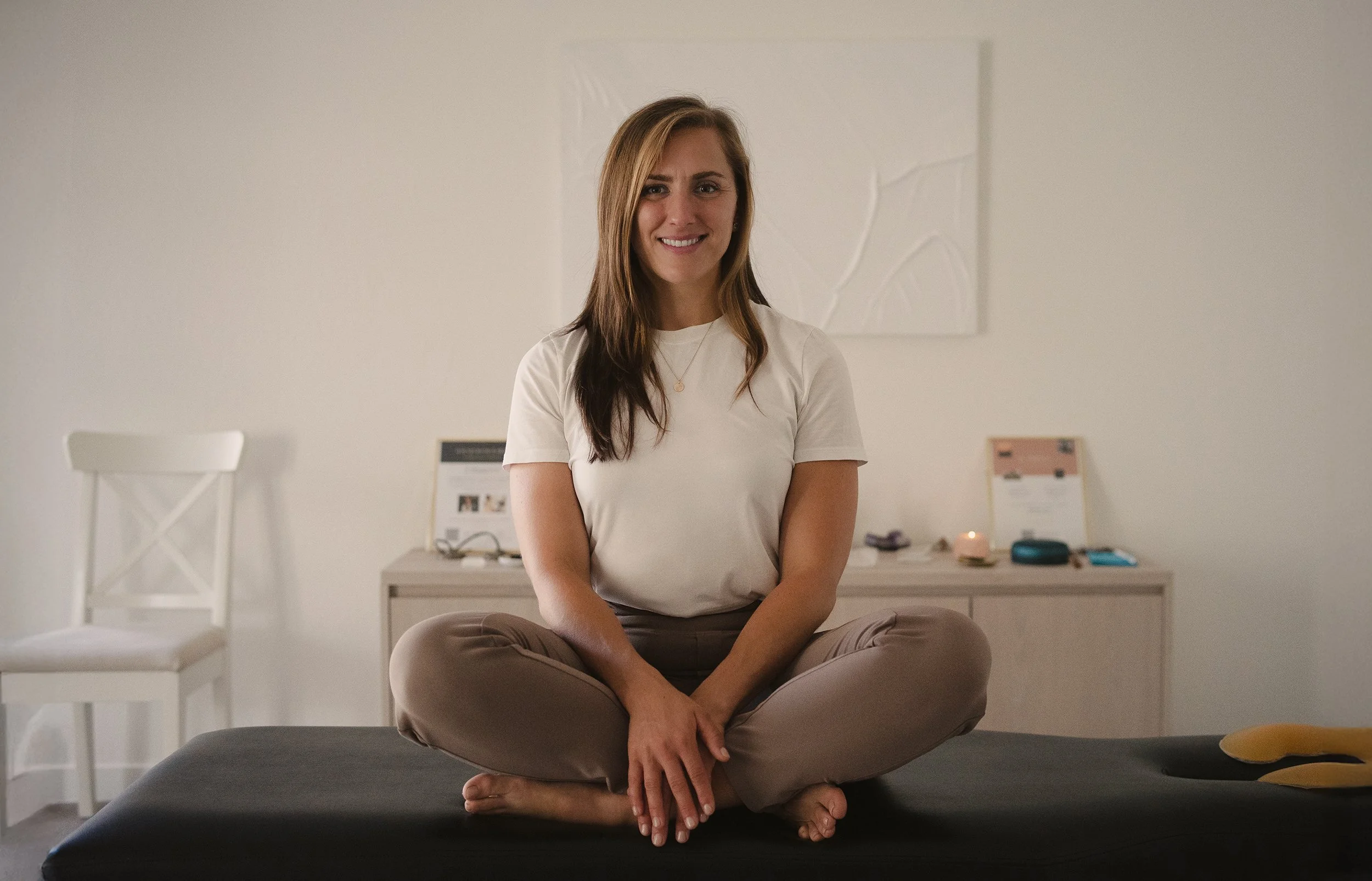
About Dr. Alandi Stec
Dr. Alandi Stec is a Doctor of Chiropractic and Reiki Master specializing in nervous system-centered healing approaches. She serves the Pleasant Hill and Bay Area athletic community through Life Force Chiropractic, combining Bio-Geometric Integration with craniosacral work and somatic practices to support athletes in discovering their body's innate capacity for optimal performance and resilience.