
Chest Tightness and Anxiety: When Stress Lives in Your Breath

Before anything else: chest tightness deserves to be taken seriously. Tightness, pressure, or pain in the chest can be a sign of a heart or lung condition that needs medical attention, and if it's new, severe, or accompanied by symptoms like pain spreading to the arm or jaw, shortness of breath, or lightheadedness, that's a reason to seek care promptly rather than read an article.
This post is for a different situation: the person who has been checked out, whose heart and lungs are healthy, and who still lives with a chest that feels tight, a breath that won't quite fill, a subtle band around the ribs that comes and goes with the stress of the week. When the serious causes have been ruled out, that tightness usually has a different story, and it's one worth understanding.
When the Chest Is Tight but the Heart Is Fine
It can be disconcerting to be told your heart is healthy while your chest still feels gripped. The relief is real, but so is the tightness, and being told nothing is wrong doesn't make it go away.
What's often happening is that the tightness isn't in the heart at all. It's in the muscles, the ribs, and the breath. Your chest is a cage of bone and muscle that has to move with every breath you take, and when the nervous system is activated, that whole apparatus changes how it works. The tightness is genuine. It's just muscular and neurological rather than cardiac.
What Anxiety Does to Your Breathing
Breathing is unusual: it happens automatically, but it also responds instantly to your state. The moment the nervous system perceives threat or demand, breathing changes. It moves higher into the chest. It gets shallower and quicker. The exhale shortens.
This is an ancient, useful response, part of preparing the body to act. The problem is what happens when the activation never fully switches off. If the nervous system spends most of the day in a low state of readiness, the breath spends most of the day high and shallow. The muscles between the ribs, around the collarbones, and up into the neck stay recruited. Held that way for hours and days, they fatigue and tighten. The result is a chest that feels constricted and a breath that feels like it can't reach the bottom.
There's also a loop worth naming. Shallow chest breathing can itself signal danger to the nervous system, which increases activation, which tightens the breath further. Many people caught in this loop start to feel short of breath, which is frightening, which tightens everything more. Understanding the loop is often the first thing that loosens it.

Why You Can't Just "Breathe Deeply" Your Way Out
Well-meaning advice to take a deep breath sometimes helps and sometimes backfires. Forcing a big breath into an already-tight chest can feel like straining against a wall, and when it doesn't bring relief, it can increase the sense that something is wrong.
The issue is that the tightness isn't really about breath volume. It's about a system stuck in a pattern. The muscles have learned to hold the chest in a braced, ready position, and the nervous system is maintaining that readiness. Real change comes less from bigger breaths and more from helping the whole system feel safe enough to let the breathing apparatus soften, at which point fuller breathing returns on its own.
The Rib Cage, the Shoulders, and the Breath
The chest doesn't hold tension in isolation. The rib cage, the muscles between the ribs, the diaphragm, and the shoulders all participate in breathing, and they all respond to nervous system tone.
When the breath lives high in the chest, the shoulders and neck get recruited as accessory breathing muscles, which is one reason chronic chest tightness so often comes bundled with tight shoulders and a stiff upper back. (I've written about the shoulder-and-breathing connection in Shoulder Pain From Desk Work.) The regions reinforce each other. Free up the breath and the shoulders often ease; free up the rib cage and the breath often deepens.

How I Work With Chest Tightness and Held Breathing
Many people arrive having already been reassured that their heart is fine, still living with a chest that won't release. This is familiar territory.
My work is informed by Bio-Geometric Integration (BGI), which treats the body as an interconnected system. When someone comes in with chest tightness and shallow breathing, I'm working with the rib cage, the diaphragm, the muscles between the ribs, the upper back, and the nervous system that's holding them all in a pattern of readiness.
Sessions are gentle and performed fully clothed, using Bio-Geometric Integration, craniosacral therapy, soft tissue work, gentle chiropractic care, and Reiki. The aim isn't to force the breath open. It's to help the whole system feel safe enough to stop bracing. As the rib cage regains movement and the nervous system settles, many people describe the breath dropping lower and fuller on its own, and the band around the chest quietly loosening.
Between Sessions
A few practices gently support a tight chest. Lengthen your exhale: breathing out slowly, longer than you breathe in, signals safety to the nervous system and is one of the most reliable ways to shift its state. Let the belly move; resting a hand on the abdomen and allowing it to rise slightly with each breath invites the diaphragm back into the work. Soften the shoulders and jaw, which tend to tighten alongside the chest. And be patient with the process; the breath deepens as the system settles, not by force. The Find Your Way Back to Center guided meditation is a gentle place to practice this.


A Closing Invitation
If your chest feels tight and your breath feels shallow, and you've been reassured that your heart and lungs are healthy, there's a good chance your nervous system is holding itself in your breathing. The tightness is real, and it's also changeable.
As the system learns it's safe to soften, the breath tends to return to its natural depth.
If you're in Pleasant Hill, Walnut Creek, or elsewhere in the East Bay or San Francisco and you'd like support with chronic chest tightness and held breathing, you're welcome to schedule a session.
If you'd like to begin at home, the free guided meditation is a gentle starting point, and 12 Days of Nervous System Regulation offers structured daily practices for settling an activated system.
EXPLORE 12 DAYS OF NERVOUS SYSTEM REGULATION
OR START WITH A FREE GUIDED MEDITATION
Chest tightness can be a sign of a serious medical condition. Always have new, severe, or concerning chest symptoms evaluated by a medical professional. This article addresses tension-related chest tightness only after medical causes have been ruled out.
Frequently Asked Questions
Can anxiety cause chest tightness?
Yes. When the nervous system is activated, breathing becomes shallow and high in the chest, and the muscles of the ribs, chest, and neck stay recruited. Held that way over time, they tighten, producing a genuine sensation of chest tightness that is muscular and neurological rather than cardiac.
How do I know if my chest tightness is anxiety or something serious?
You don't want to guess. New, severe, or concerning chest symptoms, especially with pain spreading to the arm or jaw, shortness of breath, or lightheadedness, should be evaluated by a medical professional. Tension-related chest tightness is something to consider only after a doctor has ruled out cardiac and respiratory causes.
Why can't I take a full breath even though nothing is medically wrong?
A chronically activated nervous system keeps the breathing apparatus braced and the breath high in the chest. This can create a persistent sense of not being able to breathe fully, even when the lungs and heart are healthy. As the system settles, fuller breathing tends to return on its own.
Why doesn't taking a deep breath help my tight chest?
Forcing a large breath into an already-braced chest can feel like straining and may not bring relief. The tightness is about a pattern the system is holding, not breath volume. Lengthening the exhale and helping the whole system settle tends to work better than forcing bigger breaths.
Can chiropractic help chest tightness from stress?
A gentle, whole-body approach that works with the rib cage, diaphragm, upper back, and nervous system may help release the pattern of bracing that contributes to tension-related chest tightness, once medical causes have been ruled out.
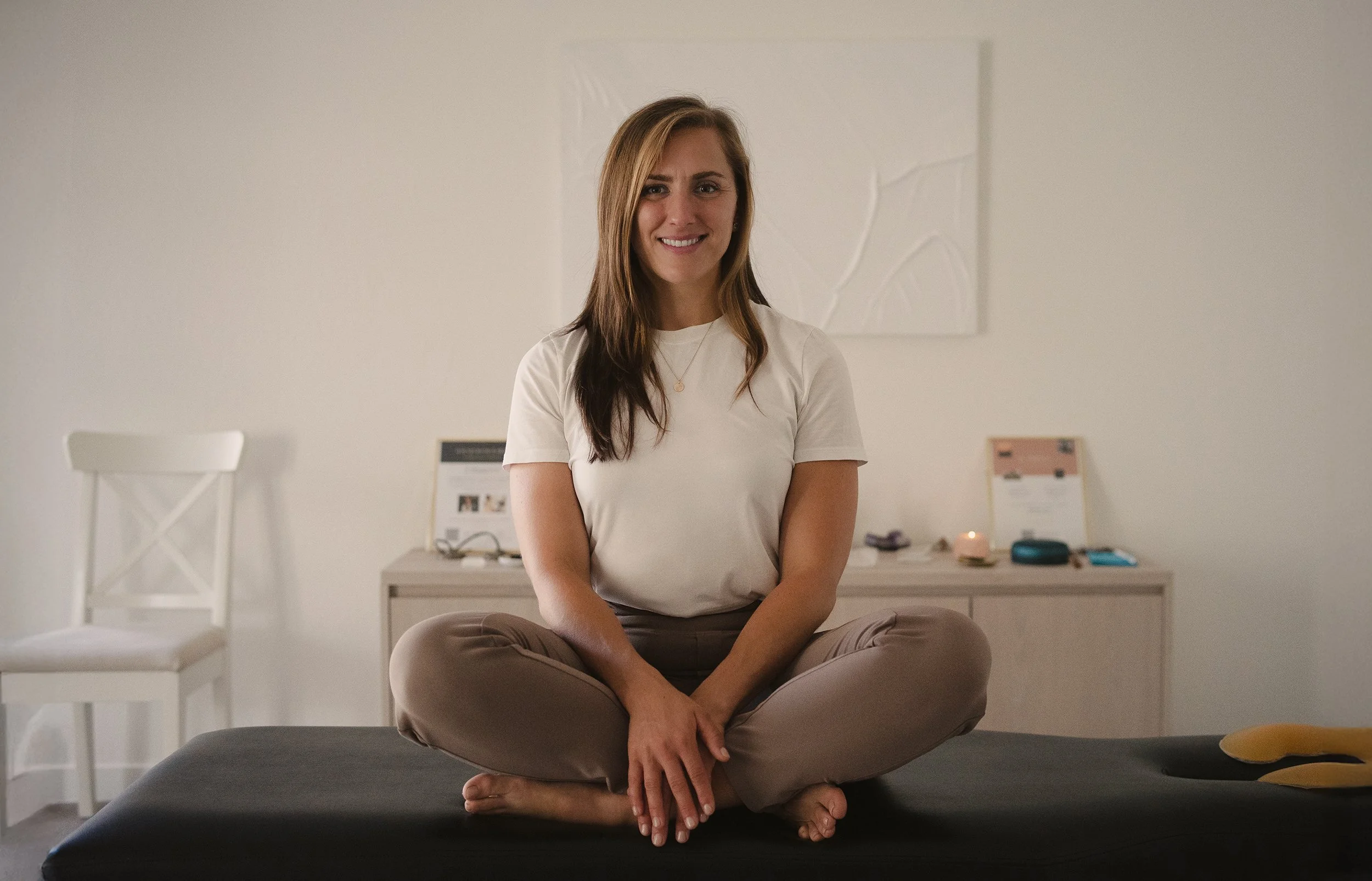
About Dr. Alandi Stec
Dr. Alandi Stec is a Doctor of Chiropractic and Reiki Master specializing in nervous system-centered healing approaches. She serves the Pleasant Hill and Bay Area athletic community through Life Force Chiropractic, combining Bio-Geometric Integration with craniosacral work and somatic practices to support athletes in discovering their body's innate capacity for optimal performance and resilience.

A FREE PRACTICE TO TAKE WITH YOU
Find Your Way Back to Center
A free guided meditation for settling the body and quieting the mind.
This 20-minute guided meditation offers a simple space to slow down, soften your attention, and reconnect with yourself. Return to it whenever life feels full, your mind feels busy, or you simply need a moment to pause.
Recorded by Dr. Alandi Stec and delivered to your inbox when you join the newsletter.