
The 21-Day Nervous System Reset: Why This Timeline Works (And What Actually Happens in Your Body)
"How long will this take?"
It's the question I hear most often when people start nervous system work.
They want to know when they'll feel better. When the anxiety will ease. When rest will actually feel restful. When they'll stop feeling like their body is running the show and they're just trying to keep up.
Here's what I tell them: Your nervous system didn't dysregulate overnight. It won't regulate overnight.
But there is a rhythm. A way this work unfolds.
Twenty-one days isn't arbitrary. It's not marketing. It's rooted in both ancient wisdom about transformation and modern understanding of how the body learns new patterns.
If you're considering deep nervous system work—or if you've started and you're wondering why it's taking so long—this is for you.
Why Nervous System Change Takes Time
Your nervous system is running programs that were installed years ago. Maybe decades ago. These patterns were adaptive once. They kept you safe when you needed to be protected.
But now they're not serving you. And changing them isn't as simple as deciding to think differently.
Your nervous system doesn't respond to logic. It responds to felt experience repeated over time.
Think about it: When you learned to be hypervigilant, you didn't decide one day to start scanning for threats. Your body learned through repeated experiences that the world wasn't safe. And over time, that pattern became automatic. Unconscious. Part of how your nervous system operates.
To change it, you need to give your nervous system repeated experiences of safety. Over time. Consistently. Until the new pattern becomes automatic.
That's what regulation work is. Creating new neural pathways. Teaching your body a different way to respond. Letting your nervous system reorganize itself around a new baseline.
This takes time. And that's not a problem. That's the process.
The Science: Why 21 Days?
There's a popular myth that it takes 21 days to form a habit. That's not quite accurate—research shows habit formation takes anywhere from 18 to 254 days depending on the complexity of the behavior and the person.
But 21 days isn't arbitrary either.
From a neuroplasticity perspective:
Your brain needs consistent repetition to create new neural pathways. When you practice something daily for about three weeks, you're beginning to establish a new pattern. Not completing it—beginning it.
The first week, you're creating awareness. The second week, you're building familiarity. The third week, you're beginning to integrate.
From a somatic perspective:
Your body needs time to reorganize its responses. Your nervous system has been operating in survival mode, potentially for years. It needs repeated experiences of safety before it trusts enough to downregulate.
Three weeks of daily practice gives your body enough consistency to start believing the new pattern is sustainable. Not complete. But beginning.
From a traditional wisdom perspective:
Many contemplative traditions use 21-day or 40-day practice periods. There's recognition that transformation happens in cycles. That sustained practice over a specific container creates conditions for deep shift.
It's not magic. It's how the body-mind works when given the conditions it needs to change.
What Actually Happens: Week by Week
If you commit to 21 days of nervous system regulation practice—daily meditation, breathwork, lifestyle rhythms, somatic awareness—here's what typically unfolds.
This isn't linear. Everyone's process is different. But there are patterns I see consistently.


WEEK 1: GROUNDWORK
Days 1-7: Awareness and Foundation
What you're doing:
• Establishing daily practice
• Learning meditation basics
• Setting intention
• Creating lifestyle rhythms that support regulation
• Beginning to notice what your body is telling you
What's happening in your nervous system:
Your body is calibrating. It's not sure yet if this is safe. Your mind might be very busy—suddenly noticing all the thoughts it's been running in the background. Or you might feel resistance—your system doesn't want to slow down enough to feel what it's been avoiding.
Both responses are normal. Both are information.
What you're likely experiencing:
This might feel harder than you expected. Or surprisingly easy. Your body might resist the stillness. Your mind might be louder than ever when you try to meditate.
Some people notice immediate relief—finally, someone's giving them permission to slow down. Others notice how exhausted they actually are once they stop pushing.
The key learning:
You're showing up. That matters more than what you feel. Your nervous system is beginning to trust that you're creating a container for something different.
By day 7, you've established a rhythm. You know what your practice looks like. You're not good at it yet (you don't need to be). But you're doing it.



WEEK 2: RECOGNITION
Days 8-14: Pattern Awareness and Recalibration
What you're doing:
• Deepening your meditation practice
• Adding breathwork and yoga nidra
• Noticing what's energy-giving vs. energy-draining
• Recognizing your body's signals earlier
• Beginning to respond differently to stress
What's happening in your nervous system:
Your body is starting to show you what needs attention. Patterns you've been running unconsciously are becoming conscious. You're noticing how certain people, places, or activities dysregulate you. You're seeing how you override your body's signals.
This can be uncomfortable. Awareness often is. But it's necessary. You can't change what you can't see.
What you're likely experiencing:
This week often feels like two steps forward, one step back. You have moments of real regulation—your breath deepens, your body softens, you feel present. Then life happens and you're right back in old patterns.
But here's what's different: You're noticing. You're catching yourself earlier. The gap between dysregulation and awareness is shrinking.
You might also notice you're more sensitive. Things that didn't used to bother you now do. That's not regression—that's your nervous system waking up. You're feeling what you've been numbing.
The key learning:
You're developing discernment. You're learning to recognize when you're regulated vs. dysregulated. What supports you vs. what drains you. What your body says yes to vs. what it contracts around.
This awareness is the foundation for everything that follows.



WEEK 3: INTEGRATION
Days 15-21: Embodiment and New Baseline
What you're doing:
• Maintaining daily practice
• Integrating regulation tools into your life
• Trusting your body's signals
• Responding from presence instead of reacting from pattern
• Beginning to establish a new baseline
What's happening in your nervous system:
Your body is starting to reorganize around a new set point. The practices aren't separate from your life anymore—they're becoming how you move through the world.
Your nervous system is beginning to trust that regulation is possible. That safety can be sustained. That you don't have to stay in survival mode.
What you're likely experiencing:
Subtle but significant shifts. You're breathing deeper without trying. You're moving slower and it feels right. You catch yourself before you're completely overwhelmed.
Rest actually feels restful. You're making different choices—saying no to things that drain you, yes to things that nourish you. You trust your body's signals instead of questioning them.
This isn't dramatic. It's not a lightning bolt of transformation. It's quiet. Steady. Real.
The key learning:
By day 21, you won't be "done." You won't be fixed. That was never the point.
But you'll know how to attune to your body. You'll have practices you can return to. You'll recognize dysregulation earlier and have tools to work with it.
Most importantly: You'll have established a new relationship with your nervous system. One based on listening, not forcing.
Beyond 21 Days: What Stays With You
Twenty-one days creates a foundation. It's enough time to establish new patterns and begin to see shifts. But it's not enough time to fully rewire decades of conditioning.
Here's what I've observed:
After 21 days of consistent practice:
• You have a lived experience of what regulation feels like
• You've built the habit of daily practice
• You know which tools work for your nervous system
• You've created lifestyle rhythms that support regulation
• You can recognize dysregulation earlier
What continues to deepen:
• Your capacity to stay present with difficult emotions
• The speed at which you return to baseline after stress
• Your trust in your body's signals
• The integration of these practices into your daily life
• Your ability to choose response over reaction
The practices don't end at day 21. They become part of how you live.
Some people continue daily meditation. Some practice three times a week. Some return to the work intensively when they notice they're dysregulated. There's no right way. Only what your body needs.
Why Consistency Matters More Than Duration
Twenty-one days of practice beats six months of sporadic attempts.
Here's why: Your nervous system learns through repetition.
If you practice for an hour once a week, you're asking your body to remember a state it only visits occasionally. But if you practice for 20 minutes every day, you're teaching your body a new baseline.
Daily practice—even brief—creates the consistency your nervous system needs to trust the new pattern.
Think of it like learning a language. You wouldn't expect fluency from one intensive weekend immersion. But 20 minutes a day for three weeks? You'd start to build foundational understanding.
Your nervous system is the same. It learns through sustained, consistent practice.


What Supports Sustainable Nervous System Change
If you're ready to commit to 21 days of deep regulation work, here's what helps:
A structured framework.
Not just "meditate daily" but specific practices, specific timing, specific sequence. Your nervous system needs clarity about what to expect.
Daily guidance.
Teachings that help you understand what's happening in your body. Context for the experiences you're having. Tools to work with resistance when it arises.
Multiple modalities.
Meditation alone isn't enough for most people. Breathwork. Yoga nidra. Somatic awareness. Lifestyle rhythms. Your nervous system needs variety to stay engaged.
Accountability and support.
Doing this alone is hard. Having a container—a course, a teacher, a structure—makes all the difference.
Permission to start over.
Because you'll miss days. Life happens. What matters is coming back. Again and again.
Your Invitation
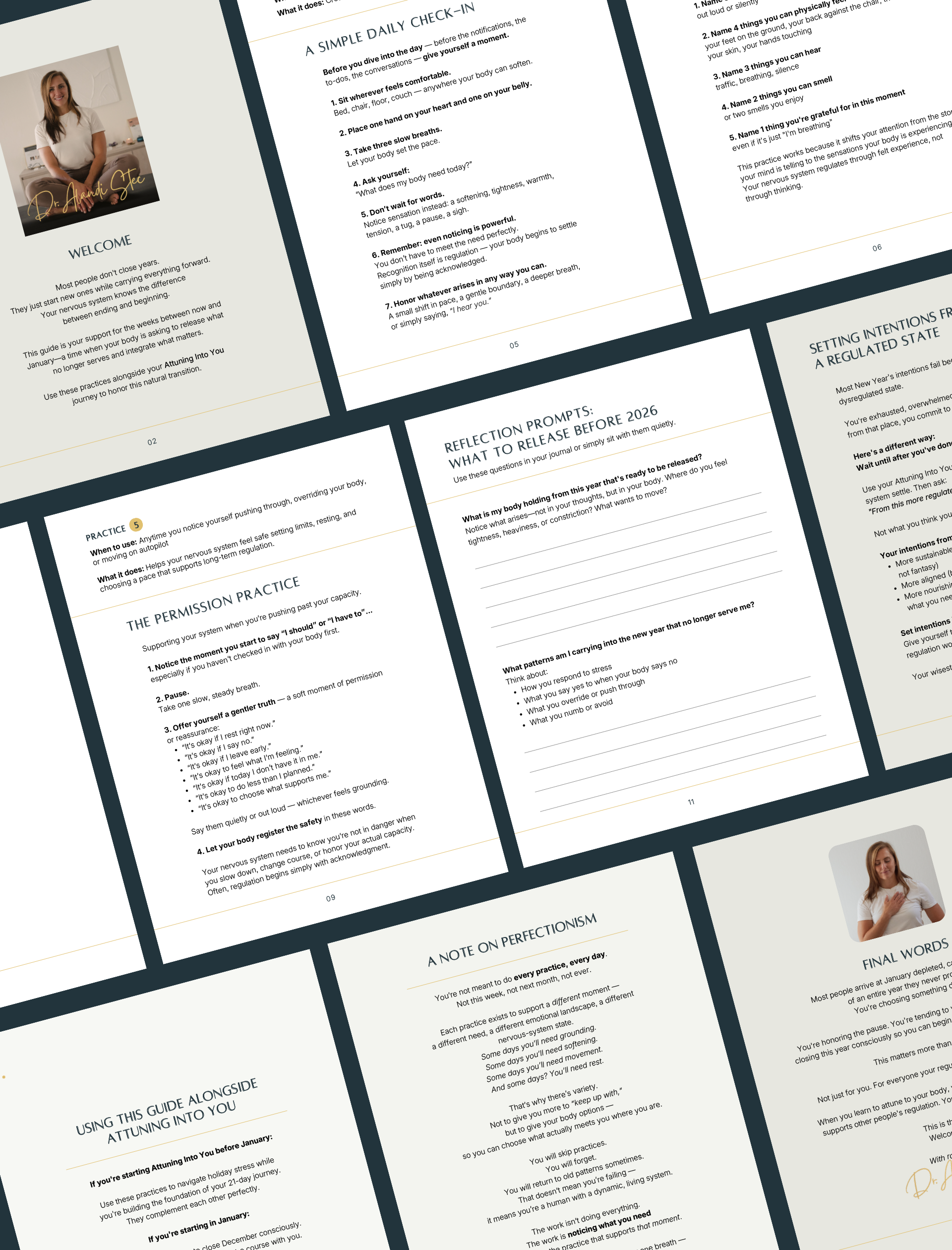
I created Attuning Into You as a 21-day structured journey through nervous system recalibration.
Not because 21 days is a magic number. But because it's enough time to create real change when you show up consistently.
Here's what you receive:
• Daily teachings that explain what's happening in your body
• Guided meditation, breathwork, and yoga nidra practices
• A comprehensive workbook to support your journey
• Lifestyle frameworks to support regulation
• Lifetime access to return to the practices whenever you need them
This is what happens across 21 days:
Week 1, you establish the foundation. Week 2, you recognize your patterns. Week 3, you integrate new ways of being.
By the end, you won't be "fixed." But you'll know how to attune to your body. You'll have practices you can trust. You'll have experienced what regulation feels like, so you can find your way back to it.
If you're ready to commit to 21 days of this work, I'm here to guide you through it.
About Dr. Alandi Stec
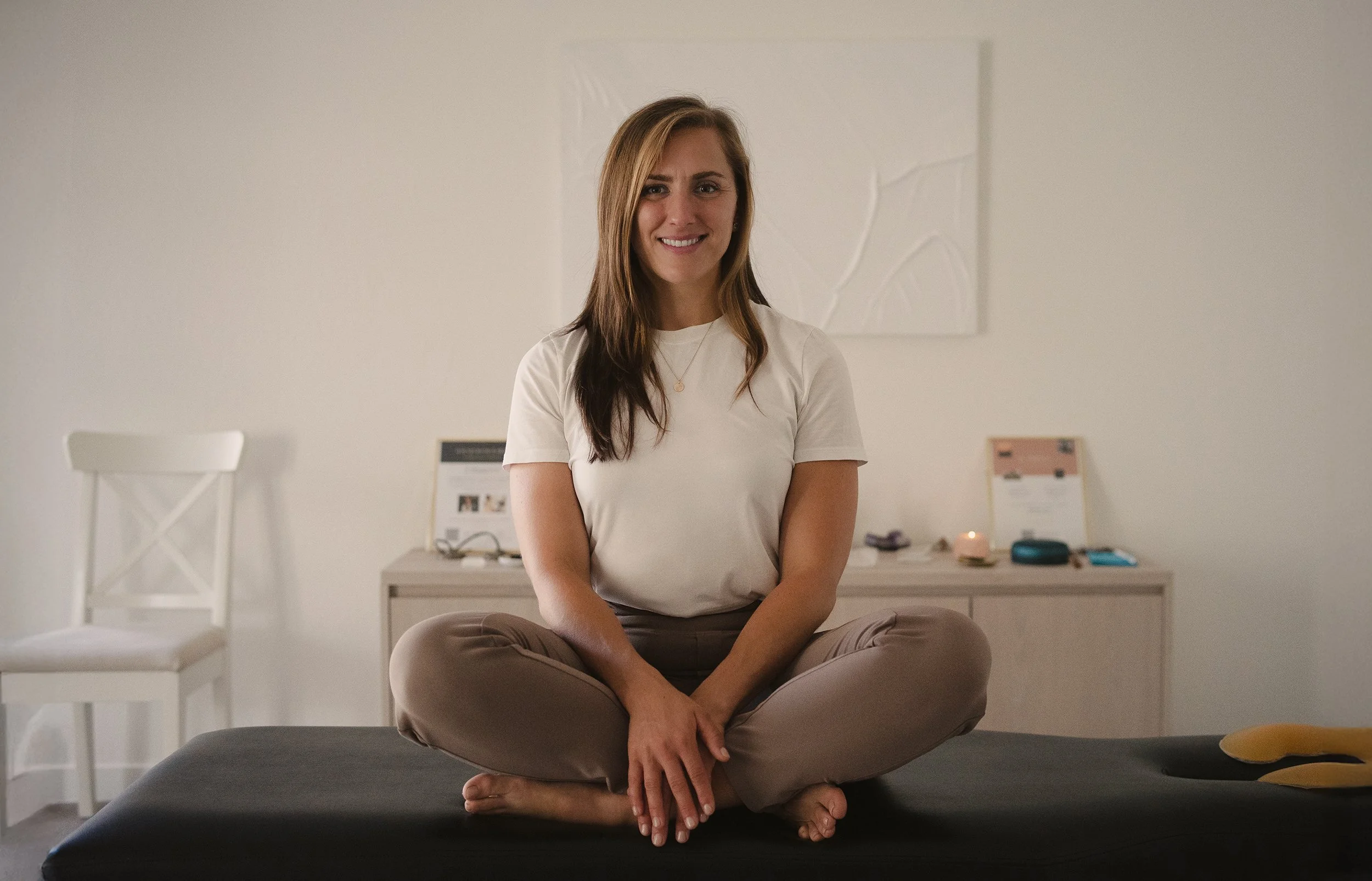
Dr. Alandi Stec is a Doctor of Chiropractic and Reiki Master serving the Pleasant Hill and greater Bay Area community. She specializes in gentle, nervous system-centered approaches to health and wellness, combining Bio-Geometric Integration with craniosacral work and energy healing to help individuals and families discover their body's innate capacity for healing and growth.