
What Is Nervous System Recalibration? (And Why Stress Management Isn't Enough)

You've tried the breathing apps. Downloaded the meditation guides.
Practiced gratitude journaling. Taken the supplements. Maybe you've even done therapy.
Some of it helps. For a little while.
But the tightness in your chest comes back. The sleepless nights return. That feeling of being constantly on edge settles in again, sometimes within days.
Here's what most people don't realize: there's a fundamental difference between managing stress and recalibrating your nervous system.
Stress management treats symptoms. Nervous system recalibration addresses the foundation.
One helps you cope with dysregulation. The other teaches your body how to regulate itself again.
If you've been stuck in the cycle of temporary relief followed by the same patterns returning, this distinction matters. A lot.
The Stress Management Trap
Most wellness approaches focus on stress management. And that makes sense—stress is what we feel most acutely. It's the immediate discomfort we want relieved.
Stress management looks like:
• Taking a few deep breaths when you notice you're overwhelmed
• Using a meditation app for 10 minutes when you can't sleep
• Scheduling a massage when your shoulders feel like concrete
• Taking a mental health day when you're completely burned out
These aren't bad practices. They provide real relief in the moment.
But here's the problem: they're reactive, not restorative.
You're waiting until your nervous system is already dysregulated, then trying to calm it down. You're treating the smoke, not the fire.
And because the underlying patterns haven't changed, you end up back in the same place. The tension rebuilds. The sleep issues return. The overwhelm creeps back in.
You're managing stress, but you're not changing your nervous system's baseline.
What Nervous System Recalibration Actually Is
Recalibration is different.
It's not about adding coping strategies on top of dysregulation. It's about reorganizing how your nervous system responds to life at a foundational level.
Think of it this way:
Stress management is like turning down the volume on a radio that's stuck on a chaotic station.
Nervous system recalibration is tuning the radio to a different frequency entirely.
Recalibration means:
• Your baseline state shifts from activation to regulation
• Your window of tolerance expands (more things feel manageable)
• Your system learns to move fluidly between activation and rest
• You develop the capacity to feel without getting stuck in feeling
• Your body begins to recognize safety again
This isn't a quick fix. It's a restructuring.
And it requires consistent practice over time—not because you're broken, but because your nervous system learned its current patterns through repetition. It needs repetition to learn new ones.
Why Your Nervous System Got Stuck in the First Place
Your nervous system didn't randomly develop dysregulated patterns. It learned them.
Dysregulation happens when:
• Stress becomes chronic without enough recovery time
• Past experiences taught your body that the world isn't safe
• You haven't had the support or tools to process what you've been through
• Your environment demands constant activation with no space for rest
Your nervous system is incredibly intelligent. It adapted to keep you functioning under difficult circumstances.
The problem is that adaptation becomes your new baseline.
Your body stays braced because at some point, staying braced kept you safe. Your sleep stays fragmented because hyper-vigilance once protected you. Your digestion stays disrupted because your system prioritized survival over restoration.
These patterns made sense when they formed. But they're no longer serving you.
Recalibration is teaching your nervous system that it's safe to let go of strategies that are no longer needed.
The Three Phases of Nervous System Recalibration
Deep nervous system work happens in phases. You can't skip ahead. Your body needs to move through each stage in its own time.
Phase 1:
Recognition (Days 1-7)
The first phase is simply learning to notice what's happening in your body without judgment.
Most people operate on autopilot, completely disconnected from their internal experience. You don't realize you've been holding your breath. You don't notice the tension building until it's overwhelming.
Recognition is about developing awareness of your nervous system states as they're happening.
What does activation feel like in your body? Where do you feel it? What cues tell you you're moving toward dysregulation?
You can't change patterns you can't see.
Phase 2:
Resourcing (Days 8-14)
Once you can recognize your patterns, the second phase is building resources—practices that help your nervous system shift states.
This is where you develop a toolkit of regulation practices: breathwork, movement, grounding techniques, rest practices like Yoga Nidra.
But here's what makes this different from stress management: you're practicing these tools when you're already somewhat regulated, not just when you're in crisis.
You're teaching your nervous system new pathways through repetition while it's calm enough to actually learn. You're building capacity, not just managing symptoms.
Phase 3:
Integration (Days 15-21)
The third phase is where recalibration becomes embodied. The practices stop feeling like something you "do" and start becoming how you naturally respond to life.
Your nervous system begins to default to regulation instead of dysregulation. The new patterns become more automatic than the old ones.
You still experience stress, but you don't get stuck in it. You can activate when needed and return to baseline afterward.
This is what lasting change feels like. Not perfect calm, but genuine flexibility.
What Makes Deep Nervous System Work Different
If you've tried meditation or breathwork before and it didn't stick, that doesn't mean it doesn't work. It usually means the approach was too shallow or inconsistent to create lasting change.
Deep nervous system work requires:
1. Consistency Over Intensity
Your nervous system doesn't change through one powerful experience. It changes through repeated, gentle exposure to regulation.
20 minutes a day for 21 days will recalibrate your system in ways that occasional weekend workshops never can.
2. Body-Based Practices, Not Just Mental Strategies
Cognitive strategies (like reframing thoughts) have their place. But your nervous system is primarily somatic—it lives in your body, not just your mind.
Practices that engage your body directly (breathwork, movement, Yoga Nidra, somatic awareness) access your nervous system in ways thinking can't.
3. Attunement, Not Force
You can't force your nervous system to calm down. Trying to do so often creates more activation.
Deep work is about attunement—learning to listen to what your body needs and meeting it there. It's invitation, not demand.
4. Time and Patience
Your nervous system didn't become dysregulated overnight. It won't regulate overnight either.
The research on neuroplasticity and habit formation consistently points to 21 days as a meaningful threshold for creating new patterns. Not because change is complete at 21 days, but because that's when new neural pathways begin to solidify.
You need enough time for your body to trust the new patterns are here to stay.
What Recalibration Feels Like
When your nervous system begins to recalibrate, the changes are subtle at first. You might not even notice them consciously.
Then one day you realize:
You took a full breath without thinking about it.
You slept through the night without waking.
Something that would have sent you spiraling last month felt manageable.
You felt an emotion without it consuming you.
Your body settled after stress instead of staying wired.
You had energy that matched your day instead of crashing at 2 PM.
These aren't dramatic moments. They're quiet recalibrations of your baseline.
And they compound. Each regulated moment teaches your nervous system that regulation is possible. That safety is real. That you can trust your body to find its way back to center.
Why 21 Days Matters
There's a reason structured nervous system programs are often 21 days.
Research shows it takes approximately three weeks of consistent practice for new neural pathways to begin forming. For habits to shift from conscious effort to automatic pattern.
Your nervous system needs:
• Enough repetition to override old patterns
• Enough time to trust the new patterns aren't temporary
• Enough consistency to establish new baseline states
Three days won't do it. A weekend retreat won't do it. Even two weeks of sporadic practice won't create the sustained change your system needs.
21 days gives your body enough time to reorganize. To learn new responses. To remember what regulation feels like and how to access it.
It's long enough to create real change, but short enough to commit to fully.
The Difference This Makes
When you shift from stress management to nervous system recalibration, everything changes.
You stop living in reaction mode.
Instead of constantly trying to calm yourself down from states of high activation, you start operating from a more regulated baseline.
You develop actual resilience.
Not the grind-through-it kind, but the kind where you can meet challenges without depleting yourself.
You trust your body again.
Instead of feeling betrayed by your physical responses, you begin to understand what your body is communicating and how to work with it.
Your relationships improve.
When your nervous system isn't in constant survival mode, you have more capacity for connection, patience, and presence.
Your capacity expands.
Things that used to overwhelm you become manageable. Your window of tolerance for life's inevitable stressors widens.
This isn't about achieving some idealized state of perpetual calm. It's about your body knowing how to move through life with more ease, more flexibility, and more trust in its own capacity to regulate.
Beginning Your Own Recalibration
If you've recognized yourself in this—if you've been managing stress without addressing the deeper patterns—you're not alone.
And more importantly, you're not stuck.
Your nervous system is capable of remarkable change. It wants to regulate. It's waiting for the right support and practices to show it how.
Recalibration requires:
• A structured approach (not sporadic efforts)
• Body-based practices that engage your nervous system directly
• Consistency over enough time for patterns to shift
• Guidance that meets you where you are without pushing
It's not about trying harder. It's about learning how to listen to what your body has been asking for all along.


A Structured Path Forward
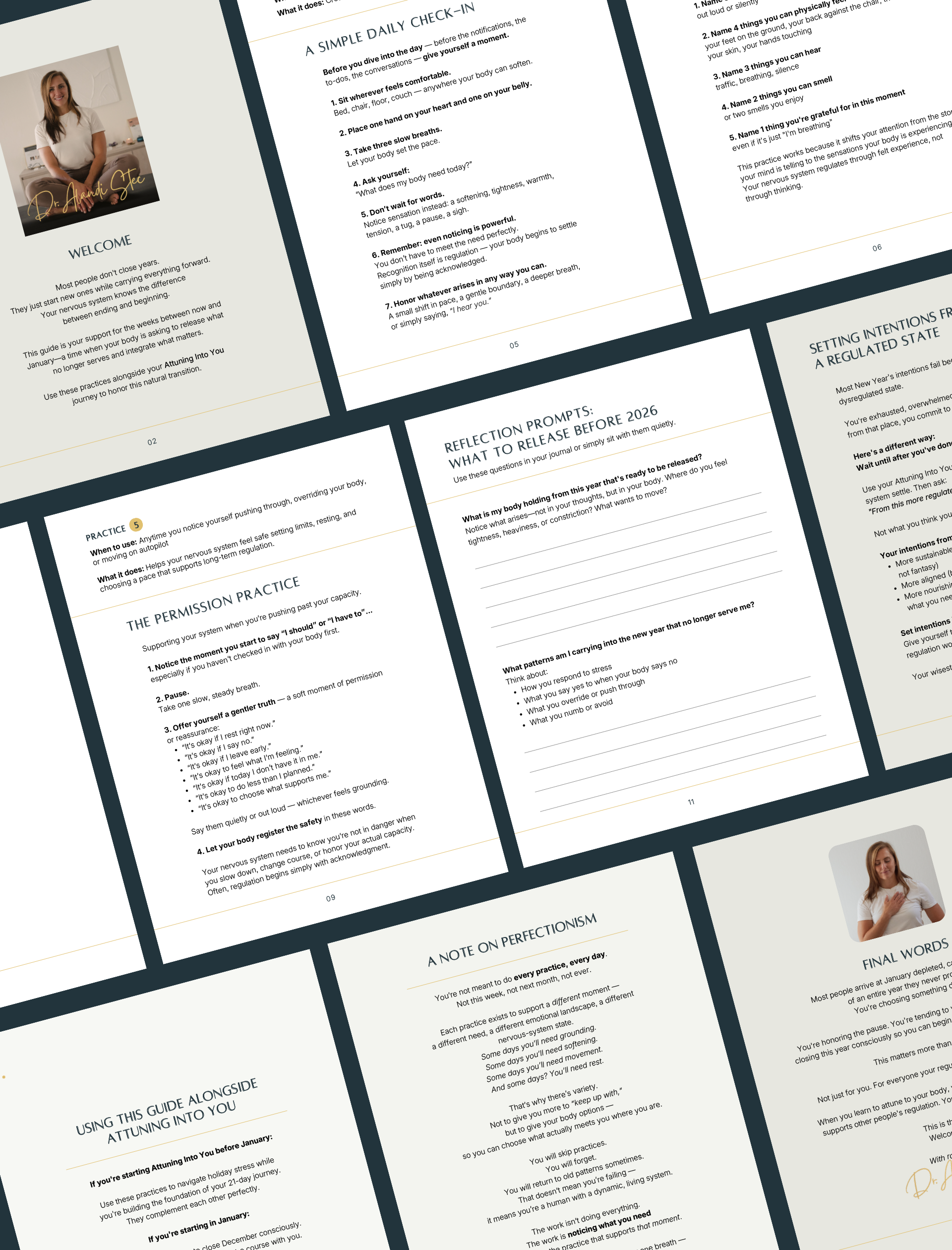
If you're ready to move beyond stress management and into genuine nervous system recalibration, Attuning Into You offers exactly that.
It's a 21-day guided journey designed to help you:
• Recognize your nervous system patterns without judgment
• Build a toolkit of regulation practices that work for your body
• Create new neural pathways through consistent, gentle practice
• Experience what lasting regulation actually feels like
Through daily teachings, somatic practices, breathwork, meditation, and Yoga Nidra, you'll learn to attune to your body's wisdom and recalibrate your nervous system from the ground up.
This isn't another stress management course. It's a structured recalibration of how your body responds to life.
About Dr. Alandi Stec
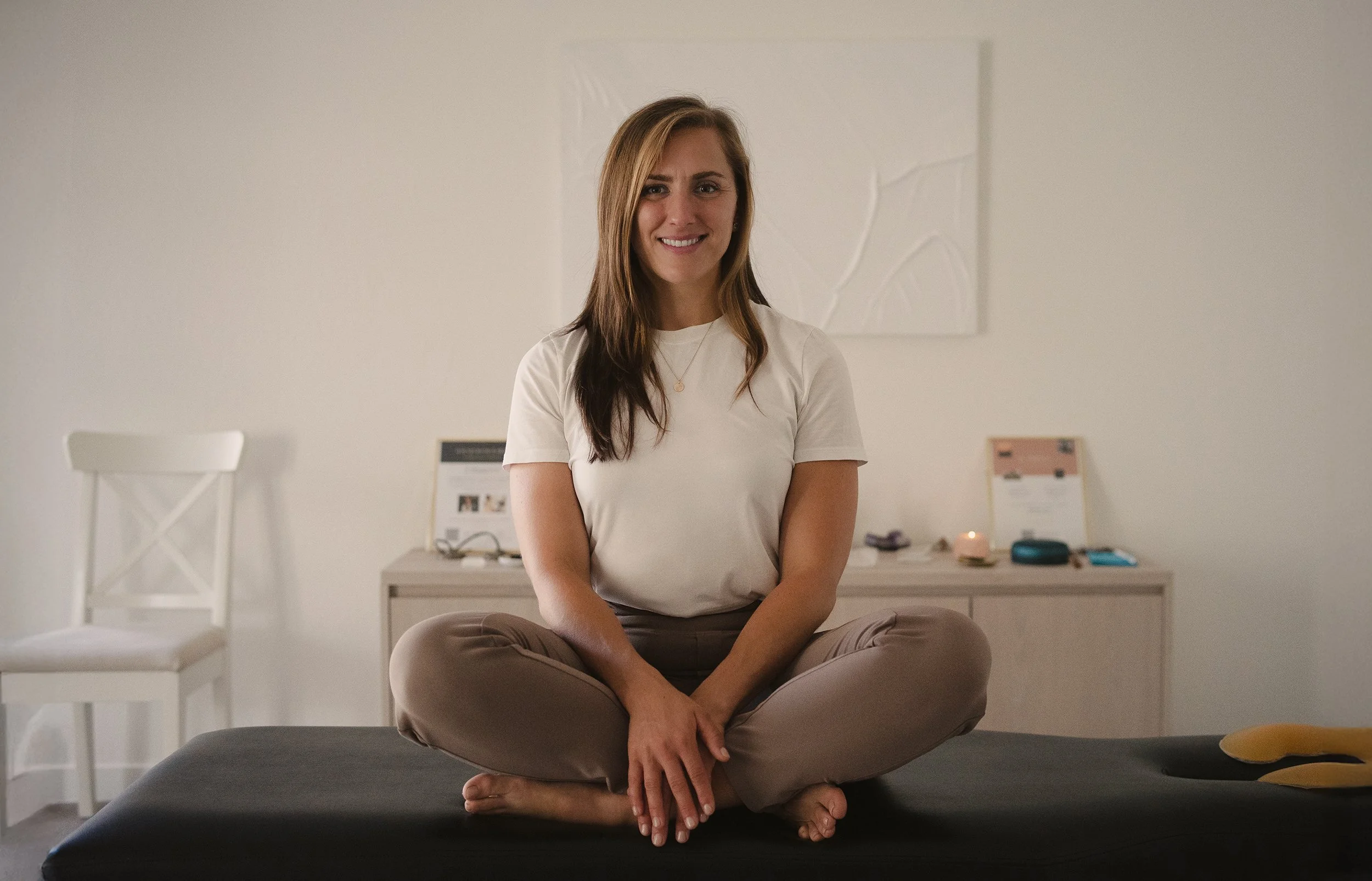
Dr. Alandi Stec is a Doctor of Chiropractic and Reiki Master serving the Pleasant Hill and greater Bay Area community. She specializes in gentle, nervous system-centered approaches to health and wellness, combining Bio-Geometric Integration with craniosacral work and energy healing to help individuals and families discover their body's innate capacity for healing and growth.