
Headaches After Stress: How Your Nervous System Holds Tension

Most stress headaches don't begin in the head. They begin somewhere lower, hours before the pain shows up. The shoulders. The base of the neck. The thin band of muscle at the back of the skull that most people have never consciously felt.
By the time the headache announces itself, your body has been holding for a while. Sometimes a whole day. Sometimes a whole week.
This is what makes stress headaches different from the kind that arrive once after a hard event and then leave. The recurring kind is rarely about a single moment of stress. It's about a pattern your nervous system has been quietly maintaining underneath the surface.
If you've been searching for why your headaches keep coming back, this is the layer that most articles skip. Not the trigger, but the holding pattern.
When a Stress Headache Becomes a Pattern
A stress headache that comes once after a hard week is one thing. It arrives, you rest, it passes. The body did what it was built to do.
A stress headache that returns every Wednesday afternoon, every Sunday night, every time the workload picks up, is something different. That's a pattern. The headache isn't responding to one stressful event. It's responding to an accumulated state that your nervous system has been holding for some time.
You can usually tell the difference by what soothes it. The first kind responds to rest, water, sleep, a quiet evening. The second kind doesn't, at least not for long. The painkillers help for a few hours. The hot shower softens it briefly. The eight hours of sleep give you a clearer morning, and then by mid-afternoon the pressure starts to build again.
That's the pattern of a nervous system that's been operating in low-grade activation for too long. The headache is one of the ways your body is asking you to notice.
What's Actually Happening in Your Nervous System
To understand a recurring stress headache, it helps to know what your body does when it stays in a state of low-level activation for days at a time.
Your sympathetic nervous system, the activation branch, is built for short bursts. A deadline. A hard conversation. A near-miss in traffic. It speeds up the systems that help you respond, then settles back down once the response is over.
Most modern stress isn't a burst. It's a hum. Email, news, schedule, screens, the soft constant pressure of doing more than the body is built to sustain. Your sympathetic branch stays slightly engaged. Not full fight-or-flight, just a low, ongoing readiness that never fully turns off.
Over hours and days, that readiness lives in your tissue as bracing. Your shoulders climb a fraction of an inch toward your ears. Your jaw rests slightly forward. The small muscles at the base of your skull hold tone they're not designed to hold for long. Your breath sits higher in your chest, ribcage barely moving.
This is the headache forming. Not in your head. In the layered tension between your shoulders, your neck, and the cranial bones at the back of your skull.
When the pattern has been holding long enough, your nervous system also starts to amplify the signal. Researchers call this central sensitization. The same level of tension that wouldn't have registered as pain six months ago now does. Your system has become more sensitized to its own holding, and the threshold for pain has dropped.
This is what nervous system dysregulation looks like in headache form. The signs often show up in other ways too, sleep disruption, gut changes, the wired-but-tired feeling. We've written more on this in our deeper guide on what nervous system regulation actually means and our piece on seven signs your nervous system is asking for support.
Why Stretching, Painkillers, and Better Posture Don't Stop the Cycle
Painkillers can offer a necessary pause from the intensity of pain. They quiet the signal, sometimes beautifully, when the body needs relief. But quieting the signal is different from listening to what the signal is trying to reveal. If the deeper pattern of bracing, compression, or compensation remains unchanged, the body continues to speak through the same pathway. The medication may wear off, but the pattern is still there, and the headache returns.
Stretching helps the muscle let go for a few minutes. Then your nervous system, still in low-grade activation, sends the signal that brings the tension back. Stretching releases the muscle. It doesn't change the message.
Posture corrections work for the same brief window. Sit straighter, shoulders back, screen at eye level. Useful, in their way. But the bracing isn't a posture problem. It's a nervous system pattern. You can have perfect posture and still hold tension in the muscles at the base of your skull because your system hasn't gotten the signal that it's safe to soften.
This is the gap most stress headache advice misses. Almost all of it works at the level of the muscle. The pattern lives one layer deeper.
The Specific Anatomy of a Stress Headache
Once you know where to look, the pattern of a stress headache becomes visible in the body.
It often starts at the base of the skull, where the suboccipital muscles connect the back of the skull to the top of the cervical spine. These are tiny muscles, but they're heavily involved in head-eye coordination and in the body's bracing response. When you've been at a screen for hours, or carrying low-grade stress for days, they tighten and stay tight.
From there, the tension recruits the trapezius, the broad muscle that runs across the top of your shoulders into the back of your neck. The trapezius is one of the most common holders of stress in the body. When it grips, it pulls on the cranial attachment points and contributes to the pressure you feel in your forehead and temples.
Add in the diaphragm. When your nervous system is in a state of activation, your breath rises into your chest. The diaphragm, the dome-shaped muscle that should be doing most of the breathing, doesn't engage fully. Less oxygen circulation. More carbon dioxide buildup. More vasoconstriction in cranial blood vessels. All of which adds to headache load.
The jaw and the masseter can be involved or not, depending on the person. When they are, the cranial tension extends from the back of the skull around to the temples and forehead, creating the band-like pressure that's the hallmark of a stress headache. Jaw involvement is its own pattern, and we've explored it in detail in our piece on the jaw side of cranial tension.
This is why stress headaches don't respond to working on the head alone. The whole pattern has to soften. The shoulders, the neck, the cranial base, the breath.
What Vagal Tone Has to Do With It
Underneath the muscle tension is something quieter and harder to see. Your vagal tone.
The vagus nerve is the longest cranial nerve in the body and the main highway of your parasympathetic branch. It sends signals between the brain and most of your major organs. Strong vagal tone means your system can move easily into rest after activation. Weakened vagal tone, common after long periods of stress, means your system stays activated longer than it should.
A 2025 review in Frontiers in Psychiatry highlighted the role of impaired vagal tone in chronic tension-type headaches. The vagal nerve helps regulate inflammation and counterbalance sympathetic activity. When its function drops, the body's ability to settle out of activation drops with it. The headache pattern becomes harder to break because the system that would normally interrupt it is operating at lower capacity.
This is part of why daily nervous system practices, the kind that build vagal tone over weeks, tend to outperform single interventions for recurring stress headaches. You're not just treating the headache. You're rebuilding the system that's supposed to be regulating the tension underneath it.

How Dr. Alandi Works With Stress Headaches
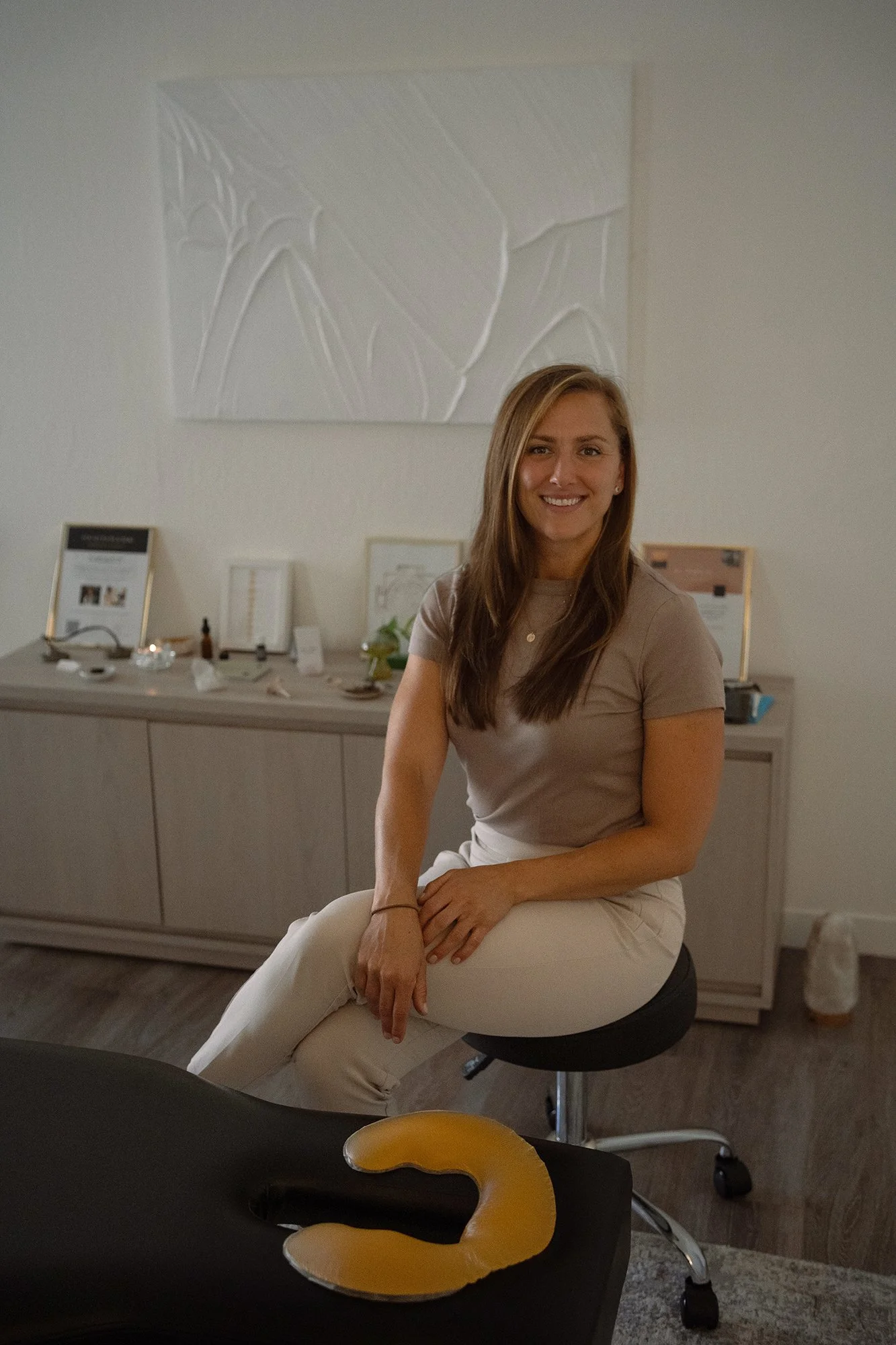
In Dr. Alandi's Pleasant Hill and San Francisco practice, stress headaches are one of the most common patterns clients arrive with. The work is built around the layered nature of the tension.
She trained in Bio-Geometric Integration and craniosacral therapy, both of which approach the body through gentle, tissue-based listening rather than forceful adjustment. For stress headaches, this matters. The bracing pattern is sensitive. Forceful work can deepen the activation. Slow, attuned work invites the system to soften without escalation.
In a typical session, she'll pay attention to the whole pattern. The pelvis, the diaphragm, the rib cage, the way the breath is or isn't dropping. She'll work with the cervical spine, the suboccipitals, and the cranial bones at the back of the skull. She'll listen for the rhythm of the tissue and follow what it's asking for.
The work isn't about eliminating tension. It's about helping your nervous system get the signal that it's safe to release the pattern it's been holding. When that signal lands, the body remembers what to do.
What Clients Notice After Care
Clients often describe specific shifts in the days after a session.
The first is breath. Most people don't realize how shallow their breathing has become until they feel it drop. After care, the breath usually finds the diaphragm again, and the chest stops doing all the work.
The second is the back of the head. The constant low-grade pressure at the base of the skull starts to lift. Not all at once. Over a few days, in waves.
Sleep deepens. The wired-but-tired feeling at bedtime softens. The middle-of-the-night wake-ups become less frequent.
The headaches themselves change. Sometimes they fade quickly. More often, they become less frequent and less intense over the following weeks. The pattern that fed them is reorganizing.
Most clients also notice something quieter. They become aware of when their shoulders are climbing toward their ears, where they didn't used to notice. The body's signal is back online. That awareness is what allows the pattern to keep softening between sessions.
Daily Practices That Help the Pattern Soften
The pattern that drives recurring stress headaches is layered, and so is what helps it shift. A few practices, used daily, can begin to interrupt the holding even before you've sought hands-on support.
Slow exhale breathing.
Two minutes, several times a day. Inhale for four counts, exhale for six or eight. The longer exhale activates the parasympathetic branch and signals your nervous system to soften. For headache patterns specifically, the diaphragm engagement matters as much as the slow rhythm. Place a hand on your belly and feel it move out on the inhale, in on the exhale.
Suboccipital release.
Lie on your back and place two tennis balls in a sock at the base of your skull, just under the occipital ridge. Rest there for two to five minutes. The tiny muscles that hold so much of the headache pattern are usually the last to release on their own. Direct, gentle pressure invites them to let go.
Daily walks with arm swing.
Not just movement, but movement that releases the trapezius and the upper back. Arms swinging naturally, shoulders relaxed. Twenty minutes of this is often more useful for headache prevention than a higher-intensity workout that keeps your shoulders gripped.
Eye breaks every 30 minutes at a screen.
The suboccipital muscles work overtime when your eyes hold a fixed point for hours. Look up. Look at something far away. Roll your eyes. Let them rest. The 20-20-20 rule (every 20 minutes, look 20 feet away for 20 seconds) is a useful structure for this.
Restorative practice in the evening.
Yoga nidra, body scan, slow stretching, time in a warm bath. The nervous system needs an unmistakable signal that the day's activation is over. Without that signal, the bracing keeps running through the night and sets up the next morning's headache.
These practices are cumulative. None of them, alone, will resolve a long-held pattern. Used daily, they begin to rebuild the capacity your nervous system needs to interrupt the headache cycle on its own.

A Closing Invitation
If your headaches have been coming back despite all the things you've tried, the next step isn't another technique. It's care that addresses the layer underneath the symptom.
Stress headaches respond to two kinds of input. Daily nervous system care, the kind you build slowly into your week. And, when the pattern has been holding for a while, hands-on support that meets the tissue where it's been bracing.
For daily care, our 12-day guided nervous system regulation program walks through practices that help your system release the kind of low-grade activation that drives recurring headaches. It's the most accessible entry point into this work. You can also pair it with our free 5-Day Mindful Reset Guide, available through June 30 to anyone who joins the newsletter.
If you're in Pleasant Hill, Walnut Creek, Lafayette, Concord, Orinda, or anywhere in the East Bay, and the headaches have become a pattern, you're welcome to book a session with Dr. Alandi. Sessions are gentle, 30 or 60 minutes, and built around the way your nervous system is actually showing up.
The body knows how to release this pattern. It just needs the right kind of listening to remember.
Frequently Asked Questions
Q: What's the difference between a tension headache and a stress headache?
A: They're usually the same thing. "Tension-type headache" is the clinical term, and "stress headache" is the common one. Both describe a band-like pressure across the forehead, temples, or back of the skull, often connected to muscle tension in the neck and shoulders. They're distinct from migraine, which involves different vascular and neurological mechanisms.
Q: How long do stress headaches usually last?
A: An episodic stress headache typically lasts from 30 minutes to a few hours. When the underlying nervous system pattern is held longer, headaches can persist for days or become near-daily, which is sometimes called chronic tension-type headache.
Q: Can chiropractic care help with tension headaches?
A: Yes, especially when the approach addresses the nervous system pattern, not only the structural tension. Gentle, tissue-based chiropractic that includes the cervical spine, cranial bones, and breath patterns tends to work well for stress headaches. Forceful adjustments can sometimes increase activation and make the pattern worse.
Q: Why do my headaches come back even after I've reduced my stress?
A: The bracing pattern that creates stress headaches lives in the tissue and the nervous system, not only in your stress level. Once the pattern is established, it can keep operating even when life calms down. The body usually needs specific input to release the pattern, not just less stress.
Q: What's the connection between breath and tension headaches?
A: When your nervous system is in low-level activation, your breath tends to rise into your chest and shallow out. Less full diaphragm engagement means less oxygen circulation, more carbon dioxide buildup, and more vasoconstriction in cranial blood vessels. All of which contributes to headache load. Restoring full diaphragmatic breath is one of the most direct ways to interrupt the pattern.
Q: When should I see someone for stress headaches?
A: A few benchmarks. If headaches are happening more than a few times a month, if they're not responding to rest, sleep, and water, if they're getting more frequent or more intense, or if you're starting to organize your week around managing them, it's worth seeking support.
About Dr. Alandi Stec
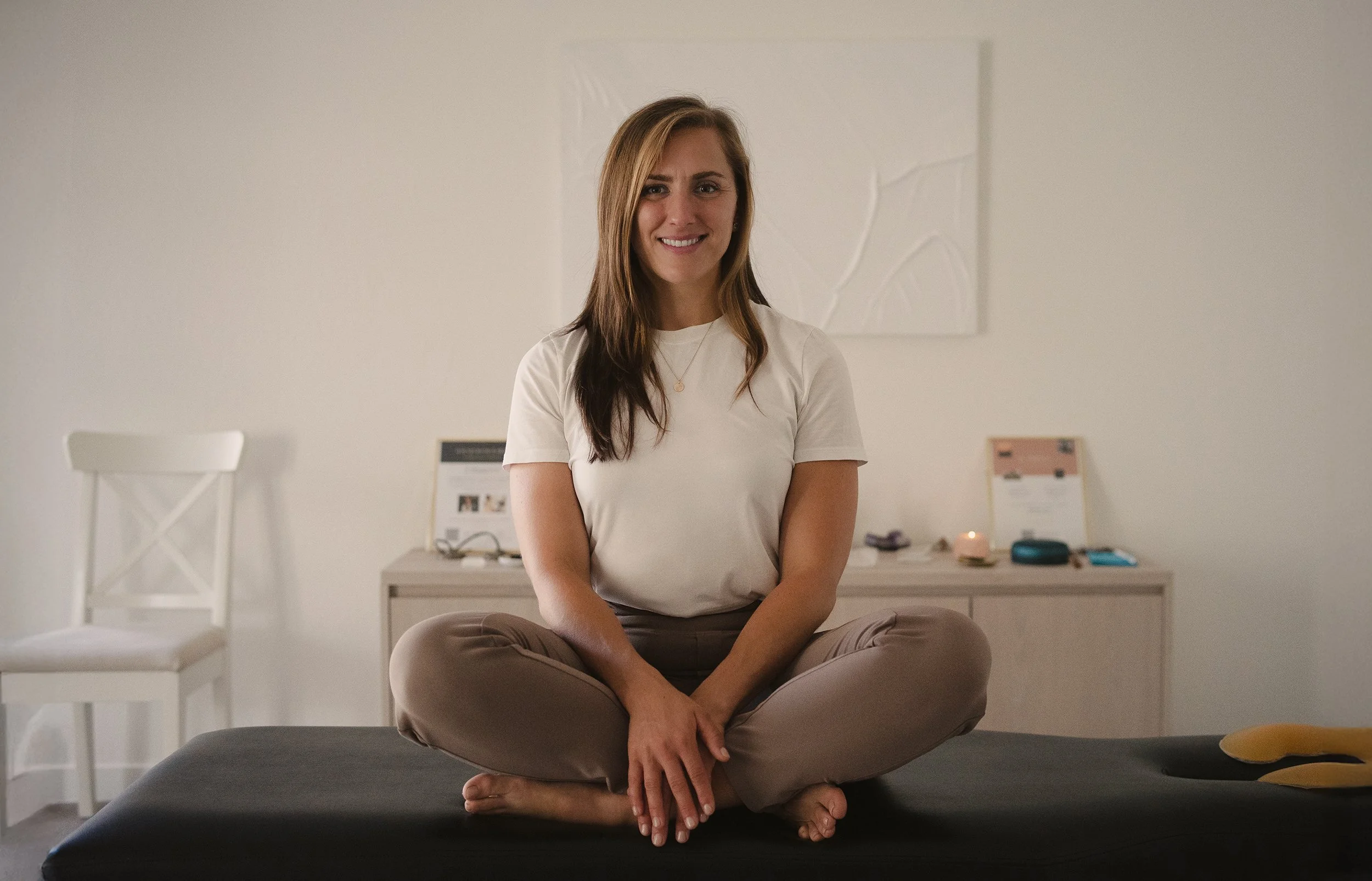
Dr. Alandi Stec is a Doctor of Chiropractic and Reiki Master specializing in nervous system-centered healing approaches. She serves the Pleasant Hill and Bay Area athletic community through Life Force Chiropractic, combining Bio-Geometric Integration with craniosacral work and somatic practices to support athletes in discovering their body's innate capacity for optimal performance and resilience.