
What Is Nervous System Regulation And Why It Matters

You've probably heard the term "nervous system regulation" more in the last year than ever before.
It's everywhere. Wellness Instagram. Therapy conversations. Alternative health spaces.
But what does it actually mean? And more importantly, why does it matter for your daily life?
This isn't another wellness buzzword. It's the difference between feeling like your body is working with you or against you.
What Regulation Actually Means
When most people hear "nervous system regulation," they think it means being calm. Peaceful. Zen. Never stressed, never activated, always floating in a state of blissful relaxation.
That's not it.
Regulation isn't about staying in one perfect state.
It's about your capacity to move between states appropriately and return to balance.
Think about it this way: A regulated nervous system can activate when you need it to. You have a deadline, your system mobilizes energy and focus. You finish the work, your system releases back to rest. You face a difficult conversation, you feel the activation, you move through it, and then you downregulate afterward.
A dysregulated nervous system gets stuck. It activates and can't come back down. Or it shuts down and can't access energy. Or it ping-pongs between the two without ever finding center.
Regulation is flexibility. It's the ability to:
• Meet what life brings without getting overwhelmed or shutting down
• Access the activation you need for challenges
• Return to rest when the challenge is complete
• Shift between states without getting trapped in any one of them
It's not about never feeling stress. It's about your body knowing how to process stress and return to equilibrium.
And when your nervous system can't do this naturally anymore, everything else starts to fall apart. Sleep. Digestion. Energy. Mood. Physical tension. Immunity. Relationships. All of it depends on a nervous system that can regulate.
The Autonomic Nervous System: Your Body's Operating System
Your autonomic nervous system controls everything your body does without conscious thought. Heart rate. Breathing. Digestion. Temperature regulation. Immune function. Hormone production.
It has two primary branches, and understanding how they work together is essential to understanding regulation.
The sympathetic branch is your mobilization system. Fight or flight. It activates when your system perceives threat or demand. Heart rate increases. Breathing quickens. Blood flows to muscles. Digestion slows. Your body prepares for action.
This state is essential. It's what gets you out of bed in the morning. It's what helps you meet deadlines, have difficult conversations, exercise, engage with life's challenges. Without sympathetic activation, you'd have no energy, no drive, no capacity to meet the world.
The parasympathetic branch is your rest and restoration system. It activates when your system perceives safety. Heart rate slows. Breathing deepens. Digestion restarts. Your body repairs, replenishes, and heals.
This state is equally essential. Without parasympathetic activation, your body can't recover. You burn through resources faster than you can restore them. Everything becomes depleted.
A healthy nervous system moves fluidly between these states.
Sympathetic activation when you need it. Parasympathetic restoration when the activation is complete. Back and forth, responding to what life requires.
Dysregulation happens when you get stuck.
Your sympathetic system stays activated even when there's no threat. Your parasympathetic system can't engage even when you're safe. Or your system collapses into a deeper shutdown state where neither activation nor rest is accessible.
The Window of Tolerance
Imagine a zone in which you can experience life without tipping into overwhelm or shutdown. This is your window of tolerance.
Inside the window:
• You feel present and connected
• Challenges feel manageable
• Emotions arise and move through
• You can think clearly and respond flexibly
• Your body feels inhabitable
Outside the window (hyperarousal):
• Anxiety, panic, racing thoughts
• Hypervigilance and constant scanning
• Explosive emotions or reactivity
• Physical tension and activation
• Feeling unsafe even when you objectively are
Outside the window (hypoarousal):
• Numbness, disconnection, dissociation
• Chronic fatigue and heaviness
• Emotional flatness
• Difficulty concentrating or remembering
• Feeling checked out or not fully present
A regulated nervous system has a wide window of tolerance. You can encounter stress, challenge, or emotion and stay within your capacity to handle it. A dysregulated nervous system has a narrow window. Small things push you out of regulation.
The goal of nervous system work isn't to eliminate stress. It's to widen your window so you have more capacity to meet what life brings without getting overwhelmed or shutting down.



What Dysregulation Looks Like in Real Life
Dysregulation doesn't always look dramatic. It often shows up in quiet, persistent ways that you've learned to accept as normal.
The Activation You Can See
Anxiety and hypervigilance:
Your mind won't stop scanning for problems. You're always waiting for the other shoe to drop. You can't fully relax even in objectively safe situations because your system is still on guard.
Physical tension:
Shoulders that won't release. Jaw clenching that happens without you noticing. Tightness across your chest or in your belly. Your body is bracing for something, even when there's nothing to brace against.
Racing thoughts:
Your mind moves fast, jumping from thought to thought, worst-case scenario to worst-case scenario. You can't seem to slow it down, even when you're exhausted and desperate for quiet.
Sleep disruption:
You're tired but you can't fall asleep. Or you fall asleep but wake at 3 a.m. with your mind racing. Or you sleep but wake up feeling like you never rested. Your system won't downregulate enough to allow true restoration.
Digestive issues:
Your gut is intimately connected to your nervous system. When you're chronically activated, digestion suffers. Constipation, diarrhea, bloating, nausea, IBS symptoms. Your body can't "rest and digest" because it's still in "fight or flight."
The Activation You Might Not Recognize
Chronic shutdown:
This is what happens when the body has been in sympathetic activation for so long that it tips into a deeper protective state. You feel numb, disconnected, like you're moving through fog. Energy is constantly depleted no matter how much you rest.
Dissociation:
You feel separated from your body or like you're watching your life from the outside. You go through the motions but don't feel fully present. This is your nervous system's way of protecting you when activation is too much to process.
Emotional flatness:
You're not sad, not happy, not much of anything. Emotions that used to move you don't land the same way. This isn't depression in the clinical sense, though it can look similar. It's your system conserving energy by dampening emotional response.
Loss of motivation:
Things you used to care about feel hollow. You can't seem to access the energy or desire to engage with hobbies, relationships, or activities that once mattered. Your system has shut down the circuitry for pleasure and connection to survive.
Chronic illness patterns:
Frequent colds and infections. Slow healing. Persistent pain or inflammation. When your nervous system is dysregulated, your immune system and healing capacity are compromised. Your body is putting all its resources toward survival, not repair.
How Dysregulation Compounds Over Time
Here's what makes nervous system dysregulation so insidious: it builds on itself.
You have a stressful period. Your nervous system activates. But the stress doesn't resolve completely, so your system stays slightly elevated. Then another stressor hits. Your system activates further, but from an already elevated baseline. Now it takes less to push you into overwhelm.
Over weeks, months, years, your baseline keeps rising. What used to be a manageable stressor now tips you into reactivity. Your window of tolerance narrows. You have less capacity to handle what life brings.
Eventually, your system is so dysregulated that even small things feel enormous. A delayed email. A mildly critical comment. A change in plans. Your body responds as if it's facing a major threat because it no longer has the flexibility to calibrate its response.
This is when people say "I used to be able to handle so much more." You haven't changed. Your nervous system's capacity has been eroded by sustained dysregulation.
The good news? Just as dysregulation compounds, so does regulation. Small, consistent practices rebuild capacity. Your window widens. Your system regains flexibility. The resilience you thought you'd lost comes back.
What Supports Regulation
Nervous system regulation isn't something you achieve once and maintain forever. It's a practice. A way of living that creates conditions for your body to feel safe enough to let go.
Safety Signals: The Foundation of Regulation
Your nervous system is constantly scanning for cues of safety or threat. This happens below conscious awareness through a process called neuroception.
Physical safety signals:
• Consistent sleep and wake times
• Regular, nourishing meals
• Movement that feels good rather than punishing
• Physical touch from safe people
• Time in nature
• Reduction of sensory overwhelm
Emotional safety signals:
• Predictability and reliability in your environment
• Relationships where you can be authentic
• Boundaries that protect your energy
• Permission to feel what you feel
• Space to move at your own pace
Relational safety signals:
• Being seen and understood
• Having your needs matter
• Co-regulation with people who are regulated themselves
• Repair after conflict or rupture
• Consistent, attuned presence
When these signals are present consistently, your nervous system begins to downregulate naturally. You don't have to force it. Safety creates the conditions for release.
Practices That Work With Your Body
Nervous system regulation happens from the bottom up, not the top down. You can't think your way into regulation. You have to work through the body.
Breathwork:
Your breath is the most direct access point to your autonomic nervous system. Slow, deep breathing activates your parasympathetic system. Breath with an extended exhale signals safety. This isn't about controlling your breath in a rigid way. It's about gently inviting your system to settle.
Movement and discharge:
Your body is designed to process stress through movement. Shaking, stretching, walking, dancing—any movement that feels organic rather than forced. This completes the activation cycle that often gets interrupted in daily life.
Rest and presence:
True rest isn't just lying down. It's the capacity to be present without doing. To let your nervous system experience that nothing needs to happen right now. This is harder than it sounds for a dysregulated system, which is why practices like Yoga Nidra can be so supportive.
Structural support:
When your spine and craniosacral system have restrictions or misalignments, it can interfere with nervous system communication. Gentle, nervous system-centered chiropractic care addresses these structural patterns while supporting your body's capacity to regulate. This is the work we do at Life Force Chiropractic in Pleasant Hill for those in the Bay Area.
Why Top-Down Approaches Often Fall Short
"Just relax." "Don't think about it." "It's all in your head."
These well-meaning phrases miss the point entirely. Nervous system dysregulation isn't a thought problem. It's a body-state problem.
You can know intellectually that you're safe and still have a nervous system screaming danger. You can understand cognitively that you should rest and still have a body that won't downregulate.
Top-down approaches (thinking, analyzing, cognitive reframing) have their place. But they can't override a nervous system stuck in survival mode.
Bottom-up approaches (breathwork, movement, somatic practices, structural work) meet the nervous system where it actually lives—in the body. They create physiological shifts that then allow cognitive shifts to follow.
This is why someone can spend years in talk therapy and still have chronic tension, poor sleep, and anxiety. The talking helps process thoughts and emotions. But without addressing the body-based patterns, the nervous system stays dysregulated.
Both approaches matter. But bottom-up work is often the missing piece.



The Timeline of Regulation
People always want to know: how long will this take?
The answer depends on how deeply dysregulated your system is, how long the patterns have been present, and how consistently you practice. But there are typical milestones most people notice.
The First Week
What you might notice:
• Moments of unexpected ease or softening
• Slightly better sleep, even if not perfect
• More awareness of when you're activated
• Brief periods where tension releases
• Clearer thinking at certain times of day
These changes are subtle. You might not even notice them unless you're paying attention. But they're significant because they show your nervous system is responding to the new signals you're giving it.
At 2-3 Weeks
What typically shifts:
• Sleep becomes more consistent
• You catch yourself in activation sooner
• Physical tension releases more readily
• Emotional reactivity decreases slightly
• You have more moments of feeling present
Energy stabilizes (less crashing and spiking)
This is when people usually say "Something's different, but I can't quite name it." Your baseline is shifting. Your window of tolerance is starting to widen.
At 21 Days and Beyond
Deeper changes emerge:
• Your body returns to baseline more quickly after stress
• You can engage with challenges without depleting yourself
• Physical symptoms (tension, digestive issues, sleep) improve noticeably
• Emotional flexibility increases
• Relationships feel easier
• You have access to creativity and joy again
This is when regulation starts to feel sustainable rather than something you're constantly working toward. Your nervous system is learning a new pattern.
Why Consistency Matters More Than Intensity
A gentle practice done daily creates more lasting change than an intense practice done sporadically.
Your nervous system learns through repetition. Each time you practice regulation, you're teaching your system that it's safe to downregulate. Over time, this becomes the new default.
Intense practices can be activating if your system isn't ready. Gentleness signals safety. Consistency builds trust. This is why sustainable regulation comes from small, regular practices rather than dramatic interventions.
Signs Your System Is Becoming More Regulated
As your nervous system regains its capacity to regulate, you'll notice changes across multiple domains.
Sleep improves:
You fall asleep more easily. You stay asleep more consistently. You wake feeling more rested. Your body can access the deep restoration it needs.
Emotional flexibility increases:
Emotions arise and move through rather than getting stuck. You can feel sadness without collapsing into despair. You can feel anger without exploding or suppressing. The intensity may still be there, but it doesn't overtake you.
Physical tension releases:
Your shoulders drop without you consciously doing it. Your jaw unclenches. Your breathing deepens. Your body can inhabit ease rather than constantly bracing.
Thinking clarifies:
The fog lifts. You can focus more easily. Decision-making feels less overwhelming. Your mind has space because it's not using all its resources to manage dysregulation.
Energy becomes sustainable:
Not the borrowed energy of caffeine or adrenaline, but genuine vitality. You can engage with your day and still have something left for yourself. You're not constantly depleted.
Digestion normalizes:
Your gut settles. Bloating decreases. Constipation or diarrhea patterns improve. Your body can actually process food because it's not stuck in survival mode.
Connection feels possible again:
You can be present with other people. Relationships don't feel as draining. You have capacity for intimacy, not just transaction.
These changes don't happen all at once. They unfold gradually as your nervous system learns it's safe to let go.
How to Start
You don't need to overhaul your entire life to begin regulating your nervous system. You need consistent, gentle practices that create safety signals.
Start here:
Morning check-in (2 minutes):
Before you reach for your phone, bring your attention into your body. Notice your breath. Notice any tension. Ask your system: what do I need today? Don't force an answer. Just listen.
Midday grounding (1 minute):
Set a reminder for mid-afternoon. Pause whatever you're doing. Take three slow breaths, making the exhale longer than the inhale. Notice your feet on the ground. This interrupts accumulating activation.
Evening wind-down (5 minutes):
Create a transition between doing and resting. This could be gentle stretching, sitting quietly, taking a few breaths with your hand on your heart. Signal to your system that the day is complete.
These practices seem simple.
They are. But simplicity is the point. Your nervous system doesn't need complexity. It needs consistency and gentleness.
When to Seek Professional Support
Some nervous system patterns run too deep for self-practice alone to shift.
Consider professional support if:
• You've been practicing consistently but aren't seeing change
• Your dysregulation significantly impacts daily functioning
• You have a trauma history that needs specialized support
• Physical symptoms persist despite nervous system work
• You need structural support alongside somatic practices
Gentle chiropractic care can address structural restrictions that interfere with nervous system communication. This is particularly helpful when physical holding patterns maintain dysregulation. If you're in Pleasant Hill or the broader Bay Area (Walnut Creek, Lafayette, Orinda, Concord), this is part of the work we do at Life Force Chiropractic.
Guided programs provide structure and support when you're learning to regulate. The 12-Day Nervous System Regulation course offers daily practices designed to gently restore your system's capacity. Each day builds on the last, creating a sustainable foundation for regulation.
Frequently Asked Questions
How long does it take to regulate my nervous system?
Initial shifts often happen within 2-3 weeks of consistent practice. You'll notice better sleep, less reactivity, or moments of unexpected ease. Deeper regulation, where your baseline shifts and your window of tolerance widens significantly, typically takes 2-3 months of consistent work.
The timeline depends on how long you've been dysregulated and how much capacity your system has for change. Some nervous systems are ready to shift quickly. Others need more time to trust that it's safe to let go.
What matters most is direction, not speed. Are you moving toward more flexibility, even gradually? That's what we're tracking.
Can I do this on my own or do I need professional help?
Many people can restore significant regulation through consistent self-practice. Daily breathwork, movement, rest practices, and attention to safety signals create real change.
However, professional support accelerates and deepens the process, especially if:
• You have a trauma history
• Dysregulation is significantly impacting your life
• You've tried self-practice without lasting results
• You need guidance in recognizing and working with your patterns
Think of it like learning any skill. You can teach yourself. But a guide who understands the territory makes the journey clearer and more efficient.
What's the difference between nervous system regulation and meditation?
Meditation can support nervous system regulation, but they're not the same thing.
Meditation is a specific practice focused on training attention and awareness. It can help you observe your nervous system states without getting caught in them. For some people, meditation naturally promotes regulation.
But for others, especially those with significant dysregulation or trauma, traditional meditation can actually be activating. Sitting still with a racing mind and activated body can create more distress rather than calm.
Nervous system regulation is broader. It includes any practice that helps your system move between states appropriately—breathwork, movement, somatic exercises, structural work, co-regulation with others, creating conditions of safety.
Meditation can be part of a regulation practice. But it's not the only path, and for some, it's not the best starting point.
Is nervous system work the same as therapy?
No, though they can complement each other beautifully.
Therapy (particularly talk therapy) works primarily with thoughts, beliefs, narratives, and emotional processing. It's essential for understanding patterns, processing experiences, and developing new perspectives.
Nervous system work addresses the body-based patterns that underlie these mental and emotional experiences. It's the somatic foundation that makes cognitive and emotional shifts possible.
Many therapists now integrate nervous system work into their practice (somatic therapy, EMDR, Sensorimotor Psychotherapy). This combination is often the most effective because it addresses both the story you tell about your experience and the way your body holds it.
If you're in therapy and doing nervous system work, you're likely to find that each supports the other. The cognitive insights land more deeply when your body can regulate. The somatic shifts create space for new narratives to emerge.
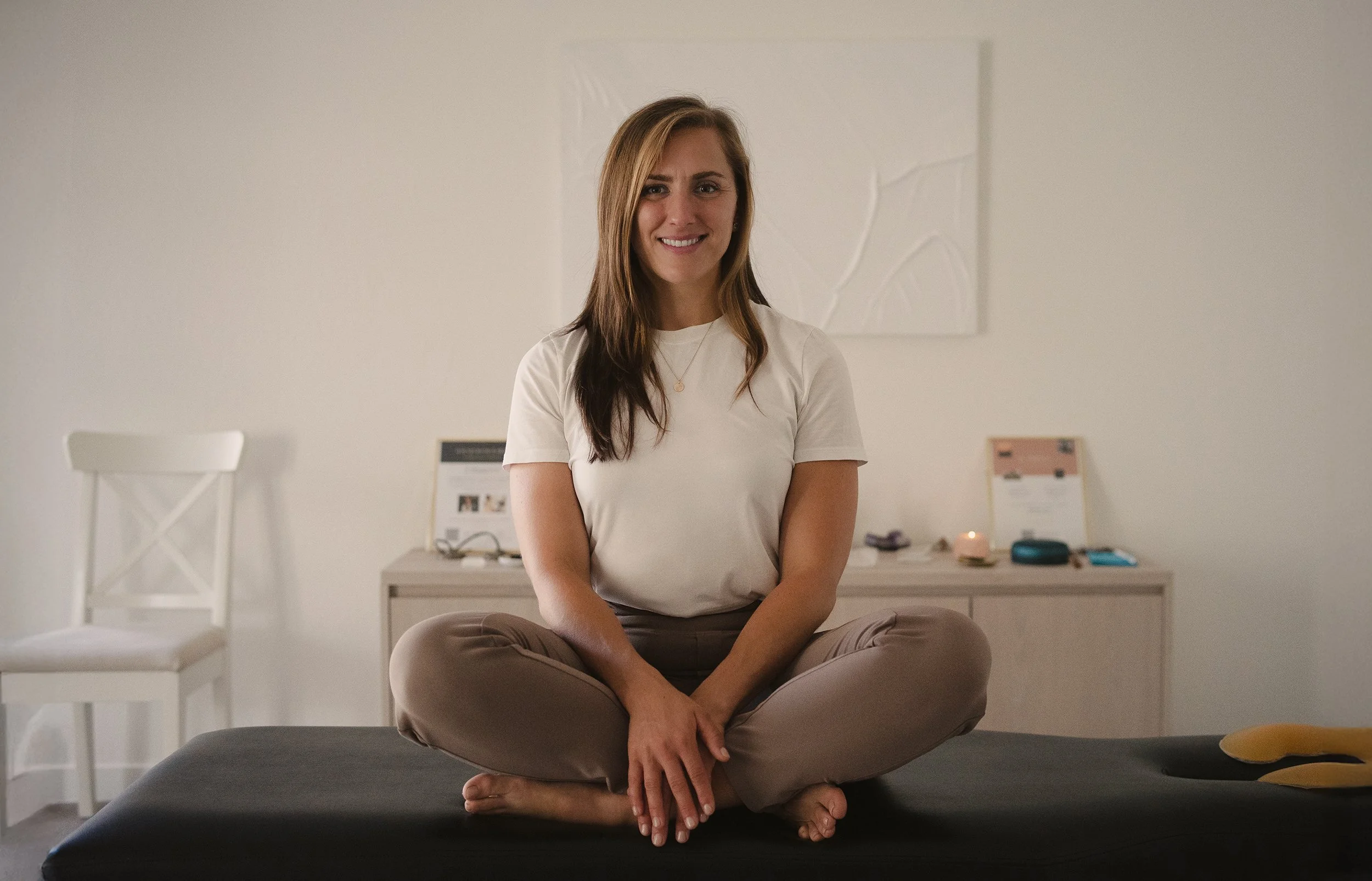
About Dr. Alandi Stec
Dr. Alandi is a Doctor of Chiropractic and Reiki Master practicing nervous system-centred care in Pleasant Hill, California. Her work integrates Bio-Geometric Integration, craniosacral therapy, and somatic practices to support the body's natural capacity for regulation and healing. She works with clients locally in the Bay Area and nationally through online courses focused on nervous system attunement and embodied wellness.