
Sciatica That Won't Quit: Why the Pain Isn't Starting Where You Think

The pain travels. That's what makes sciatica recognizable. It doesn't sit in one place.
Down the back of the thigh. Behind the knee. Sometimes into the calf, sometimes all the way to the foot. Sometimes it's a sharp electric line. Sometimes a dull, heavy ache. Sometimes a numb patch where sensation should be, or pins and needles in the arch of the foot when you've been sitting too long.
Wherever it shows up along the line, that's where your attention goes. The back of the right glute. The outer side of the left shin. The hamstring that feels strangely tight on one side and not the other.
But the pain isn't really starting in any of those places. That's the part most articles on sciatica miss.
Sciatica Isn't Always Where Sciatica Hurts
The sciatic nerve is the longest nerve in the body. It begins in the lower lumbar spine, exits through small openings between vertebrae, passes through the pelvis, threads beneath or through the deep gluteal muscles, and runs all the way down the back of the leg into the foot.
That's a long path. The pain you feel is wherever along that path the nerve is being compressed, irritated, or pulled.
Most popular sciatica content focuses on one of two compression points. The lumbar disc, which can bulge or herniate and press on the nerve root where it exits the spine. Or the piriformis, the small muscle deep in the glutes that the sciatic nerve passes near, which can squeeze the nerve when it grips.
Both of these can be involved. Neither tends to be the whole story when sciatica keeps coming back.
The reason: nerves don't get compressed in a vacuum. The disc, the piriformis, the sacroiliac joint, the deep gluteal muscles, the lumbar paraspinals, the psoas at the front of the spine, all of these are part of one connected web. When that web tightens, the compression points emerge wherever the system has the least slack. Treating only the spot where the pain shows up addresses the symptom without addressing the pattern that created it.
What's Actually Happening in Your Nervous System
Recurring sciatica is rarely a purely structural problem. The structure is involved, yes. But the structure is being held a certain way, and that holding has a source.
Your nervous system regulates muscle tone all day long, in the background, without your awareness. When the system has been in protection mode for a stretch of time, whether from stress, an old injury, surgery, prolonged sitting, or a difficult life chapter, the muscles around your pelvis and lower spine begin to brace. The deep gluteal muscles grip. The psoas, the deep hip flexor that runs from your lumbar spine to your femur, shortens and pulls. The sacrum loses some of its natural movement. The pelvic floor tightens.
This bracing pattern is intelligent. It's your body trying to stabilize a region it's reading as vulnerable. But the same bracing that's meant to protect you is what compresses the sciatic nerve. The pelvis is held more tightly than it should be. The space the nerve runs through narrows. The nerve, sensitive by nature, registers the pressure and sends pain down the line.
This is why sciatica can flare during high-stress weeks even when nothing physical has changed. Your nervous system has shifted further into activation, and the bracing pattern has tightened along with it. Sciatica isn't necessarily injured. It's reflecting what the rest of your system is doing.
For more on what nervous system regulation actually means and how it shapes patterns like this, our complete guide to nervous system reset goes deeper.
Why Stretching, Foam Rolling, and Heat Don't Stop the Cycle
Most popular sciatica advice focuses on releasing the spot. Stretch the piriformis. Foam roll the glutes. Apply heat to the lower back. Take an anti-inflammatory.
These approaches help in the moment. They reduce the local tension or the inflammation, which gives the nerve a brief window of less compression. The pain softens. You feel relief.
Then your nervous system, which is still operating in the bracing pattern, sends the signal that brings the tension back. Sometimes within hours. Sometimes by the next morning. The piriformis re-grips. The glutes re-tighten. The compression returns. The pain comes with it.
This is the loop most people get stuck in. They've found the techniques that give relief for an hour or two, and they've integrated those into their week. But the pattern is unchanged. The pain comes back because the system that's holding the pattern hasn't shifted.
The same goes for repeated cortisone injections, repeated chiropractic adjustments to the same vertebra, repeated rounds of physical therapy that focus on local muscles. None of it is wrong. It just doesn't reach the layer where the pattern is held.
The Whole-Body Pattern Behind Recurring Sciatica
Once you know where to look, the pattern that drives recurring sciatica becomes more visible.
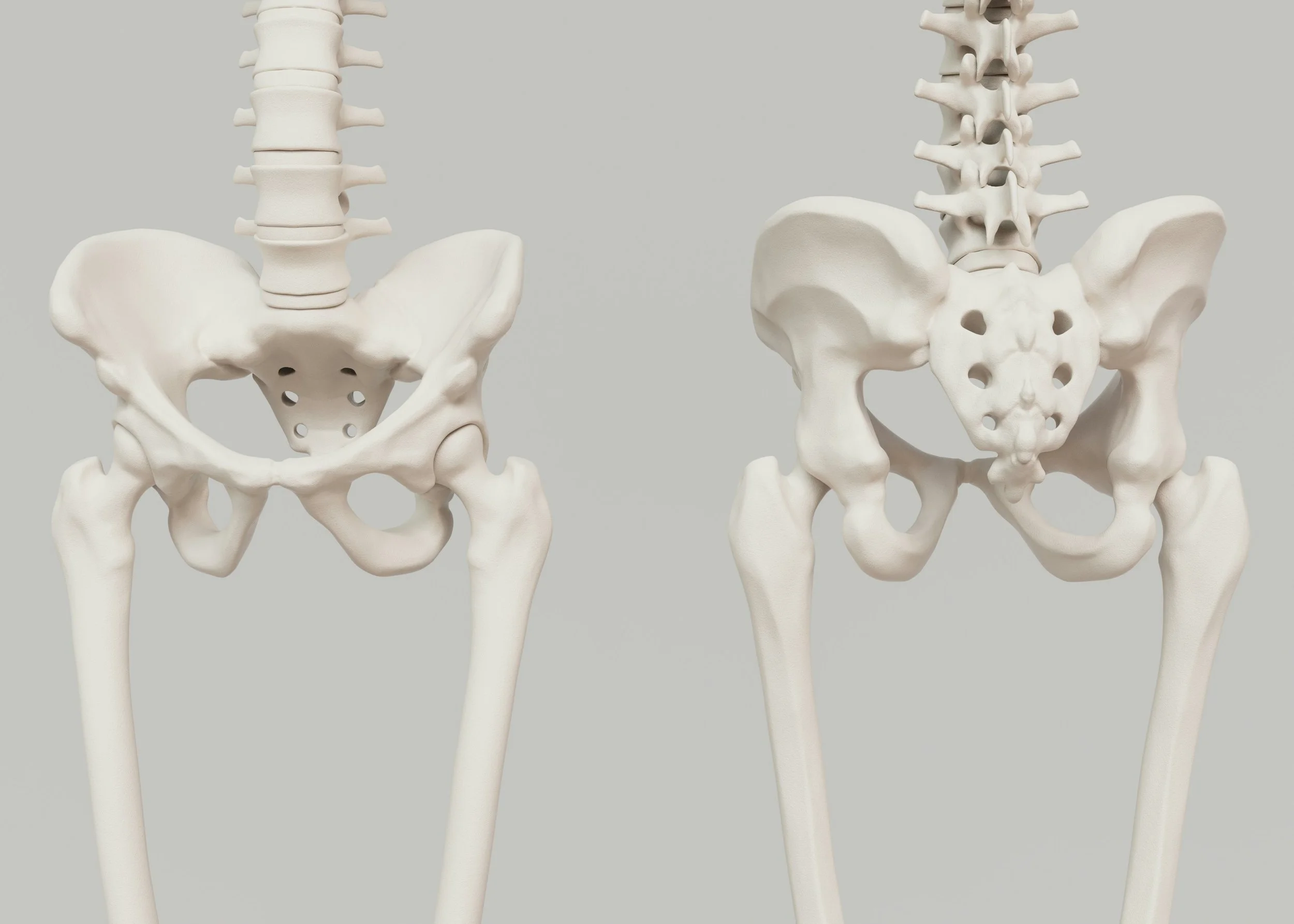
It usually involves the entire posterior chain plus the front of the hips. Specifically:
The sacrum.
This wedge-shaped bone at the base of the spine should move slightly with breath and movement. When the system is bracing, the sacrum locks. The whole pelvic ring loses its natural rhythm.
The psoas.
This deep hip flexor connects the lumbar vertebrae to the inside of the thigh bone. When it grips chronically, it pulls the lumbar spine forward and down, narrowing the space where the sciatic nerve roots exit. Tight psoas patterns are also closely linked to nervous system stress responses, which we've explored in our piece on tight hips and the psoas connection.
The deep gluteal layer.
Underneath the surface glutes are smaller, deeper muscles, including the piriformis. These hold tone reflexively when the pelvis is bracing. The sciatic nerve passes through this layer, and when the layer tightens, the nerve gets squeezed.
The breath and diaphragm.
When the diaphragm doesn't fully drop into your belly, the lumbar spine and pelvis lose one of their main sources of internal support. Bracing patterns intensify when breath stays in the upper chest.
The cranial-pelvic connection.
The cranium and the sacrum operate on a paired rhythm in craniosacral terms. Tension in one usually shows up in the other. People with chronic sciatica often have cranial tension they haven't noticed, and people with chronic headaches often have pelvic patterns they haven't noticed.
This is why isolated piriformis stretches don't resolve the cycle. The piriformis is one node in a much larger web. The whole web has to soften.
Why Your Imaging Might Not Match Your Pain
One of the more confusing experiences for people with recurring sciatica is when an MRI shows a disc bulge or herniation that doesn't actually correlate with the pain pattern.
This happens often. Imaging studies of people without any back pain show that disc bulges, herniations, and degeneration are surprisingly common, especially after age 40, even in people who feel completely fine. The structure can look concerning on imaging and produce no pain at all.
The reverse is also true. People with significant sciatic pain sometimes have unremarkable imaging. The disc looks normal. The structures appear stable. And yet the pain is real and persistent.
What's often happening: the pain is reflecting the holding pattern of the whole region, not a specific structural defect. The bracing through the pelvis, the gripping of the deep gluteals, the tightening of the psoas, the loss of sacral movement. All of these create the conditions for nerve compression even when no single structure looks dramatic on a scan.
This is part of why structural-only approaches sometimes fail. The structure isn't the whole story. The pattern is.
How Dr. Alandi Works With Sciatica
In Dr. Alandi's Pleasant Hill and San Francisco practice, sciatica is one of the more common patterns clients arrive with, especially clients who have tried physical therapy, chiropractic adjustments, or repeated injections without lasting change.
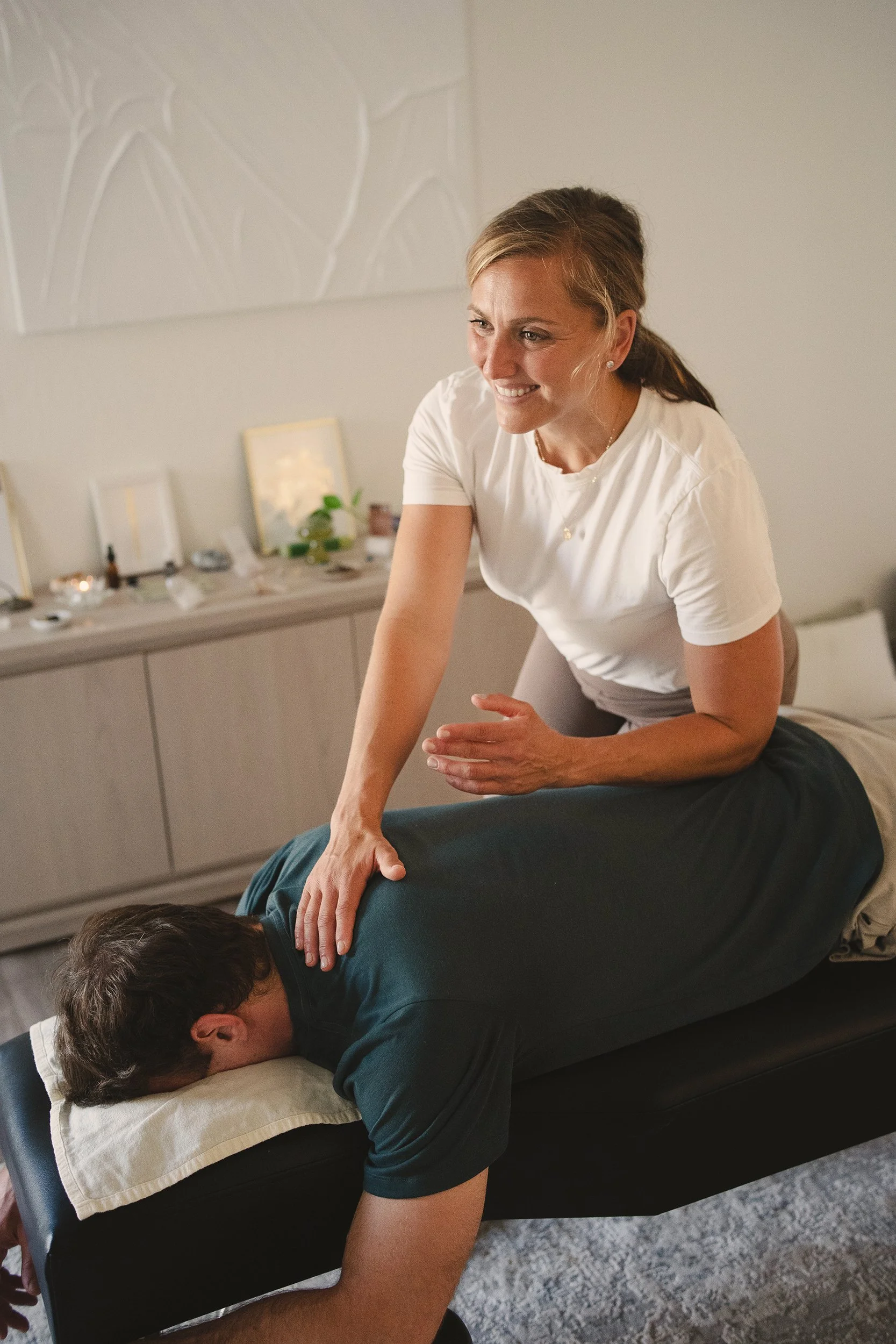
The work is built around the layered nature of the pattern. She's trained in Bio-Geometric Integration and craniosacral therapy, both of which approach the body through gentle, tissue-based listening rather than forceful adjustment. For sciatica specifically, this matters. Forceful adjustments to a pelvis that's already bracing can deepen the protective response and make the compression worse. Slow, attuned work invites the system to release the pattern from underneath.
In a session, she'll work with the whole web. The lumbar spine, the sacrum, the deep gluteal layer, the psoas, the diaphragm, and the cranial connection. She'll listen for where the bracing is holding hardest and follow what the tissue is asking for. The work is slow. There's no cracking. The body needs space to reorganize, and forceful intervention rarely creates that space.
What she's looking for, more than the pain, is the pattern. Where is the body holding most? What's the rhythm of the breath? Is the sacrum moving? Is the psoas softening or still gripping? The pain is information, but the pattern is what shifts the long-term picture.
What Clients Notice After Care
Clients with recurring sciatica often describe specific shifts in the days and weeks following care.
The first is usually breath. The diaphragm starts dropping more easily. The belly is involved in breathing again. This alone changes pelvic tension, because the diaphragm and the pelvic floor work as a paired system.
The second is movement quality. Walking feels different. The hips swing more freely. The stride lengthens slightly because the back of the leg isn't bracing the way it was.
The pain pattern itself usually changes shape before it goes away entirely. Some clients describe it as the pain having "less reach." It used to run all the way to the foot, now it stops at the calf. Or it used to be there every day, now it shows up only after a long sitting day. This is the nerve experiencing less compression as the surrounding pattern softens.
Sleep deepens. Sitting becomes more tolerable. The fear of triggering the pain, which often shapes daily decisions for people with chronic sciatica, begins to ease.
Most clients also notice they're more aware of their pelvis. They feel when it tightens during a stressful conversation. They feel when the psoas grips after an hour at a screen. That awareness is what allows the pattern to keep softening between sessions.
Daily Practices That Help the Pattern Soften
The pattern that drives recurring sciatica is layered, and so is what helps it shift. A few practices, used daily, can begin to interrupt the holding even before you've sought hands-on support.
Constructive rest.
Lie on your back with your knees bent, feet flat on the floor, hip-width apart. Let your knees rest in toward each other. Stay for ten minutes. This is one of the most direct ways to invite the psoas to release. The body's weight does the work. You don't have to stretch or push.
Slow exhale breathing into the belly.
Inhale for four counts, exhale for six or eight. Place a hand on your belly and feel it rise on the inhale. The diaphragm engagement matters as much as the slower rhythm. This is the breath that invites the pelvic floor and the psoas to soften.
Walks, daily, ideally outside.
Walking with natural arm swing, not power walking, releases the gluteal layer through gentle rhythmic movement. Twenty minutes most days outperforms longer high-intensity workouts that keep the pelvis braced.
Position changes every 30 minutes when sitting.
Static sitting is one of the most reliable triggers for sciatic compression. Stand up, walk, change positions. Even a brief shift breaks the bracing pattern.
Restorative practice in the evening.
Yoga nidra, body scan, slow restorative yoga, time in a warm bath. The nervous system needs an unmistakable signal that the day's activation is over. Without that signal, the bracing keeps running through the night.
These practices are cumulative. None of them, alone, will resolve a long-held sciatica pattern. Used daily, they begin to rebuild the capacity your nervous system needs to interrupt the pain cycle on its own.

A Closing Invitation
If your sciatica has been coming back despite the things you've tried, the next step isn't another stretch or another round of the same approach. It's care that addresses the layer underneath the symptom.
Sciatica that has become a pattern responds to two kinds of input. Daily nervous system care, the kind you build slowly into your week. And, when the pattern has been holding for a while, hands-on support that meets the whole web where it's been bracing.
For daily care, our 12-day guided nervous system regulation program walks through practices that help your system release the kind of low-grade activation that drives recurring patterns like this. It's the most accessible entry point into this work. You can also pair it with our free 5-Day Mindful Reset Guide, available through June 30 to anyone who joins the newsletter.
If you're in Pleasant Hill, Walnut Creek, Lafayette, Concord, Orinda, or anywhere in the East Bay, and the sciatica has become a recurring pattern, you're welcome to book a session with Dr. Alandi. Sessions are gentle, 30 or 60 minutes, and built around the way your nervous system, your pelvis, and your whole posterior chain are actually showing up.
The body knows how to release this pattern. It just needs the right kind of listening to remember.
Frequently Asked Questions
Q: What's the difference between sciatica and a herniated disc?
A: A herniated disc is one possible cause of sciatica. Sciatica is the symptom: pain, numbness, or tingling traveling along the path of the sciatic nerve. The cause can be a herniated disc, but it can also be piriformis tightness, sacroiliac dysfunction, deep gluteal bracing, or whole-body protective patterns. Imaging often shows disc changes that don't actually correlate with the pain, which is why structural-only treatment sometimes fails.
Q: Can stress cause sciatica?
A: Stress doesn't directly cause sciatica, but it can trigger or worsen the bracing pattern that compresses the sciatic nerve. When your nervous system is in a state of activation, the muscles around the pelvis tighten reflexively. For someone who already has a sciatica pattern, a stressful week can flare the symptoms even when nothing physical has changed.
Q: How long does sciatica usually last?
A: Acute sciatica from a clear injury often resolves in four to six weeks with conservative care. Recurring or chronic sciatica, the kind that comes back after relief, can persist for months or years if the underlying pattern isn't addressed. Pattern-based sciatica responds best to whole-body care that includes nervous system regulation.
Q: Can chiropractic help sciatica?
A: Yes, especially when the approach addresses the whole pattern, not just the lumbar spine. Gentle, tissue-based chiropractic that works with the sacrum, the deep hip layer, the psoas, and the breath tends to outperform forceful adjustments to the lumbar vertebrae alone. Forceful work on a bracing pelvis can sometimes deepen the protective response.
Q: Should I rest or stay active with sciatica?
A: In most cases, gentle movement is more helpful than bed rest. Constructive rest positions, walking, slow restorative practices, and daily mobility tend to keep the system from tightening further. Pushing through high-intensity workouts during a flare often makes the bracing pattern worse. Listen to the difference between movement that softens the pain and movement that tightens it.
Q: When should I see someone for sciatica?
A: If the pain has lasted more than a few weeks, if it's interfering with sleep, work, or daily activity, if you're starting to organize your week around managing it, or if you've tried stretching, painkillers, and rest without lasting change, it's worth seeking support from a nervous-system-focused practitioner.
About Dr. Alandi Stec
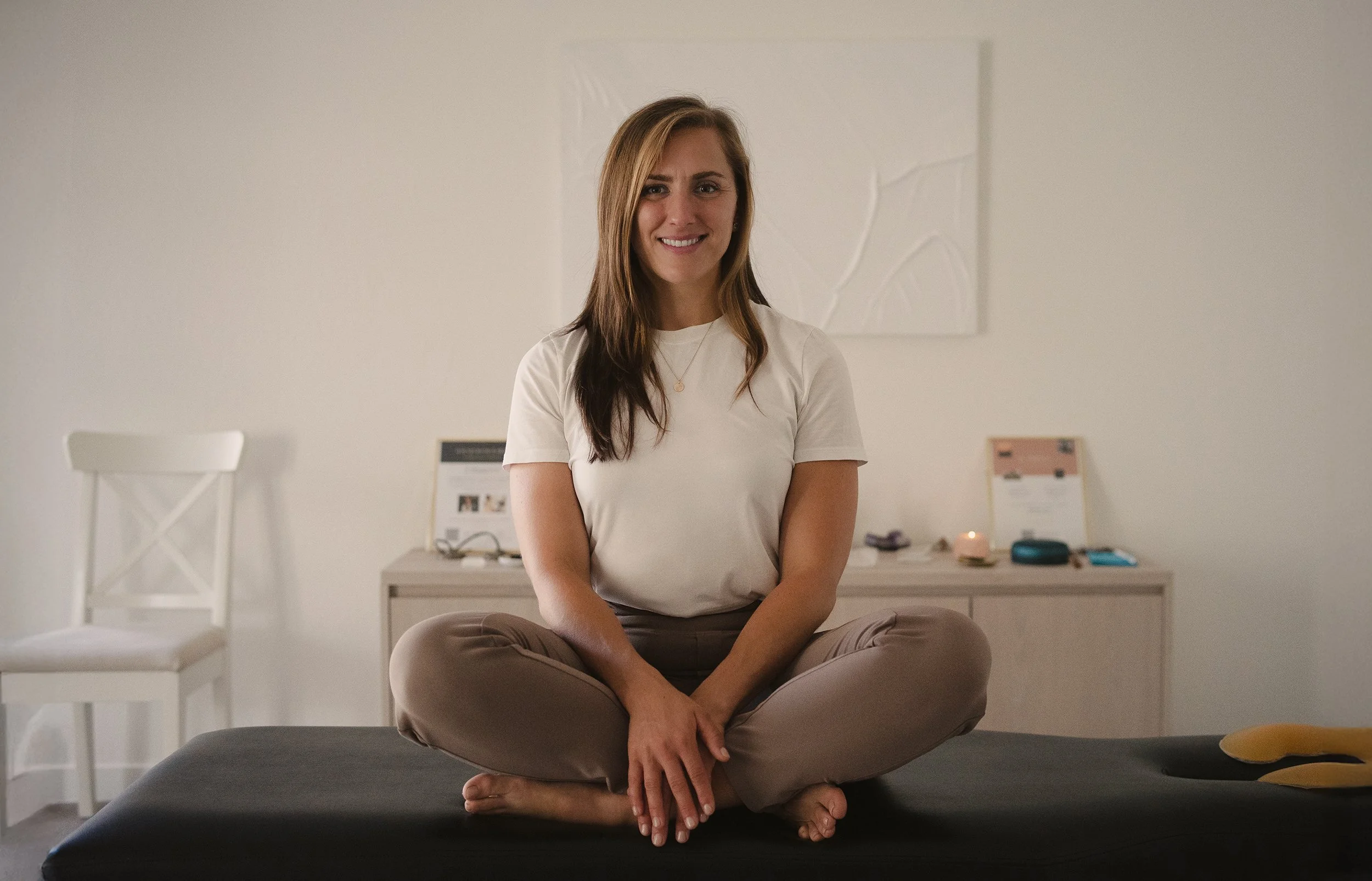
Dr. Alandi Stec is a Doctor of Chiropractic and Reiki Master specializing in nervous system-centered healing approaches. She serves the Pleasant Hill and Bay Area athletic community through Life Force Chiropractic, combining Bio-Geometric Integration with craniosacral work and somatic practices to support athletes in discovering their body's innate capacity for optimal performance and resilience.