
When Your Body Asks for Less (Reading Nervous System Depletion)

Your body is sending you a clear message.
The exhaustion that won't lift. The tasks that feel impossibly heavy.
The way even small demands drain you completely. The pull toward rest that feels urgent, almost primal.
This isn't laziness. This isn't weakness. This isn't you failing at life.
This is your body communicating in the clearest language it has: I need something different now.
When your nervous system reaches a state of deep depletion, it doesn't announce itself with words. It speaks through sensation, through capacity, through the undeniable knowing that you can't keep going the way you've been going.
And here's what changes everything: this signal is wise. Your body isn't breaking down. It's asking you to listen.
Learning Your Body's Language
Your body has been speaking to you for a while now. Quietly at first, then more insistently.
Maybe it started as needing more coffee to get through the day. Sleep not quite restoring you like it used to. A subtle sense that your reserves were running low.
Then the signals got clearer. Activities you normally enjoy started requiring more effort than they gave back. Social plans felt draining rather than nourishing. Your patience thinned. Your capacity shrank.
Now, the message is unmistakable. Your body is asking you to stop. To move through life differently. To regulate your nervous system.
This progression isn't failure. It's feedback.
Your nervous system has a threshold. When demands consistently exceed what your system can sustainably handle, your body begins conserving energy.
It's not punishing you. It's prioritizing what matters most: your survival and eventual restoration.
The exhaustion you're experiencing, the way tasks feel heavier, the pull toward rest—these are your body's way of saying "the pace we've been keeping isn't working anymore."
And the most compassionate response you can offer is: I'm listening.
What Deeply Depleted Systems Actually Need
When people recognize they're exhausted, the natural response is to rest. Take a weekend off. Get more sleep. Try to recharge.
And sometimes, rest doesn't seem to restore you the way you expect.
This isn't because rest is wrong. It's because nervous system depletion requires a specific kind of restoration that goes beyond passive rest.
Think of your nervous system like soil that's been farmed intensively. Simply stopping the farming doesn't immediately restore the soil. The ground needs specific nutrients, time to regenerate, different conditions that allow life to return.
Here's what makes nervous system regulation deeply restorative and different from regular rest:
Your system needs to feel safe enough to restore.
When your nervous system has been running in overdrive, simply having time off doesn't automatically shift it into restorative mode. Your body needs signals that it's genuinely safe to let go, to stop vigilance, to direct energy toward healing rather than maintaining readiness.
Passive rest isn't the same as active restoration.
Lying on the couch scrolling your phone gives your body physical rest, but it doesn't necessarily help your nervous system regulate. True restoration comes through practices that actively support your system's return to balance—things that help discharge held activation, restore rhythm, and rebuild capacity.
You're relearning sustainability, not just recovering energy.
The patterns that led to depletion need to change. Otherwise, any energy you restore gets depleted just as quickly. This means learning to listen to your body's capacity signals before they become urgent. Learning to pace yourself in ways that maintain reserves rather than drain them.
Your body is asking you to do less, but in a more nourishing way.
This isn't about adding more self-care tasks to your list. It's about engaging with life at a pace and intensity your nervous system can actually sustain. Quality of presence over quantity of activity.
Recovery isn't about getting back to how you were operating before. It's about learning to operate in partnership with your body's wisdom rather than override it.
How Your Nervous System Protects Your Capacity
Your nervous system is designed to move fluidly between states: activation for engaging with demands, restoration for rebuilding resources, and conservation when reserves run low.
In healthy functioning, this happens naturally. You mobilize energy for what matters, then return to baseline. You respond to challenges, then discharge the activation. The rhythm continues, sustainable and regenerative.
Deep exhaustion happens when this rhythm breaks down—not because your body is failing, but because it's adapting to protect you from further depletion.
Here's how your nervous system responds when demands persistently exceed capacity:
Your Body Tries to Meet the Demand
When life asks more of you than feels comfortable, your nervous system activates resources.
Cortisol and adrenaline provide energy. Your focus sharpens. Your body prepares to rise to the occasion.
This activation is meant to be temporary. A surge for a challenge, then a return to ease.
But when challenges don't end—when the pace stays relentless, when responsibilities keep piling on, when there's never quite enough time or rest—your body stays activated. Days become weeks. Weeks become months. The rhythm of activation and recovery gets stuck in activation.
Your Resources Begin to Deplete
Running in a state of constant readiness burns through your body's reserves. Your adrenal system works overtime. Your sleep quality decreases. Your immune function lowers. Your capacity to regulate emotions narrows.
You start noticing the exhaustion, but the demands keep coming. So you compensate. More caffeine. More willpower. Less sleep. Fewer boundaries.
Your body is still trying to meet what's being asked of it. But the cost keeps growing.
Your Body Begins Asking You to Stop
Eventually, your nervous system makes a choice: continue depleting resources that are already low, or begin conserving what remains.
It chooses conservation. Not to punish you, but to protect you.
This is what deep nervous system depletion looks like. Your body redirects energy away from everything non-essential. Your capacity drops significantly. Tasks that once felt automatic now require enormous effort. Motivation fades because motivation requires energy you don't have to spare.
From the outside, this might look like:
• Profound tiredness that sleep doesn't fully restore
• Difficulty focusing or making even simple decisions
• Emotional flatness or feeling easily overwhelmed
• Physical heaviness, like moving through water
• Needing to withdraw from social connections
• Loss of joy in things that usually bring pleasure
From the inside, it feels like:
• Everything requires more energy than you have
• You're moving through life at half speed
• You've lost the thread of who you are
• You can't understand why you can't just function normally
But here's what your body is actually doing: it's forcing you to prioritize rest and restoration because you haven't been choosing it voluntarily. It's protecting your long-term survival by limiting your short-term capacity.
This isn't breakdown. It's recalibration. Your body is teaching you what sustainable actually means.

Reading Your Body's Signals for Regulation
Not all exhaustion means your nervous system needs deep recalibration for nervous system regulation. Sometimes you're simply tired from a busy period, and rest does restore you.
But nervous system depletion has a particular quality. Here's how to recognize when your body is asking for more than just a good night's sleep:
You notice a gap between rest and restoration.
Even when you have time to rest, you don't feel renewed. You lie down but your mind won't quiet. You have a day off but still feel drained. The usual ways of recharging aren't recharging you anymore.
Simple tasks require more energy than they used to.
Things that were once automatic now require conscious effort and decision-making. Making breakfast. Responding to messages. Getting dressed. Your body is conserving energy, and that means everything takes more.
Your capacity for stress has narrowed significantly.
Things that wouldn't have bothered you before now feel overwhelming. A question from a coworker feels intrusive. Your phone buzzing creates tension in your chest. The normal sounds and demands of daily life feel louder, sharper, more than you can handle.
Your emotional range has compressed.
Either you feel a kind of flatness—not exactly sad, just neutral about most things—or you swing between fine and completely overwhelmed with little middle ground. You've lost access to the full spectrum of feeling.
Decision-making has become difficult.
Even small choices feel overwhelming. What to eat for lunch. Which route to drive. Whether to respond to that text now or later. Your brain feels foggy, like it's working harder to process information that used to be simple.
Your body carries tension it won't release.
Your shoulders stay tight. Your jaw clenches. Your breath stays shallow. You notice you're bracing, but consciously trying to relax doesn't quite work. The tension has become your body's baseline.
You need more space from people than usual.
You find yourself canceling plans not because you don't care, but because being "on" for anyone—even people you love—feels like it costs more than you have to give. You're protecting your limited energy for absolute essentials.
Joy feels distant or absent.
The things that usually light you up—your favorite music, time in nature, creative pursuits—feel neutral. Not unpleasant, just... nothing. Your nervous system is so focused on conservation that pleasure has become less accessible.
If several of these feel familiar, your body is communicating clearly:
the pace and intensity you've been maintaining isn't sustainable. It's asking you to recalibrate how you move through life.
This isn't a diagnosis of what's wrong. It's information about what your body needs.



Supporting Your Nervous System's Regulation
When your body asks for deep rest and recalibration, the response isn't about fixing what's broken. It's about learning to listen and partner with your body's wisdom.
Progress happens in small increments. Some days you'll have more capacity than others. That's not failure—that's how nervous systems restore themselves. In waves, not straight lines.
The goal isn't to get back to pushing yourself as hard as you were before. The goal is to restore your body's capacity while learning to honor its limits, so you can engage with life in a way that's actually sustainable.
1. Shift From Passive Rest to Active Restoration
Your body needs more than lying still. It needs practices that actively support nervous system regulation.
This might look like:
Gentle movement that helps your body complete stress responses it couldn't complete while pushing through (slow walks, stretching, intuitive dance)
Breath practices that signal safety and help shift your system toward parasympathetic states
Time in nature where your nervous system can borrow the natural world's rhythms
Creative expression without pressure or performance—drawing, singing, writing just for the felt sense of it
Somatic practices that help discharge held activation from your tissues
The key is choosing practices that feel nourishing rather than depleting. If something feels like one more task on your list, it's not the right practice for this moment.
2. Honor Different Capacity Levels
Your capacity will vary day to day. Learning to work with this rather than against it is part of the recalibration.
On days when capacity is very low:
• Keep your focus narrow—just what needs to happen today
• Create physical comfort (warmth, soft textures, dim lighting)
• Use simple grounding practices (feet on floor, hands on heart, naming what you see)
• Let expectations be extremely small
On days when you have slightly more capacity:
• Introduce small amounts of gentle activation (a short walk, light stretching)
• Practice simple regulation techniques (extended exhales, body scanning)
• Connect briefly with safe people
• Engage in tasks that provide a sense of completion without overwhelming you
As capacity gradually returns:
• Add activities back slowly, one at a time
• Notice how your body responds to each addition
• If you feel depletion creeping back, pull back before it becomes urgent
• Celebrate small wins—they're rebuilding your capacity one moment at a time
3. Listen to What Your Body Is Teaching You
Depletion often happens because you've been overriding your body's earlier signals. Recovery requires learning to hear and honor those signals before they become urgent.
This means:
Noticing your capacity thresholds before you cross them. Where's the line between "pleasantly engaged" and "starting to drain"?
Honoring "no" when your body says it, even when your mind thinks you "should" say yes
Questioning the beliefs that drove you to depletion: "Rest must be earned." "My worth equals my productivity." "I can't say no."
Asking regularly: What does my body actually need right now? Not what I think it should need—what does it need?
Sometimes, nervous system depletion is the thing that finally forces you to examine patterns that weren't sustainable. Your body is teaching you what it means to live in partnership with your own limits rather than constantly pushing beyond them.
4. Build Daily Regulation Into Your Rhythm
Small, consistent practices build nervous system resilience more effectively than occasional big interventions.
Morning orientation:
Before reaching for your phone, take a few minutes to sense your body. Notice your breath. Set an intention to honor your capacity today rather than override it.
Midday check-ins:
Pause periodically throughout the day. Am I holding tension? Is my breath shallow? What small thing would help me regulate right now? (A few deep breaths, a brief walk, closing my eyes for a moment)
Evening transition:
Create a bridge between the day's activity and rest. This might be gentle movement, journaling, breath work, or a body scan—something that helps your system release the day before sleep.
Weekly deep rest:
Dedicate time specifically for nervous system restoration. This could be Yoga Nidra, extended time in nature, somatic therapy, or any practice that allows true letting go.
5. Rebuild Capacity Gradually
As you start feeling better, there's often a temptation to quickly return to your previous pace. This is where many people deplete again.
Think of your nervous system like a muscle that's been resting. You wouldn't immediately jump back into heavy training. You'd start gently and increase load slowly as strength returns.
Add activities back one at a time.
Notice how each addition affects your energy and capacity. If something consistently drains you more than it gives back, that's information.
Watch for the early signals of depletion.
Don't wait until you're exhausted again. When you notice your capacity narrowing, your sleep disrupting, or your patience thinning, respond immediately by pulling back.
Redefine what "normal" means.
Recovery isn't about getting back to who you were before. It's about becoming someone who lives in sustainable partnership with their body's actual capacity.
This might mean a permanently slower pace. Fewer commitments. More space. That's not loss—that's wisdom.
Signs Your Capacity Is Returning
Recalibration doesn't feel like a sudden shift from exhausted to energized. It's subtle, gradual, and easy to miss if you're looking for dramatic change.
Early signs your nervous system is restoring:
• You wake up and notice a softness in your body that wasn't there before
• Small tasks feel slightly less heavy
• You have brief moments of curiosity or interest in something
• You notice beauty again—the way light falls, how coffee tastes, the texture of your blanket
• Your body feels marginally lighter when you move
As restoration deepens:
• You can engage in activities for longer before feeling depleted
• Your emotional range expands beyond flat or overwhelmed—you feel shades in between
• Decision-making becomes easier; your mind feels clearer
• You remember things you used to enjoy and feel a pull toward them
• Physical tension begins to ease; your body releases more readily
Markers of sustained recalibration:
• You have energy reserves at the end of the day
• Stress doesn't immediately overwhelm your system; you have more buffer
• You can be present with people without it costing everything
• Joy returns, not just as a concept but as something you actually feel
• You trust your body's signals and respond to them before they become urgent
This process typically unfolds over months, not weeks. Your nervous system took time to reach depletion, and it needs time to feel safe enough to restore fully.
Notice and celebrate the small shifts. They're evidence that your body is listening to your new partnership with it.
You're not returning to who you were. You're becoming someone who knows how to honor their capacity, someone who listens when their body speaks, someone who understands that sustainable living isn't about doing more—it's about doing what matters in a way your body can support.



When to Seek Professional Support
Burnout is serious, and sometimes you need more than self-care practices to recover.
Consider professional guidance if:
• You've been in shutdown for more than a few months without improvement
• You're having thoughts of self-harm or feeling like life isn't worth living
• Your functioning has deteriorated to the point where you can't work or care for yourself
• Past trauma is compounding your burnout
• You need help establishing boundaries or making life changes
• You want structured support through the recovery process
Nervous System Support
For those in the Pleasant Hill, Walnut Creek, Lafayette, or broader Bay Area, gentle chiropractic care that focuses on nervous system regulation can support your body's recovery. When your spine is under stress, it affects how your nervous system functions. Gentle adjustments combined with craniosacral work help release the physical tension that keeps your body locked in protective patterns.
This kind of care honors where your body is right now. There's no pressure to be further along than you are. Each session meets you in your current state and supports your body's natural healing capacity.
Structured Daily Practice
Having a framework for daily nervous system regulation can take the decision-making burden off your depleted system. The 12-Day Nervous System Regulation course provides guided practices specifically designed to support burnout recovery. Each day builds on the last, creating gentle momentum without overwhelming your capacity. For $50, you get lifetime access to practices you can return to whenever your system needs support.
If rest has been particularly elusive, theYoga Nidra At Home course offers deep restorative practices that help your nervous system remember how to downregulate. This can be particularly helpful when your body is stuck in the wired-but-exhausted state that often accompanies burnout.
Frequently Asked Questions
How is this different from depression?
While deep nervous system depletion and depression can coexist and share symptoms, they have different origins. Depression often involves neurochemical patterns that affect mood across all areas of life. Nervous system depletion is specifically your body's adaptive response to chronic demands exceeding capacity—it's situational and improves when the stressors change and your system restores. That said, prolonged depletion can contribute to depression, so honoring both as real and worthy of support matters.
Can I restore my capacity without making major life changes?
Sometimes yes, sometimes no. It depends on whether your current situation can become sustainable with adjustments. Some people restore capacity through better boundaries, reduced hours, different approaches to the same responsibilities, or improved regulation practices. Others need to change situations that are fundamentally incompatible with their wellbeing. The honest question to ask: can this become sustainable with changes, or is the situation itself unsustainable? Your body's signals will guide you.
How long does recalibration take?
There's no universal timeline. Deep depletion that developed over years might take many months to restore. More recent depletion might shift within weeks. Factors include how long you've been depleted, how significantly your capacity decreased, what changes you can make, your access to support, and whether past experiences are complicating the picture. Focus on the direction you're moving rather than the speed. Small improvements compounding over time create lasting change.
Why do I feel worse when I finally stop?
This is common and makes sense from a nervous system perspective. When you've been running on activation and override, stopping means you finally feel the accumulated exhaustion you've been pushing through. Your body has been holding so much that when you give it permission to rest, everything surfaces. You're finally feeling what's true instead of suppressing it. This actually indicates your body trusts you enough to show you what it's been carrying. The discomfort is temporary and part of restoration.
How do I handle guilt about needing more rest?
Guilt often stems from beliefs about productivity and worth being interconnected. Your body needing rest isn't something to feel guilty about—it's information about what's sustainable. The cultural message that rest must be earned through productivity is part of what creates depletion in the first place. Recalibration requires examining and challenging that belief. Your body deserves care and rest simply because it's your body, not because you've "earned" it through output. This shift in perspective is often as important as the practical rest practices.
Will I always have less capacity than I used to?
Not necessarily. Some people fully restore their capacity and then some, because they're no longer depleting themselves constantly. Others find their sustainable capacity is different from what they could do while overriding their limits—and they're okay with that because the quality of their life improves. You might have different capacity than before, but capacity that's sustainable feels very different from capacity you're forcing. Many people discover they prefer this new relationship with their body's wisdom over their previous pattern of constant override.
What if the demands in my life genuinely can't decrease right now?
Sometimes you're in a season where certain demands truly can't change—caring for young children or aging parents, financial obligations that require a particular job, health situations demanding attention. In these cases, focus on building your nervous system's resilience rather than waiting for external conditions to change. Small daily practices, any moments of rest you can create, professional support, and lowering expectations in non-essential areas all help. You're working with what is while building capacity for what's required. The situation may not change quickly, but your system's ability to meet it can strengthen gradually.
Your Body Has Been Teaching You All Along
The exhaustion you're experiencing isn't punishment. It's not your body giving up on you or breaking down.
It's communication. Clear, persistent, impossible to ignore.
Your body has been trying to tell you something for a while now. Quietly at first, with subtle signals you could override. Then louder, with symptoms that disrupted your functioning. Now, with undeniable clarity: The way you've been living isn't sustainable for me.
This isn't betrayal. It's wisdom.
Your body knows things your mind doesn't want to accept. It knows that productivity isn't worth destroying yourself. It knows that rest isn't something you earn—it's something you require. It knows that your worth exists independent of what you accomplish.
And when you wouldn't listen voluntarily, it made you listen by limiting your capacity to continue.
The recalibration you're moving through isn't about getting back to how things were. It's about learning to live in partnership with your body's actual needs rather than constantly overriding them.
This partnership means:
• Listening to capacity signals before they become urgent
• Honoring "enough" even when you think you should do more
• Trusting that sustainable pace serves you better than constant pushing
• Believing your body's wisdom matters more than external expectations
Capacity will return. But more importantly, you'll develop a new relationship with it—one where you work with your body rather than against it.
You're not learning to do less because you're weak. You're learning to live differently because you're wise enough to finally listen.
Your body has been your teacher all along. What it's teaching you now is how to choose yourself.
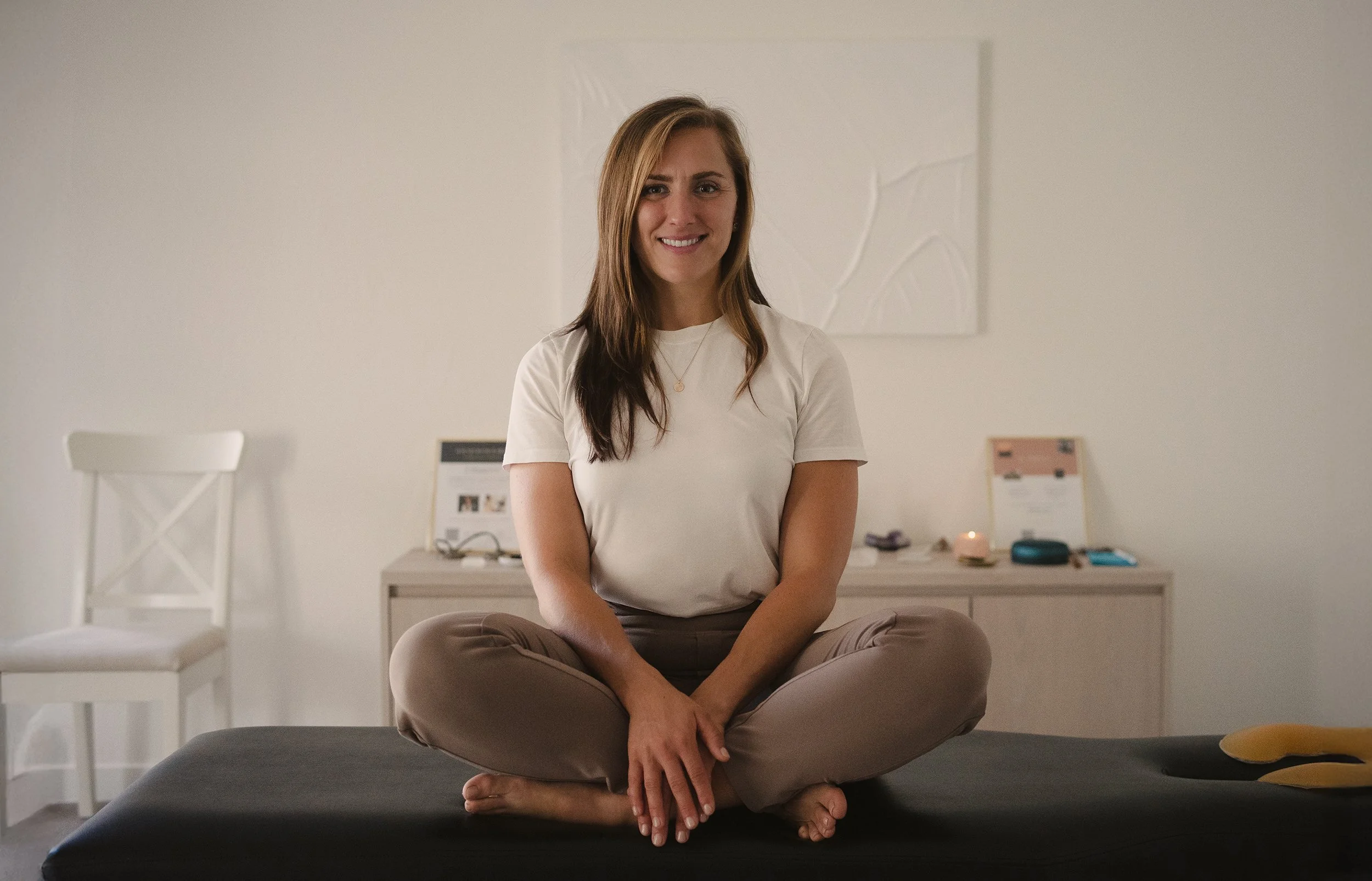
About Dr. Alandi Stec
Dr. Alandi is a Doctor of Chiropractic specializing in gentle, nervous system-centered care at Life Force Chiropractic in Pleasant Hill and San Francisco. She supports people recovering from burnout and chronic stress through structural care that honors the body's protective responses and creates space for authentic healing.