
Where Your Body Holds Stress (And Why It Won't Let Go Without Help)

You're exhausted but you can't sleep. Your mind finally quiets but your body won't follow. You lie there, aware of the tightness in your shoulders, the tension in your jaw, the way your spine feels like it's bracing against something even though nothing is happening.
This is what chronic stress looks like when it lives in your body.
You've tried stretching. Hot baths. Massage. Maybe yoga or meditation apps. Some things help temporarily. But the tension always comes back. Your shoulders creep up toward your ears. Your jaw clenches without you noticing. Your spine feels like it's carrying weight even when you're lying down.
You're wired but tired. Running on empty but unable to stop. Your body won't let go of what it's been holding.
And you're starting to wonder if this is just how life feels now.
Here's what most people don't realize: the tension isn't just in your muscles. It's in your nervous system. And until you address what's happening there, your body will keep defaulting to the same patterns of holding and bracing, no matter how many times you try to manually release them.
Where Your Body Actually Holds Stress
When stress hits, your nervous system activates. This is normal. This is survival.
Your sympathetic system kicks in. Adrenaline flows. Your body mobilizes resources to handle the perceived threat. Heart rate increases. Breathing shifts. Blood flow redirects to major muscle groups.
And specific areas of your body brace to protect you.
Your spine becomes your body's shock absorber.
It tightens to create stability when everything feels unstable. The muscles along your vertebrae contract, holding you upright, keeping you functional. This is adaptive when the stress passes. But when stress is chronic, your spine never gets the signal that it's safe to soften.
Your shoulders rise toward your ears as your body prepares to fight or flee.
This protective posture happens automatically. You probably don't notice it anymore. But your trapezius muscles, your levator scapulae, the entire shoulder girdle stays engaged, holding tension you've stopped consciously feeling.
Your jaw clenches as part of your body's threat response.
This comes from a primitive protective mechanism. Tighten the jaw, protect vulnerable structures, prepare for impact. Many people grind their teeth at night without knowing it. Others carry constant tension through their temporomandibular joint. The jaw becomes a holding place for stress your body can't discharge.
These aren't three separate problems. They're connected through your nervous system. When your autonomic system stays activated, these areas become where your body literally "holds it all together."
Why the Tension Won't Release on Its Own
You can't just will yourself to relax.
Your conscious mind might understand you're safe. You might tell yourself to drop your shoulders, unclench your jaw, let your spine soften. But the part of your nervous system creating this tension isn't listening to those commands.
The autonomic nervous system operates below conscious awareness. It's monitoring for threats and safety signals continuously. And if it has decided that vigilance is necessary, it will maintain the tension patterns designed to keep you protected.
This is why massage provides temporary relief but the tension returns within days. Why stretching feels good in the moment but doesn't create lasting change. Why even meditation, while valuable, doesn't always shift the physical holding patterns.
You're not addressing the nervous system pattern underneath the muscle tension. You're treating the symptom, not the source.
The longer these patterns stay established, the more your body normalizes them. What started as a stress response becomes your new baseline. Your nervous system forgets what "not tense" feels like. The holding becomes automatic, invisible, constant.
What Happens When Tension Becomes Your Normal
Most people don't realize how much tension they're carrying until it starts causing secondary problems.
Sleep suffers.
When your body can't downregulate, sleep becomes difficult. You're exhausted but can't fall asleep. Or you sleep but wake up feeling unrested because your nervous system never fully disengaged. True rest requires your body to feel safe enough to let go. When the holding patterns won't release, neither can you.
Breathing becomes shallow.
Chronic shoulder and spine tension restricts your ribcage. You can't take full, deep breaths anymore. This perpetuates nervous system activation because shallow breathing signals to your body that something is wrong, which creates more tension. The cycle feeds itself.
Headaches increase.
Jaw tension, neck tension, and shoulder tension all contribute to chronic headaches. The constant muscle contraction affects blood flow and nerve signaling. What you think might be migraines could be your body's response to unrelenting tension it can't release.
Digestion struggles.
When your nervous system is in sympathetic activation, digestion gets deprioritized. You might experience constipation, bloating, or just a general sense that food doesn't sit well. Your body can't rest-and-digest when it's stuck in fight-or-flight.
Everything feels harder.
When your body is using energy to maintain chronic tension patterns, you have less available for everything else. Small tasks feel overwhelming. Your patience runs thin. You're irritable without knowing why. This isn't a character flaw. It's what happens when your nervous system is overtaxed.
The tension isn't just uncomfortable. It's affecting your entire system.
How Gentle Alignment Changes the Pattern
This is where nervous system-centered chiropractic care works differently than what most people expect.
We're not just "cracking your back" or manually forcing muscles to release. We're working with your body's innate geometry and the tension patterns your nervous system has created.
Using Bio-Geometric Integration, we assess where your body is holding. Not just where it hurts, but where the nervous system has established patterns of bracing and protection. Where the spine has lost its natural resilience. Where the shoulders have locked into elevation. Where the jaw has become a storage place for stress.
The adjustments are gentle.
There's no forceful manipulation. Often, it's a precise contact held for a few seconds while your nervous system recognizes what we're doing and begins to respond. Your body feels the invitation to release and, when it feels safe to do so, it does.
We're communicating with your nervous system.
The adjustment isn't about moving bones. It's about giving your autonomic system information that changes its threat assessment. When your spine begins to align, your nervous system receives signals that stability has returned. It can begin to let go of the protective bracing.
The changes ripple through your whole system.
When your spine releases, your shoulders can drop. When your shoulders drop, your jaw softens. When your jaw releases, you can breathe more fully. When you breathe more fully, your nervous system gets the signal it's safe to downregulate. Everything is connected.
This isn't a one-session fix. Your body built these patterns over months or years. It needs repeated experiences of safe release to establish new patterns. But people often notice changes after even the first session. Not because everything is perfect, but because their body remembers what "not tense" feels like.
What Patients in Pleasant Hill Notice
The changes aren't always dramatic. Sometimes they're so gradual you don't notice until you realize something has shifted.
"I slept through the night for the first time in months."
"My coworker pointed out that my shoulders aren't up by my ears anymore."
"I didn't realize how much tension I'd been holding until it released."
"I can take a full breath again."
"My headaches have decreased significantly."
"I feel like I can actually relax when I sit down now."
Patients often report:
• Deeper, more restorative sleep
• Reduced frequency and intensity of tension headaches
• Shoulders that naturally sit lower and feel lighter
• Jaw tension that decreases (less grinding, less TMJ pain)
• Easier, fuller breathing
• Improved digestion
• More energy (not using it all to maintain tension)
• Better ability to handle stress without immediately tensing
• Feeling more "in their body" and less dissociated
But perhaps most significantly, they notice they can finally rest. Not just lie down, but actually let their nervous system settle. The constant hum of activation quiets. Their body remembers it's allowed to soften.
Why Pleasant Hill Professionals Are Seeking This Care
If you work in the Bay Area, you know the stress. The commute. The deadlines. The constant pressure to perform. The lack of boundaries between work and personal life. The screens. The notifications. The sense that you can never quite catch up.
Your body is managing all of this whether you realize it or not.
Many Pleasant Hill professionals come to our practice because they've tried everything else. They've done the stretching, the massage, the self-care routines. They understand intellectually that they need to reduce stress. But their bodies won't cooperate.
They're high-functioning on the outside while feeling like they're holding themselves together with sheer willpower on the inside. The tension has become so normalized they've forgotten what ease feels like.
This care offers something different. It's not about adding another item to your to-do list. It's about giving your nervous system the support it needs to release what it's been carrying. So you can continue doing what you do, but from a place of regulation rather than constant activation.
Understanding the Difference: Symptom Management vs. Pattern Change
There's a difference between managing symptoms and changing the underlying pattern.
Symptom management helps you cope with tension: massage, hot baths, pain relievers, stretching.
These are valuable. They provide relief. But they're addressing the muscle tension without addressing the nervous system pattern creating it.
Pattern change addresses why your body keeps creating tension in the first place.
It works with your nervous system's threat assessment. It helps your body establish new patterns of responding to stress. It teaches your autonomic system that it can release the chronic bracing.
Think of it like this: You can keep bailing water out of a boat (symptom management). Or you can fix the leak (pattern change). Both have their place. But if you never address the source, you'll be bailing forever.
Nervous system-centered chiropractic care addresses the source. We're not just releasing today's tension. We're helping your body establish new patterns of regulation that prevent chronic tension from rebuilding.
What to Expect from Care
When you come to Life Force Chiropractic in Pleasant Hill, the first session is about understanding. We'll talk about what you're experiencing. Where you feel tension. What makes it better or worse. How long this has been your pattern.
Then we'll assess how your body is holding. Where your spine has lost resilience. Where your nervous system has created bracing patterns. This isn't just about finding what hurts. It's about understanding the whole pattern.
Initial care is typically more frequent.
When patterns have been established for months or years, your body needs consistent support to establish new ones. You might come weekly or twice a week for the first few weeks. This isn't forever. It's what your nervous system needs to shift out of chronic patterns.
Then we space out.
As your body establishes new patterns and your nervous system builds regulation capacity, you need less frequent support. Many patients move to every other week, then monthly, then occasional maintenance.
The work is collaborative.
I'll explain what I'm noticing and what we're addressing. You'll learn to recognize your own holding patterns. This body awareness becomes a tool you can use outside of sessions.
Results vary.
Some people notice significant shifts after 2-3 sessions. Others need more consistent care before the patterns begin changing. This isn't because some people are "worse" than others. Nervous systems are complex. The timeline depends on how long patterns have been established and how your individual system responds.
When to Consider This Approach
This care might be right for you if:
• You've tried everything else and the tension keeps returning
• You're wired but tired, unable to fully relax
• Your shoulders live up by your ears no matter what you do
• You clench or grind your teeth (especially at night)
• Tension headaches are becoming more frequent
• You can't take a full, deep breath
• Sleep doesn't restore you anymore
• You feel like you're holding yourself together with sheer willpower
• The stress isn't going away, but your body's response to it needs to change
You don't have to live with chronic tension as your new normal.
Your body has the capacity to release what it's been holding. Sometimes it just needs the right support to remember how.
Your Body Is Ready to Let Go
You've been managing this tension for so long, you've forgotten what it feels like to not carry it.
But your body hasn't forgotten. It knows how to soften, how to release, how to move with ease instead of constant bracing. That capacity is still there. It's just been overridden by nervous system patterns that have been running on autopilot.
Gentle, nervous system-centered chiropractic care helps your body find its way back. Not by forcing anything. But by creating the conditions where release becomes possible. Where your autonomic system can finally receive the signal that vigilance isn't necessary. Where the tension that's been protecting you can soften because protection is no longer needed.
The tightness in your shoulders. The clenching in your jaw. The bracing in your spine. These aren't permanent. They're patterns. And patterns can change.
Ready to help your body let go?
If you're in Pleasant Hill or the surrounding Bay Area and you're tired of just managing tension instead of actually releasing it, we're here to help.
Book a consultation to discuss what you're experiencing and how gentle, nervous system-centered care can support your body in releasing what it's been holding.
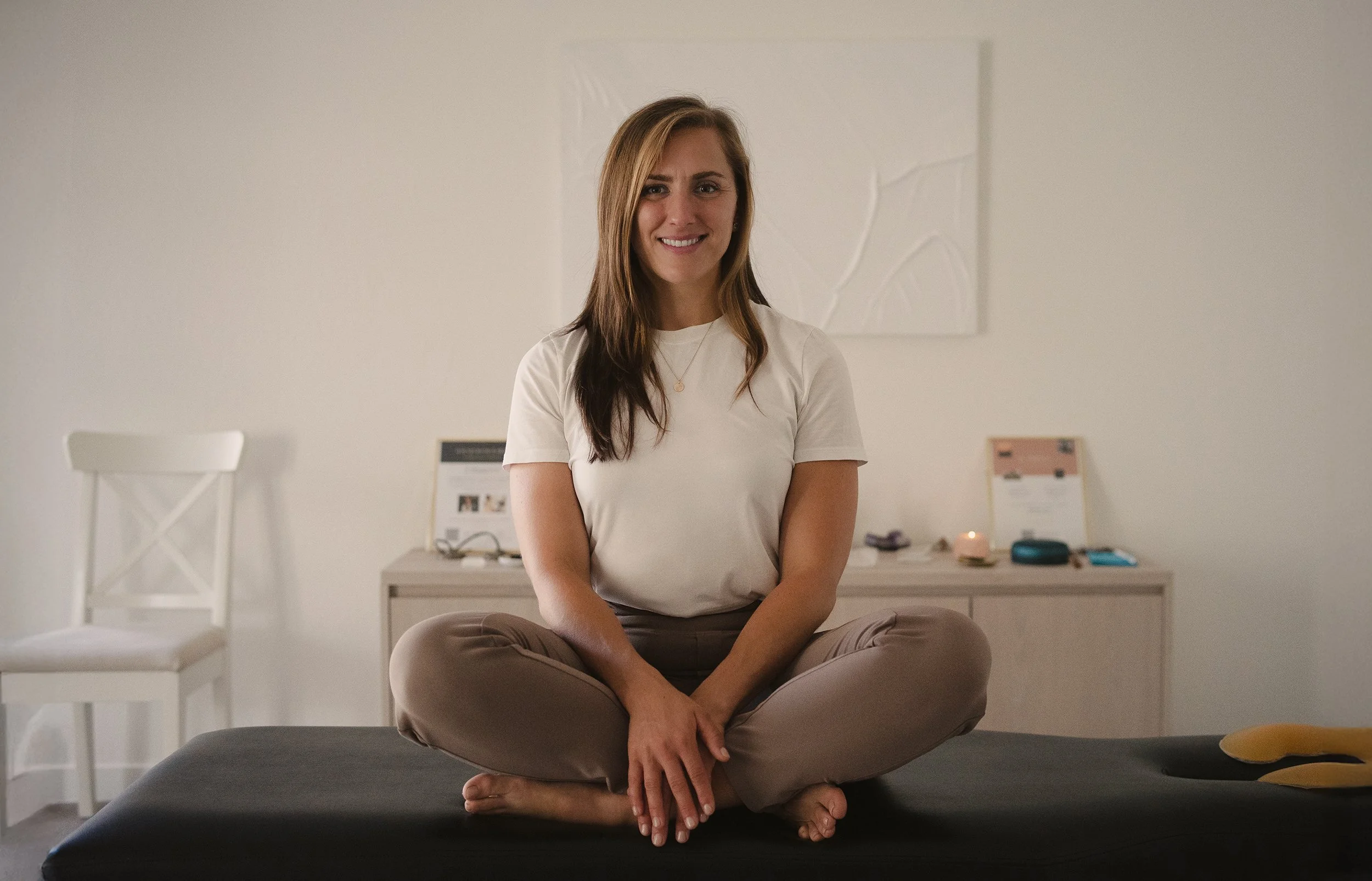
About Dr. Alandi Stec
Dr. Alandi Stec is a Doctor of Chiropractic specializing in gentle, nervous system-centered care in Pleasant Hill. Using Bio-Geometric Integration, she helps adults release chronic tension patterns and return to greater ease in their bodies and lives.