
Sound Bath & Reiki: What Actually Happens in Your Nervous System

You're lying on a mat in a quiet room. Someone strikes a singing bowl nearby and the sound washes over you.
Your chest vibrates slightly. Your breathing deepens without you deciding to breathe deeper. Something in your body softens.
Maybe you've wondered what's actually happening in these moments. Maybe you've been curious about sound healing or Reiki but hesitated because it feels too "out there." Maybe you've tried it once and felt something shift, but couldn't quite explain what or why.
There's real physiology behind these practices. They're not placebo, and they're not magic. They're nervous system medicine delivered through specific pathways your body is designed to receive.
The Curious Skeptic's Dilemma
You're practical. Evidence-based. You want to understand how things work before you try them.
When someone mentions "sound healing" or "energy work," you might feel torn between curiosity and skepticism.
Part of you wonders if there's something valuable here. Another part worries you'll end up in a situation that feels too mystical, too undefined, too far from what you know.
This caution is reasonable. The wellness world is full of practices that overpromise and under-explain.
You want to know what you're getting into before you lie down on a mat and let someone work with singing bowls or place their hands near your body.
The challenge is that sound baths and Reiki work through mechanisms your body understands, even when your mind doesn't have the language for them yet.
They engage systems in your nervous system that respond to vibration, resonance, and presence. These aren't abstract concepts. They're measurable physiological processes.
You don't have to abandon your critical thinking to explore these practices. You just need to understand what's actually happening in your body when you do.
What Actually Happens During a Sound Bath
A sound bath isn't about getting clean and it's not really about the sounds themselves. It's about what specific sound frequencies do to your nervous system.
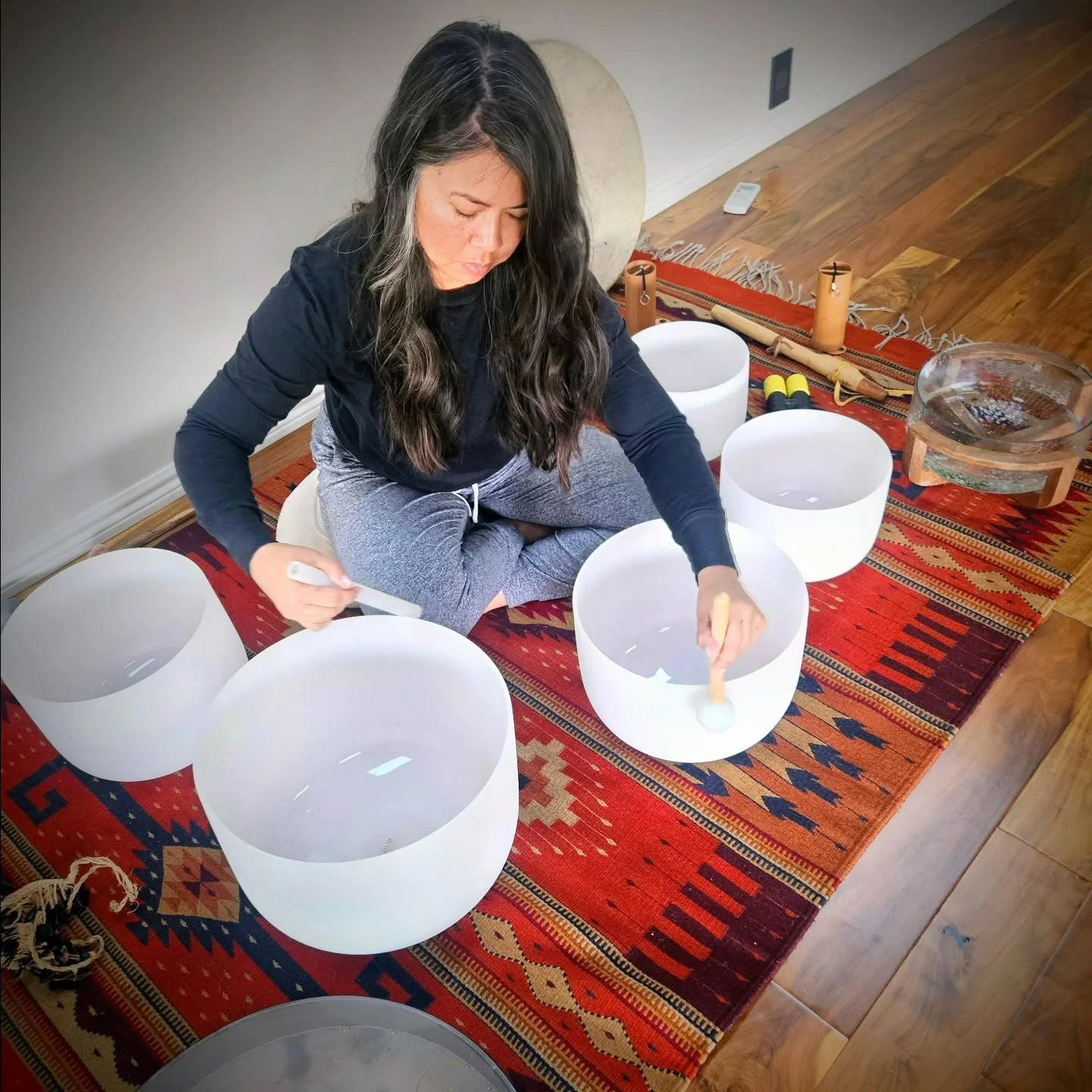
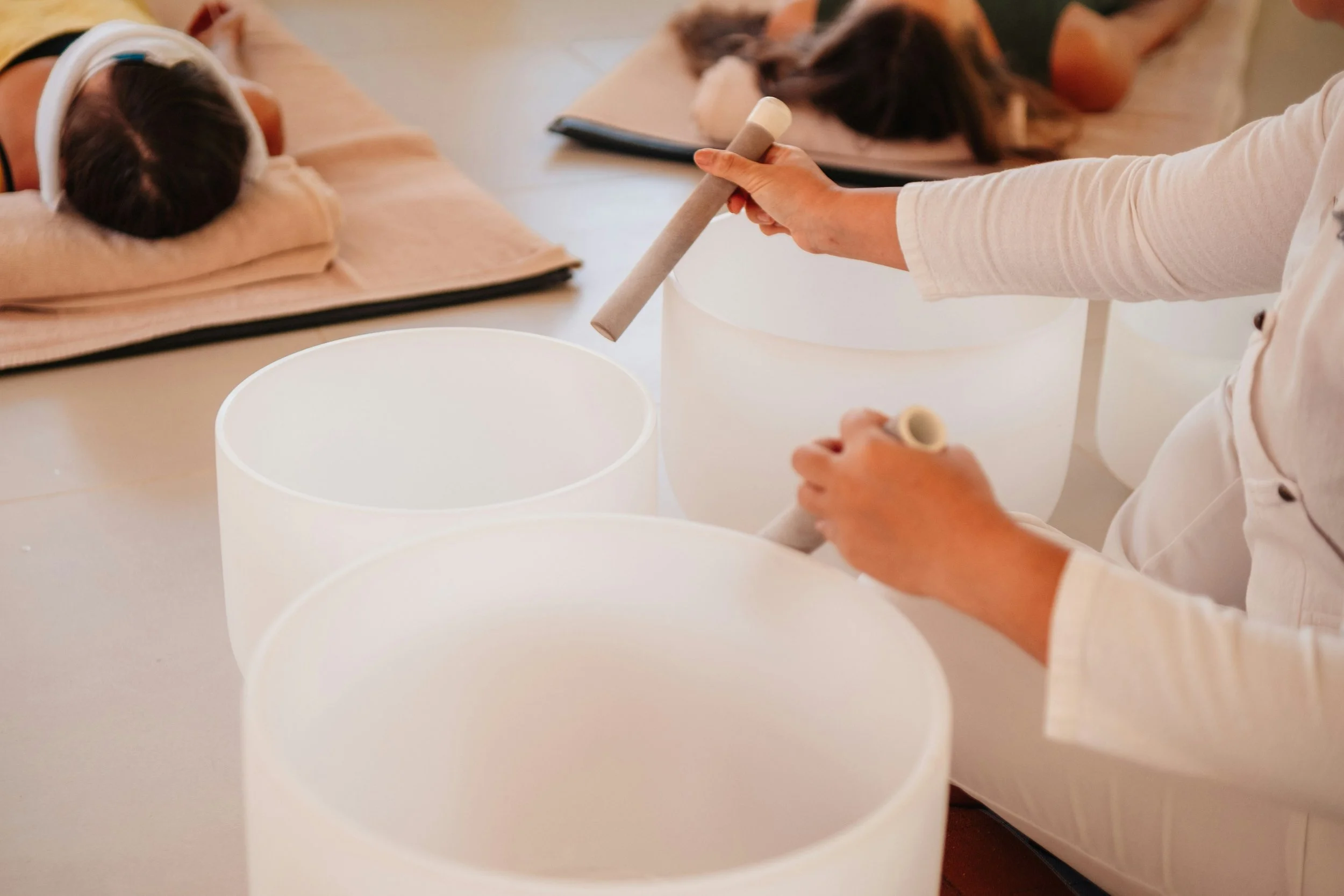
You arrive at a session. The room is warm, dimly lit, set up with yoga mats and blankets. You lie down, usually on your back, covered enough to stay comfortable. The practitioner begins playing crystal singing bowls, gongs, chimes, or other instruments tuned to specific frequencies.
What happens next is where it gets interesting.
The vibrations reach you before your ears fully process the sound.
When a singing bowl resonates near your body, you feel it as much as hear it. That vibration travels through the air and through your body. It reaches your fascia, the connective tissue network that surrounds every muscle, organ, and structure in your body. This fascial network is sensitive to vibration. It responds to specific frequencies by releasing held tension.
Your breath changes without effort.
Within the first few minutes, most people notice their breathing has slowed and deepened. This isn't because someone told you to breathe differently. It's because the sound frequencies activate your vagus nerve, the main nerve of your parasympathetic nervous system. When your vagus nerve is stimulated, it signals your diaphragm to drop and expand. Your breath deepens automatically.
Your brain waves shift.
The repetitive, harmonic nature of the sounds encourages your brain to move from beta waves (alert, thinking, planning) toward alpha and theta waves (relaxed awareness, meditative states). This isn't hypnosis. It's entrainment. Your brain naturally synchronizes with consistent external rhythms. When you're exposed to slow, steady vibrations, your brain waves follow.
Time feels different.
A 60-minute sound bath often feels like it lasted 15 minutes or several hours. This time distortion happens because you're moving in and out of different consciousness states. Your prefrontal cortex, the part of your brain that tracks time and makes plans, quiets down. Without that constant mental narration, your experience of time shifts.
Your body starts processing and releasing.
You might notice emotions surfacing. Tears might come without sadness. Your stomach might gurgle. You might feel tingling in your hands or feet. These aren't side effects. They're signs your nervous system is moving from sympathetic activation (fight-or-flight) into parasympathetic restoration (rest-and-digest). Your body is finally getting the signal that it's safe to release what it's been holding.
A sound bath isn't passive. Your body is actively reorganizing in response to specific frequencies that tell your nervous system it's safe to let go.
The Science: Sound Frequency and Vagal Activation
Your nervous system has been responding to sound since before you were born. In utero, you oriented to your mother's heartbeat, her voice, the rhythmic sounds of her body. This sensitivity to sound never goes away. It's built into how your nervous system regulates itself.
Sound is vibration.
When a singing bowl rings, it creates pressure waves that move through air and through your tissues. Your body is mostly water, and water conducts sound exceptionally well. These vibrations don't just reach your ears. They reach your bones, organs, fluids. Your entire body becomes a resonating chamber.
Specific frequencies activate the vagus nerve.
Your vagus nerve runs from your brainstem down through your chest and abdomen, connecting to your heart, lungs, and digestive system. It's the main pathway for parasympathetic nervous system communication. Research shows that certain sound frequencies, particularly low-frequency vibrations like those from gongs or crystal bowls, directly stimulate vagal tone.
When your vagus nerve is activated:
• Your heart rate slows and becomes more variable (high heart rate variability is a sign of nervous system resilience)
• Your breathing deepens and moves into your belly
• Your digestion improves (your body can finally direct resources toward breakdown and absorption)
• Inflammation markers decrease
• Your immune system function improves
• Your body shifts from resource mobilization (sympathetic) to resource restoration (parasympathetic)
This isn't theoretical. Heart rate variability monitors show measurable changes during sound healing sessions. Participants consistently show increased parasympathetic activity and decreased sympathetic activation within 10-15 minutes of sound exposure.
Frequency entrainment creates coherence.
Your brain has different operating frequencies. Beta waves (13-30 Hz) are associated with active thinking and stress. Alpha waves (8-12 Hz) correlate with relaxed alertness. Theta waves (4-8 Hz) emerge during meditation and deep relaxation. Delta waves (0.5-4 Hz) happen in deep sleep.
Most singing bowls and gongs produce fundamental frequencies in the theta and alpha range. When your brain is exposed to these frequencies consistently, it begins to entrain, to match that frequency. This isn't mystical. It's physics. Rhythmic systems influence each other toward synchronization. Your nervous system does this with sound frequencies just like it does with light (your circadian rhythm) or with other people's nervous systems (co-regulation).
Binaural beats and hemispheric balance.
When two slightly different frequencies reach your ears simultaneously, your brain perceives a third "phantom" frequency, the difference between the two. This is called a binaural beat. Certain binaural beats (particularly in the 4-8 Hz theta range) promote hemispheric synchronization. Your left and right brain hemispheres begin firing in coordinated patterns. This creates a state of integration where your analytical mind and your intuitive sensing work together rather than competing.
Fascial resonance and somatic release.
Your fascia is piezoelectric. It generates electrical charge in response to mechanical pressure. When sound vibrations reach your fascial network, they create subtle electrical impulses. This stimulation helps fascial tissue release chronic holding patterns. Areas of your body that have been braced, protected, held tight for months or years suddenly have permission to soften. This is why people often feel physical sensations during sound baths: tingling, warmth, release, emotion moving through specific body areas.
The science isn't complete yet, but the mechanisms are clear enough. Sound healing works through your vagus nerve, your brain wave patterns, and your fascial system. These are concrete physiological pathways, not placebo effects.
What Reiki Does in the Body:
Reiki might be the practice that triggers the most skepticism. Someone places their hands on or near your body. They claim to be working with energy. Nothing seems to be happening, yet people report feeling warmth, tingling, deep relaxation, or emotional release.
Is it real? Or is it just belief?
The research is still emerging, but what we know suggests Reiki works primarily through nervous system regulation and the power of therapeutic presence.
Therapeutic touch activates the social engagement system.
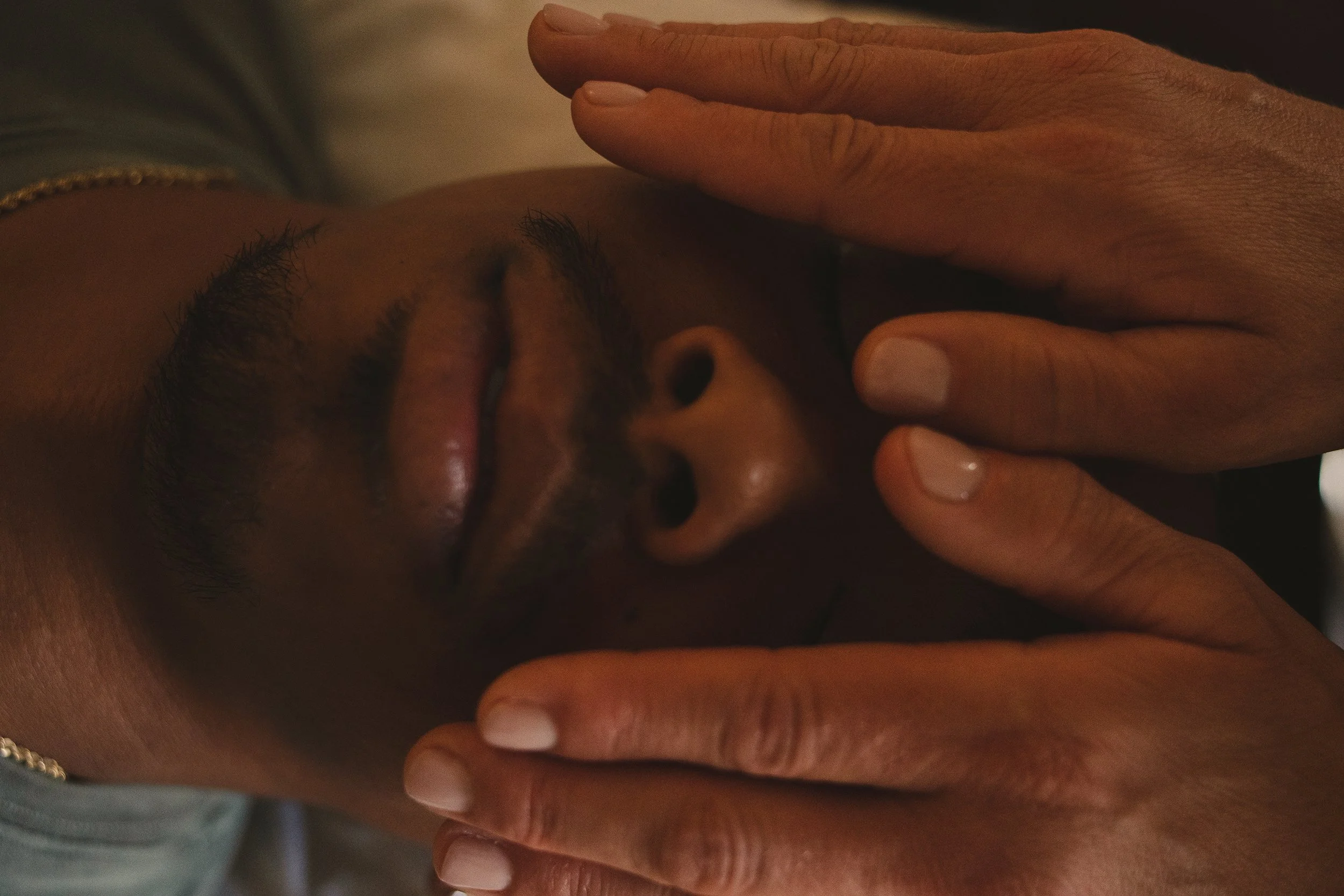
Your nervous system has evolved to respond to safe, caring touch. When someone places their hands on your body with healing intent, particularly in a quiet, focused environment, your nervous system receives multiple signals of safety. The weight and warmth of hands. The steady presence of another person. The undivided attention. Your nervous system reads these signals and begins to downregulate threat response.
This is the social engagement system, a set of neural pathways that help you distinguish between danger and safety based on social cues. Safe touch, calm voice tones, soft eye contact, all of these tell your nervous system it can relax its defensive stance. Reiki provides these signals in concentrated form.
The parasympathetic response is measurable.
Studies using heart rate variability monitors during Reiki sessions show consistent shifts toward parasympathetic activation. Participants' heart rate decreases. Their heart rate variability increases (a sign of nervous system resilience). Their cortisol levels drop. These changes happen even in people who don't believe in energy work.
Presence matters neurologically.
When someone is fully present with you, paying complete attention without agenda or distraction, your nervous system feels this. Mirror neurons in your brain fire in response to another person's nervous system state. If the practitioner is calm, regulated, and fully present, your nervous system begins to mirror that state. This is co-regulation, one of the most powerful tools for nervous system healing.
Reiki practitioners are trained to cultivate a specific quality of presence: grounded, open, non-judgmental, fully attentive. This presence alone creates a field of regulation that your nervous system can entrain to.
The "energy" might be bioelectricity.
Your body runs on electrical impulses. Every heartbeat, every thought, every muscle contraction involves electrical charge moving through cells. Some research suggests that Reiki practitioners may be influencing the bioelectric field around your body through focused attention and hand placement. This isn't mystical energy. It's the same bioelectricity your nervous system uses to function.
Whether you call it energy, presence, focused attention, or nervous system co-regulation, something measurable happens during Reiki. Your body responds. Your nervous system shifts. You often feel different afterward than you did before.
Pain relief through nervous system modulation.
Research shows Reiki can reduce pain perception. The mechanism appears to be through changing how your nervous system processes pain signals. When you're in chronic sympathetic activation, your pain threshold lowers. Everything hurts more because your nervous system is already on high alert. When Reiki helps you shift into parasympathetic activation, your pain threshold rises. The same stimuli feel less painful because your nervous system isn't interpreting everything as a potential threat.
You don't have to believe in chakras or universal life force to benefit from Reiki. You just need a nervous system that responds to safety cues, therapeutic presence, and sustained attention. Everyone has that.
What to Expect at Your First Session in Pleasant Hill
If you're considering attending a sound bath or Reiki session in Pleasant Hill or the wider Bay Area, here's what the experience typically looks like.
Before you arrive:
Wear comfortable, loose clothing. Yoga pants and a soft shirt work well. You'll be lying still for 45-90 minutes, so anything restrictive will become uncomfortable. Avoid eating a heavy meal within two hours of the session, your digestive system makes noise when it's actively processing, which can be distracting during the quiet moments.
When you arrive:
You'll be invited to find a spot in the room. There will be yoga mats, bolsters, blankets, and eye pillows available. Set up your space in a way that feels comfortable. Most people lie on their backs, but you can also lie on your side or sit if lying down isn't accessible for you.
The practitioner will introduce the session, often explaining what instruments they'll be using or what to expect during the experience. This is your moment to ask questions if you have them. There's no requirement to stay silent before the session begins.
During the sound bath:
The lights will dim. The practitioner will begin playing instruments. You might notice some people falling asleep immediately. Others stay alert but deeply relaxed. Neither response is better. Your nervous system will do what it needs to do. Some people experience profound emotional release, tears, or spontaneous body movements. Others simply feel deeply restful. All responses are welcome.
If at any point you feel uncomfortable or need to adjust your position, you can move. You can also leave the room if needed. This is about your regulation, not about lying perfectly still.
During Reiki:
In a Sound Bath Reiki experience, Reiki is not applied through hands-on or hands-off touch to individual bodies. Instead, Reiki is offered through the energetic field of the room as a whole.
The practitioner holds a coherent, regulated field that works in partnership with sound and vibration, allowing Reiki to move through the shared space. This supports both the collective energy of the group and each person’s individual nervous system at the same time.
Rather than directing energy to one person at a time, the work unfolds organically — sometimes supporting the group as a unified field, and sometimes meeting individuals internally where their system needs reorganization or settling. These individual shifts naturally contribute back to the collective atmosphere, creating a co-creative space of clarity, connection, and ease.
There is no physical touch in this experience. Participants simply rest and receive. Sensations may include deep relaxation, subtle internal movement, emotional softening, or a sense of spaciousness. Others may feel calm without noticing distinct sensations.
All experiences are welcome and valid.
After the session:
When the sounds fade and the session ends, give yourself time to transition. Sit up slowly. Drink water. Your nervous system has been through a significant shift, and you might feel spacey, emotional, or deeply peaceful. All of these are signs the session worked. Avoid rushing back into activity immediately. Let your body integrate what just happened.
In the days after:
You might notice improved sleep, reduced pain, easier emotional processing, or a general sense of being more settled in your body. You might also notice old emotions surfacing or temporary fatigue as your body continues processing. This is regulation happening, not something going wrong.
At Life Force Chiropractic's events in Pleasant Hill, we often combine sound healing with Reiki, sometimes partnering with skilled practitioners like sound healer Tiffany Nelson.
These combined sessions offer multiple pathways for your nervous system to regulate and restore.
Why Sound Healing and Reiki Complement Chiropractic Care
Chiropractic care, particularly the gentle nervous system-centered approach we use at Life Force Chiropractic, works by removing interference from your nervous system so your body can heal itself. We address structural patterns that create ongoing stress signals in your system.
Sound healing and Reiki work through different but complementary pathways.
Chiropractic addresses structural nervous system interference.
When your spine, cranium, or pelvis is holding patterns of tension or restriction, these patterns create constant input to your nervous system. Your brain receives signals that something is wrong, that you need to protect, that you're not safe. This keeps you in low-grade sympathetic activation even when there's no actual threat. Chiropractic adjustments, especially Bio-Geometric Integration work, help release these structural patterns so your nervous system can shift out of defense mode.
Sound healing addresses energetic and emotional holding patterns.
Sometimes your body holds tension that isn't primarily structural. You're holding grief in your chest. Anxiety in your throat. Unprocessed stress in your belly. These patterns exist in your fascia, your visceral tissues, your nervous system's emotional processing centers. Sound frequencies reach these patterns directly. They help your body release what it's been carrying without having to verbally process or cognitively understand it.
Reiki addresses regulation through presence and co-regulation.
Your nervous system heals not just through hands-on work but through being in relationship with another regulated nervous system. Reiki provides sustained, focused attention and presence. This creates a field of safety where your system can lower its defenses and begin reorganizing. It's particularly valuable for people whose nervous systems are so activated that even gentle touch feels threatening at first.
When these modalities work together, you get comprehensive nervous system support. The structural interference is addressed. The emotional and energetic holding patterns are released. The nervous system experiences co-regulation with a practitioner who is present and grounded. Your body receives the message from multiple directions: it's safe now, you can let go, you can restore.
Many of our patients at Life Force Chiropractic in Pleasant Hill find that attending sound baths or Reiki sessions between chiropractic visits helps maintain their nervous system regulation. The chiropractic work removes structural interference. The sound and energy work help process what that structural release brings up. Together, they create lasting change rather than temporary relief.
Your Nervous System Deserves Multiple Pathways to Healing
You don't have to choose between evidence-based care and practices that work through subtler mechanisms. Your nervous system responds to structure, frequency, presence, and attention. It needs all of these at different times.
If you're in the Pleasant Hill area, Walnut Creek, Lafayette, Concord, or anywhere in the East Bay, exploring sound healing and Reiki might be the next step in your healing journey. These practices are particularly valuable if you've been doing everything "right" for your health but still feel wound up, if your body holds tension you can't seem to release, or if you're ready for something that works directly with your nervous system's capacity for deep regulation.
We regularly host sound healing and Reiki events at Life Force Chiropractic. These sessions are designed for people who are new to these practices as well as experienced practitioners looking to deepen their nervous system regulation.
You can see our upcoming events and register at www.chiropracticlifeforce.com/events.
Your nervous system already knows how to heal. Sometimes it just needs the right conditions: the right frequency, the right presence, the right invitation to finally let go.
Frequently Asked Questions
Do I need to believe in energy work for it to be effective?
No. Your nervous system responds to therapeutic presence, sustained attention, and safety cues regardless of your belief system. While openness can enhance the experience, skeptics often report profound effects. Your body's physiological responses (heart rate variability changes, parasympathetic activation, cortisol reduction) happen independent of belief.
How is a sound bath different from just listening to relaxing music?
Sound baths use specific instruments tuned to frequencies that directly stimulate your vagus nerve and promote brain wave entrainment. The vibrations are felt in your body, not just heard. The experience is immersive and multi-sensory. Recorded music, while beneficial, doesn't create the same vibrational impact or live presence that influences nervous system regulation.
What should I do if I fall asleep during a session?
Falling asleep during a sound bath or Reiki session is common and perfectly fine. Your nervous system is still receiving the benefits whether you're conscious or not. Many people move in and out of sleep-like states during the session, which indicates your body has shifted into deep parasympathetic activation.
Can sound healing or Reiki help with chronic pain?
Yes, through nervous system regulation. When your nervous system is chronically activated, your pain threshold lowers and pain signals amplify. Both practices help shift you into parasympathetic activation, which raises your pain threshold and helps your body process pain signals more accurately. This doesn't mean they replace medical treatment, but they're valuable complementary approaches.
How often should I attend sessions to see benefits?
Most people notice immediate effects (better sleep, reduced tension, emotional clarity) after a single session. For lasting changes in nervous system regulation, attending monthly or bi-monthly sessions works well. Think of these practices like movement or meditation: occasional sessions provide relief, consistent practice creates lasting change.
Are there times when sound healing or Reiki isn't recommended?
Sound healing is generally safe for most people. Those with severe mental health conditions, pregnancy (first trimester), or certain seizure disorders should consult their healthcare provider first. Reiki is considered very safe, but if you have trauma history and touch feels activating, let the practitioner know so they can work hands-off.
What's the difference between a group sound bath and an individual session?
Group sound baths offer the benefit of collective nervous system co-regulation. Being in a room with other people in deep rest creates a stronger field of safety. Individual sessions allow for personalized attention and can address specific areas of tension or concern. Both are valuable, and many people benefit from experiencing each.
Will I have to participate or share personal information?
No. Sound baths and Reiki sessions typically don't require you to speak, share, or participate beyond lying down and receiving. Some practitioners offer brief opening or closing circles where sharing is invited but never required. Your experience is private, and you're free to process internally.
About Dr. Alandi Stec
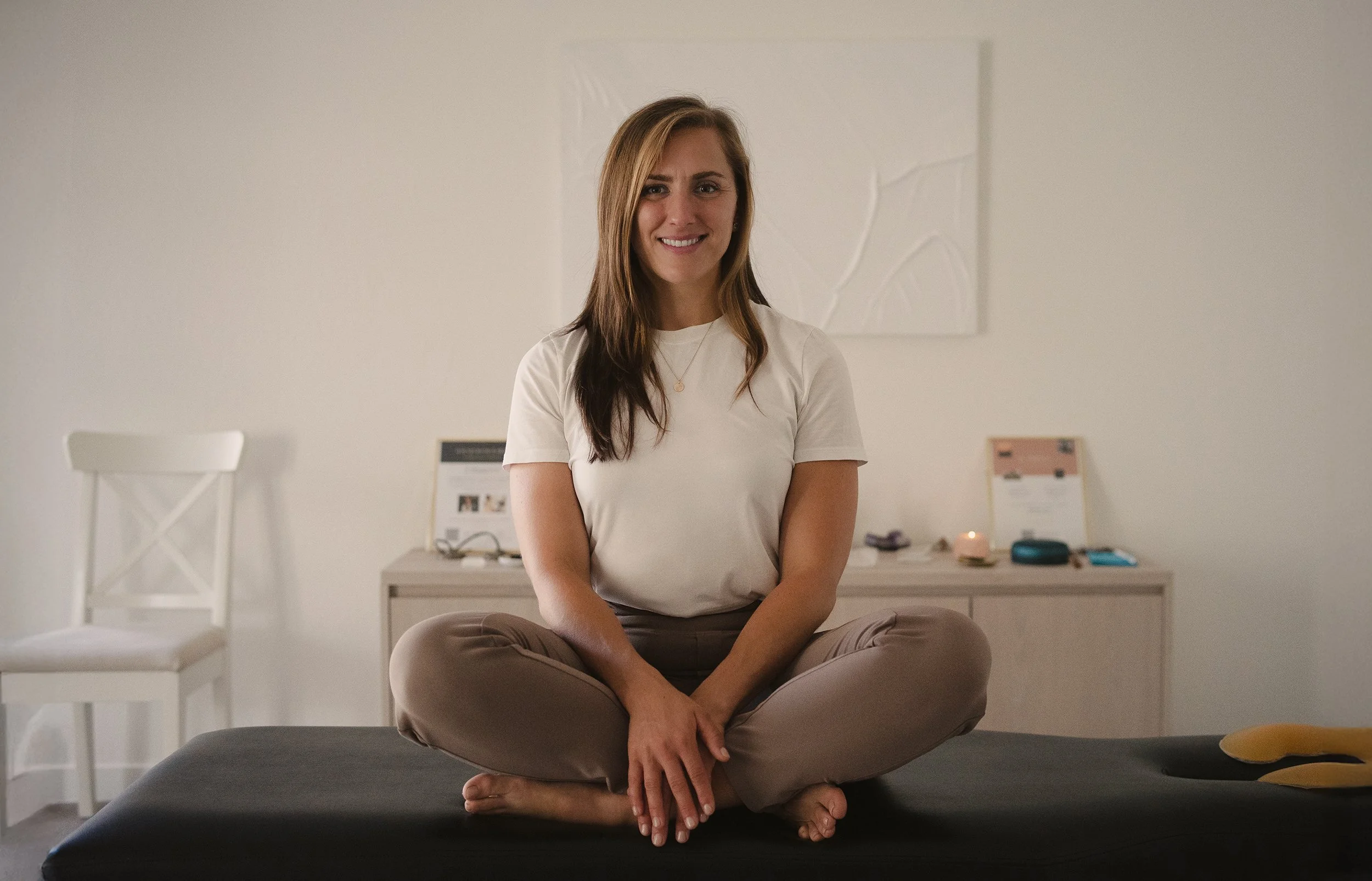
Dr. Alandi Stec practices nervous system-centered chiropractic care in Pleasant Hill, California, serving the broader Bay Area including Walnut Creek, Lafayette, Concord, Orinda, Clayton, and beyond. She combines Bio-Geometric Integration chiropractic with craniosacral therapy, Reiki, and somatic practices to support whole-body nervous system regulation. Learn more about our approach or book your first appointment.