
Postpartum Recovery & Nervous System Care

You grew a human. You brought a life into this world. Your body accomplished something extraordinary.
Now you're six weeks postpartum, and your provider has cleared you for "normal activity." But your body doesn't feel normal. Your back aches from constant feeding and holding. Your pelvis feels unstable. Your rib cage hasn't returned to where it was. Sleep deprivation has you moving through fog.
And underneath all of it, there's this bone-deep exhaustion that rest doesn't seem to touch.
Everyone talks about pregnancy care. Prenatal vitamins, chiropractic adjustments, preparing your body for birth. But the moment baby arrives, all the focus shifts to the newborn. Your body, which just went through the most physically demanding experience of your life, is expected to simply recover on its own.
Here's what most people don't tell you: the postpartum period is another massive transition. Your body isn't just healing from birth. It's recalibrating structurally, hormonally, and neurologically while meeting completely new physical demands.
And it needs support. Real, hands-on, nervous system-centered support.
If you're a new parent in Pleasant Hill, Walnut Creek, Lafayette, or the surrounding Bay Area, gentle chiropractic care can help your body recover in a way that actually feels sustainable.
What Your Body Is Actually Going Through
Birth is intense. Whether you had a vaginal delivery or a cesarean, your body worked at the edge of its capacity to bring your baby into the world.
But the physical demands don't end there. They shift into something different, something that persists 24/7 without pause.
Your structure is still changing.
During pregnancy, the hormone relaxin loosened your ligaments to allow your pelvis to open. That hormone doesn't disappear immediately after birth. Your joints stay more mobile for months, especially if you're breastfeeding. This means your body needs to restabilize while still being somewhat unstable.
Your core is rebuilding.
Your abdominal muscles stretched significantly during pregnancy. Many people experience diastasis recti—a separation of the abdominal muscles that needs time and specific support to heal. Until that core strength returns, your back and pelvis compensate, often creating pain and dysfunction.
Your rib cage is returning.
During pregnancy, your ribs expanded to make room for your growing uterus. Now they're supposed to return to their pre-pregnancy position, but this doesn't always happen smoothly. Some people find they can't take deep breaths comfortably. Others feel restricted or compressed in their mid-back.
Your pelvis is finding its new normal.
Whether you delivered vaginally or had a cesarean, your pelvis went through massive changes. The bones shifted. The ligaments stretched. Now everything needs to find stability again, but often with new patterns of tension or misalignment.
You're holding and feeding constantly.
Nursing or bottle feeding, you're holding your baby for hours each day. Most people develop a dominant side, creating asymmetry in how your shoulders, neck, and spine bear weight. Your upper back rounds forward. Your neck juts out. These postures, repeated hundreds of times daily, create their own patterns of pain and restriction.
You're sleeping in fragments.
Or not sleeping much at all. Sleep deprivation affects everything—how your nervous system regulates, how your body heals, how you process pain, how your muscles hold tension. The exhaustion is compounding the physical strain.
This isn't just about time healing all wounds. Your body is working incredibly hard while operating on minimal resources. It needs specific support to navigate this recovery.
The Postpartum Issues That Bring New Parents to Care
New parents in Pleasant Hill and throughout the Bay Area come to us with specific concerns that regular medicine often dismisses as "normal postpartum issues."
Persistent low back pain.
Your back supported different weight distribution for nine months and worked overtime during labor. Now it's trying to restabilize while you're bending, lifting, and carrying constantly. The pain might be in the same place it was during pregnancy, or it might be new, sharper, more limiting.
Pelvic instability or pain.
Some people feel like their pelvis might separate when they walk. Others experience sharp pains in the pubic bone or sacroiliac joints. Getting in and out of bed, climbing stairs, or even rolling over can trigger intense discomfort.
Diastasis recti complications.
When your abdominal muscles don't come back together properly, it affects more than just aesthetics. It impacts your core stability, your posture, your ability to lift and carry. Your back ends up doing work your core should be doing.
Tailbone pain.
Birth can bruise, shift, or even fracture the coccyx (tailbone). Sitting becomes excruciating. Feeding your baby while sitting feels impossible. This pain can persist for months if not addressed.
Upper back and neck tension.
The constant feeding, holding, looking down at your baby creates chronic tension through your shoulders, between your shoulder blades, and up into your neck. Headaches become frequent. Your shoulders feel locked forward.
Rib pain and breathing restriction.
Your ribs might still feel expanded, creating discomfort. Or they might have closed too quickly, creating restriction. Either way, you notice you can't breathe as deeply or move as freely through your mid-back.
Hip pain and clicking.
The hormonal changes and structural shifts can leave your hips feeling unstable, clicking with movement, or aching at night. This makes the constant getting up and down with baby even more challenging.
C-section recovery complications.
If you had a cesarean, you're healing from major abdominal surgery while immediately caring for a newborn. The scar tissue can create restrictions. Your core is compromised. Your body is working around the healing incision, often creating compensatory patterns that lead to pain.
These aren't separate issues. They're all connected through your structure and your nervous system. And addressing them requires care that sees the whole picture.
Why Your Nervous System Needs Recovery Too
Most postpartum care focuses on physical healing—checking that your uterus has contracted, that any tears or incisions are healing, that your bleeding has stopped.
But there's another layer that often gets overlooked: your nervous system went through this too.
Birth is one of the most intense experiences your nervous system will ever process.
Regardless of how it unfolded, your body moved through an extreme activation state. For some, labor and delivery were relatively straightforward. For others, there were complications, interventions, moments of fear or overwhelm.
Your nervous system holds the imprint of that experience. And if it didn't have the opportunity to fully process and integrate what happened, that activation can persist.
Sleep deprivation compounds nervous system dysregulation.
When you're not getting consolidated sleep, your nervous system can't restore itself properly. You're operating in a state of chronic stress, even when you're not consciously stressed. This affects everything—how you experience pain, how your body heals, how your emotions regulate, how much capacity you have for the demands of new parenthood.
The fourth trimester is depleting.
You're giving your body to feeding, to holding, to soothing. You're meeting your baby's needs around the clock. Your nervous system is being asked to regulate two people—yourself and your baby—while running on empty.
This is why postpartum recovery isn't just about your pelvis realigning or your core strength returning. It's about supporting your nervous system's capacity to regulate while meeting unprecedented demands.
Gentle chiropractic care addresses both—the structural healing and the nervous system restoration.

How Gentle Chiropractic Supports Postpartum Recovery
At Life Force Chiropractic in Pleasant Hill, postpartum care recognizes that you're not trying to "get your body back." You're supporting your body's evolution into this new phase.
We address structural misalignments that create pain.
When your pelvis is out of balance, your spine has restrictions, or your rib cage hasn't returned to optimal position, your body has to compensate. Gentle adjustments help restore alignment so your body can function more efficiently and with less pain.
We support your nervous system's regulation.
Through craniosacral work and gentle techniques, we help your nervous system process and integrate the intensity of birth. We create conditions where your body can shift out of survival mode and into restoration mode.
We release the tension patterns from constant holding and feeding.
Your body develops specific patterns of tension from the repetitive demands of caring for a newborn. We address these patterns before they become chronic, helping your shoulders release, your neck soften, your spine regain mobility.
We help your core and pelvis restabilize.
While we don't replace physical therapy for diastasis recti or pelvic floor dysfunction, we support the structural framework that allows those tissues to heal properly. When your pelvis is balanced and your spine is aligned, your core can rebuild more effectively.
We work with c-section recovery.
Gentle work around the scar tissue, supporting the fascial restrictions that develop, addressing the compensatory patterns your body created to protect the healing incision—all of this helps your body recover more completely from surgical birth.
Every session is adapted to where you are. If you're two weeks postpartum, care looks different than if you're six months postpartum. If you're breastfeeding, we account for that. If you're still experiencing significant pain, we move slowly and gently.
This isn't about pushing your body to recover faster. It's about giving it the support it needs to recover well.
Supporting Your Nervous System's Regulation
When your body asks for deep rest and recalibration, the response isn't about fixing what's broken. It's about learning to listen and partner with your body's wisdom.
Progress happens in small increments. Some days you'll have more capacity than others. That's not failure—that's how nervous systems restore themselves. In waves, not straight lines.
The goal isn't to get back to pushing yourself as hard as you were before. The goal is to restore your body's capacity while learning to honor its limits, so you can engage with life in a way that's actually sustainable.
1. Shift From Passive Rest to Active Restoration
Your body needs more than lying still. It needs practices that actively support nervous system regulation.
This might look like:
Gentle movement that helps your body complete stress responses it couldn't complete while pushing through (slow walks, stretching, intuitive dance)
Breath practices that signal safety and help shift your system toward parasympathetic states
Time in nature where your nervous system can borrow the natural world's rhythms
Creative expression without pressure or performance—drawing, singing, writing just for the felt sense of it
Somatic practices that help discharge held activation from your tissues
The key is choosing practices that feel nourishing rather than depleting. If something feels like one more task on your list, it's not the right practice for this moment.
2. Honor Different Capacity Levels
Your capacity will vary day to day. Learning to work with this rather than against it is part of the recalibration.
On days when capacity is very low:
• Keep your focus narrow—just what needs to happen today
• Create physical comfort (warmth, soft textures, dim lighting)
• Use simple grounding practices (feet on floor, hands on heart, naming what you see)
• Let expectations be extremely small
On days when you have slightly more capacity:
• Introduce small amounts of gentle activation (a short walk, light stretching)
• Practice simple regulation techniques (extended exhales, body scanning)
• Connect briefly with safe people
• Engage in tasks that provide a sense of completion without overwhelming you
As capacity gradually returns:
• Add activities back slowly, one at a time
• Notice how your body responds to each addition
• If you feel depletion creeping back, pull back before it becomes urgent
• Celebrate small wins—they're rebuilding your capacity one moment at a time
3. Listen to What Your Body Is Teaching You
Depletion often happens because you've been overriding your body's earlier signals. Recovery requires learning to hear and honor those signals before they become urgent.
This means:
Noticing your capacity thresholds before you cross them. Where's the line between "pleasantly engaged" and "starting to drain"?
Honoring "no" when your body says it, even when your mind thinks you "should" say yes
Questioning the beliefs that drove you to depletion: "Rest must be earned." "My worth equals my productivity." "I can't say no."
Asking regularly: What does my body actually need right now? Not what I think it should need—what does it need?
Sometimes, nervous system depletion is the thing that finally forces you to examine patterns that weren't sustainable. Your body is teaching you what it means to live in partnership with your own limits rather than constantly pushing beyond them.
4. Build Daily Regulation Into Your Rhythm
Small, consistent practices build nervous system resilience more effectively than occasional big interventions.
Morning orientation:
Before reaching for your phone, take a few minutes to sense your body. Notice your breath. Set an intention to honor your capacity today rather than override it.
Midday check-ins:
Pause periodically throughout the day. Am I holding tension? Is my breath shallow? What small thing would help me regulate right now? (A few deep breaths, a brief walk, closing my eyes for a moment)
Evening transition:
Create a bridge between the day's activity and rest. This might be gentle movement, journaling, breath work, or a body scan—something that helps your system release the day before sleep.
Weekly deep rest:
Dedicate time specifically for nervous system restoration. This could be Yoga Nidra, extended time in nature, somatic therapy, or any practice that allows true letting go.
5. Rebuild Capacity Gradually
As you start feeling better, there's often a temptation to quickly return to your previous pace. This is where many people deplete again.
Think of your nervous system like a muscle that's been resting. You wouldn't immediately jump back into heavy training. You'd start gently and increase load slowly as strength returns.
Add activities back one at a time.
Notice how each addition affects your energy and capacity. If something consistently drains you more than it gives back, that's information.
Watch for the early signals of depletion.
Don't wait until you're exhausted again. When you notice your capacity narrowing, your sleep disrupting, or your patience thinning, respond immediately by pulling back.
Redefine what "normal" means.
Recovery isn't about getting back to who you were before. It's about becoming someone who lives in sustainable partnership with their body's actual capacity.
This might mean a permanently slower pace. Fewer commitments. More space. That's not loss—that's wisdom.
What New Parents Notice With Postpartum Care
The effects of gentle chiropractic care during the postpartum period show up in both immediate and long-term ways.
Pain decreases.
Most people notice that their back pain, pelvic pain, or neck tension improves with regular care. Not overnight, but progressively. They can hold their baby without wincing. They can sit to feed without their tailbone screaming. They can get through the day with less constant discomfort.
Movement becomes easier.
Getting up from the floor where you've been doing tummy time. Carrying the car seat. Bending to change diapers. These repetitive movements start to feel more fluid and less painful as your structure realigns.
Energy improves slightly.
While nothing replaces actual sleep, when your nervous system has support to regulate and your body isn't working so hard to compensate for misalignments, many people notice they have marginally more energy. In the postpartum fog, even marginal improvements matter.
Breathing deepens.
As your rib cage returns to better position and your thoracic spine regains mobility, you can take fuller breaths. This helps with both physical comfort and nervous system regulation.
You feel more connected to your body.
The postpartum period can feel disorienting. Your body looks and feels different. It's accomplishing things you didn't know it could (making milk, healing from birth, functioning on no sleep). Regular care helps you feel more grounded in and trusting of this transformed body.
Recovery feels more supported.
There's something powerful about having someone attend to your body's needs during a time when all attention typically flows toward the baby. This care says: your recovery matters. Your body deserves support. You're worth investing in even during this depleting phase.
Postpartum Care Addresses What "Normal Recovery" Misses
At your six-week postpartum checkup, your provider likely cleared you for normal activity if everything looked physically healed.
But here's what that standard timeline doesn't account for:
Your ligaments are still loose.
It can take 3-6 months for the relaxin hormone to fully clear your system, longer if you're breastfeeding. Your joints need support during this extended period of instability.
Your core hasn't rebuilt yet.
Even if your diastasis has closed, your core strength and coordination take months to restore. Your body is compensating in ways that create pain and dysfunction.
Your nervous system is still processing birth.
Whether your birth was traumatic or straightforward, your nervous system integrated an extreme experience. That processing doesn't complete in six weeks.
The physical demands are just beginning.
Your baby is getting heavier. You're carrying them more. The repetitive strain on your body is increasing, not decreasing.
Sleep deprivation is cumulative.
The longer you go without consolidated sleep, the more depleted your nervous system becomes. Six weeks in is often when the exhaustion really hits.
Standard postpartum care checks the basics: Is the uterus contracting? Are incisions healed? Are you bleeding normally?
But it often misses: How is your structure adapting? Is your nervous system regulating? Is your body getting the support it needs to heal while meeting constant demands?
Gentle chiropractic care fills that gap. It provides the hands-on, structural, nervous system support that the standard six-week timeline doesn't address.
When to Start Postpartum Chiropractic Care
There's no single right time. It depends on your body, your birth experience, and what you're noticing.
Some people start within the first few weeks.
If you're experiencing significant pain, instability, or restriction, earlier care can help. We adapt our techniques to your very recent postpartum state, using extremely gentle approaches that support without overwhelming your healing body.
Many people start around 6-8 weeks.
This is when the initial healing has progressed, you're settling into some routines with baby, and you're starting to notice which discomforts aren't resolving on their own.
Others come months postpartum.
You might think the pain or instability will improve with time, and when it doesn't, you seek care. It's never too late. Bodies heal in their own timeframes, and support is valuable whenever you begin.
And some continue care from pregnancy.
If you received chiropractic care during pregnancy, continuing through postpartum creates continuity. Your body is already familiar with the care, and we're already familiar with your body's patterns.
For new parents in Pleasant Hill and the surrounding Bay Area—Walnut Creek, Lafayette, Orinda, Concord—we adapt our approach to meet you exactly where you are in your postpartum journey.
Beyond Your Recovery: Family Care
One of the natural progressions we see is that parents who receive postpartum care often want to extend that nervous system support to their baby.
Birth is intense for babies too. The physical forces of labor and delivery, the rapid transition from womb to world—their nervous systems are integrating all of this.
Gentle chiropractic care for infants can support:
• Easier feeding and latching
• Better sleep patterns
• Digestive comfort and reduced colic symptoms
• Nervous system regulation during the fourth trimester
• Optimal development from the beginning
Many families at Life Force Chiropractic in Pleasant Hill receive care together—postpartum recovery for parents, gentle nervous system support for babies, creating a foundation of regulation for the whole family.
Your Body Deserves This Support
You just accomplished something extraordinary. You grew a human. You birthed them into the world. Now you're sustaining them with your body while operating on minimal sleep, processing massive hormonal shifts, and healing from one of the most physically demanding experiences a body can go through.
And somewhere in all of that, you're supposed to also be recovering.
The truth is, recovery needs support. Your body can't heal optimally while it's compensating for structural misalignments, operating on a dysregulated nervous system, and managing constant physical demands without help.
You don't have to just endure the pain. You don't have to wait months hoping it eventually improves. You don't have to accept that postpartum discomfort is simply your new normal.
Gentle, nervous system-centered chiropractic care can help your body heal while honoring how much it's already doing. Care that sees you, not just your baby. Care that recognizes your recovery matters just as much as the new life you're nurturing.
Your body carried your baby with incredible strength. Now let someone help carry you through this next transition.
Schedule Your Postpartum Care Consultation
Life Force Chiropractic | Pleasant Hill
200 Gregory Lane, Suite B105
Pleasant Hill, CA 94523
Book Your Appointment Online
Or call: (925) 276-3026
We serve new parents throughout the Bay Area, including:
Pleasant Hill
Walnut Creek
Lafayette
Orinda
Concord
Clayton
Alamo
Danville
Office Hours:
Wednesday: 3–7 pm
Thursday: 1–7 pm
Friday: 1–6 pm
Saturday: 12–4 pm
Frequently Asked Questions
How soon after birth can I start chiropractic care?
You can begin as soon as you feel ready. Some people come within the first week or two. Others wait until their six-week checkup or later. We adapt our approach based on how recently you gave birth and what your body needs. If you had a vaginal delivery, we're extremely gentle with your pelvis and use positioning that's comfortable. If you had a c-section, we work carefully around your incision and scar tissue.
Is postpartum chiropractic different from regular chiropractic?
Yes. Postpartum care accounts for the specific structural and hormonal changes your body is navigating. Your ligaments are still loose from relaxin. Your core is rebuilding. Your pelvis is restabilizing. We use techniques specifically adapted for these conditions, often gentler than what we'd use with someone who isn't postpartum.
Can chiropractic help with diastasis recti?
While we don't replace physical therapy for diastasis recti rehabilitation, we support the structural framework that allows your core to heal properly. When your pelvis is balanced and your spine is aligned, your abdominal muscles have better conditions for knitting back together. Many people combine chiropractic care with physical therapy for comprehensive recovery.
I had a c-section. Can you still help?
Absolutely. C-section recovery has its own considerations—scar tissue, fascial restrictions, compensatory patterns your body developed to protect the healing incision. We work gently around these areas, supporting your body's overall structure while respecting the surgical healing process. Many people find that gentle care helps them recover more completely from cesarean birth.
Will care interfere with breastfeeding?
Not at all. In fact, many nursing parents find that when their upper back, neck, and shoulders have less tension, feeding positions become more comfortable. We can also offer guidance on positioning that reduces strain on your body during feeds. Some people even notice their milk supply improves when their nervous system is better regulated, though we can't guarantee this outcome.
How often do I need postpartum chiropractic appointments?
This varies based on your body's needs and how you're recovering. Some people come weekly for the first month or two, then space out to biweekly or monthly. Others come less frequently from the start. We'll assess your situation and create a care plan that makes sense for your recovery timeline and your life with a newborn.
Can I bring my baby to appointments?
Yes. We understand that as a new parent, separating from your baby might not be practical or comfortable. You're welcome to bring your baby to appointments. We have a comfortable space where they can be nearby during your care.
I'm several months postpartum. Is it too late to start care?
It's never too late. Whether you're three months, six months, or a year postpartum, your body can still benefit from structural and nervous system support. Many people don't realize they could feel better until much later in the postpartum period. We meet you wherever you are in your recovery journey.
Do you work with physical therapists or pelvic floor specialists?
Yes. We believe in collaborative care. If you're working with a pelvic floor physical therapist or other specialists, we're happy to coordinate. Many conditions benefit from both chiropractic support for overall structure and specialized therapy for specific issues like pelvic floor dysfunction or diastasis recti.
Will my insurance cover postpartum chiropractic care?
Coverage varies by insurance plan. We can provide you with a superbill to submit to your insurance if you have out-of-network benefits. We're also happy to discuss our service fees directly. You can view our current service fees for Pleasant Hill online.
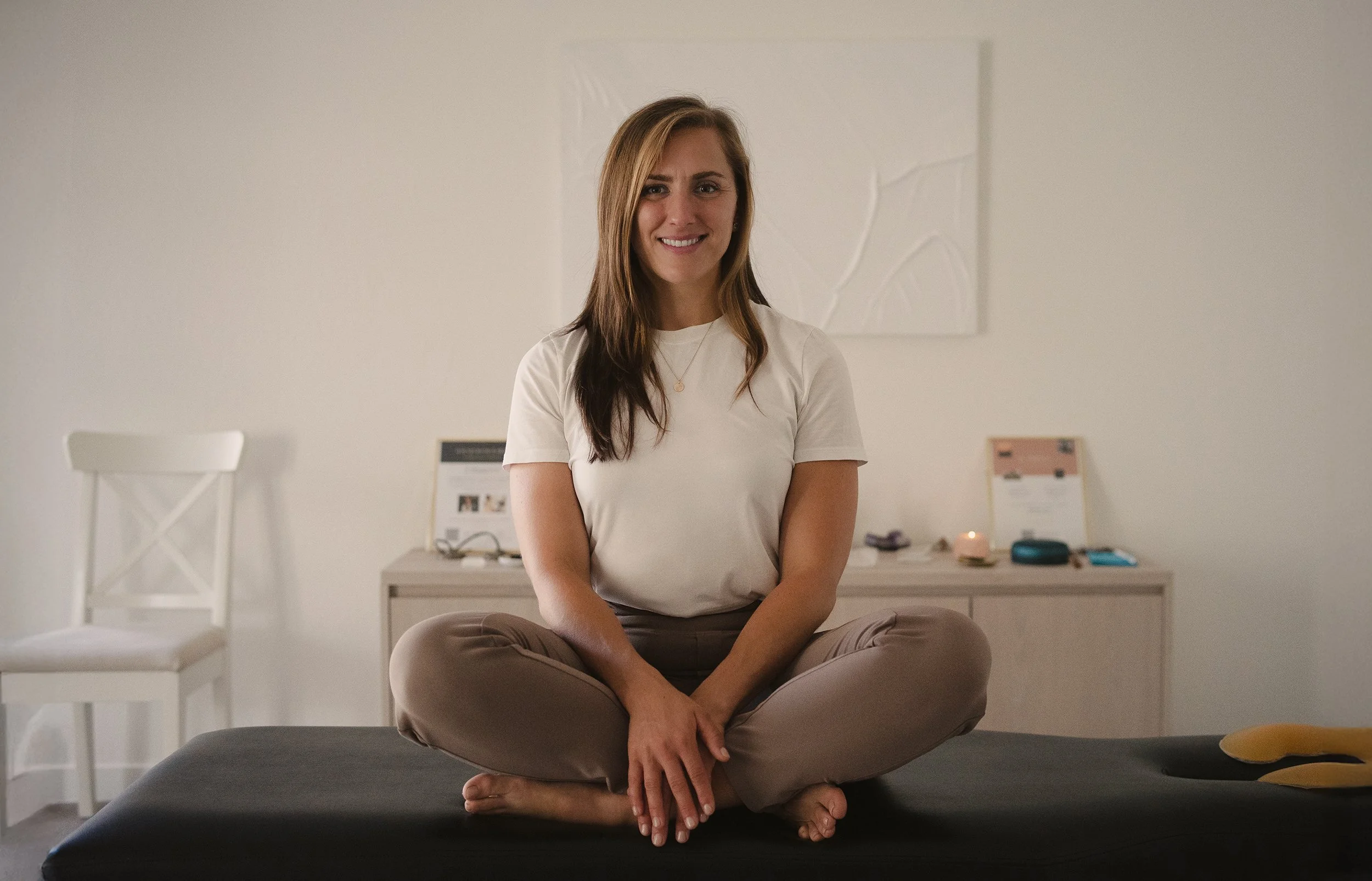
About Dr. Alandi Stec
Dr. Alandi Stec provides gentle, nervous system-centered chiropractic care for new parents at Life Force Chiropractic in Pleasant Hill, California. She specializes in postpartum recovery, supporting bodies through the fourth trimester and beyond. She also offers gentle care for infants and children, creating whole-family nervous system support throughout the Bay Area.